The Moon is slowly spiraling away from Earth, and our days are getting longer.
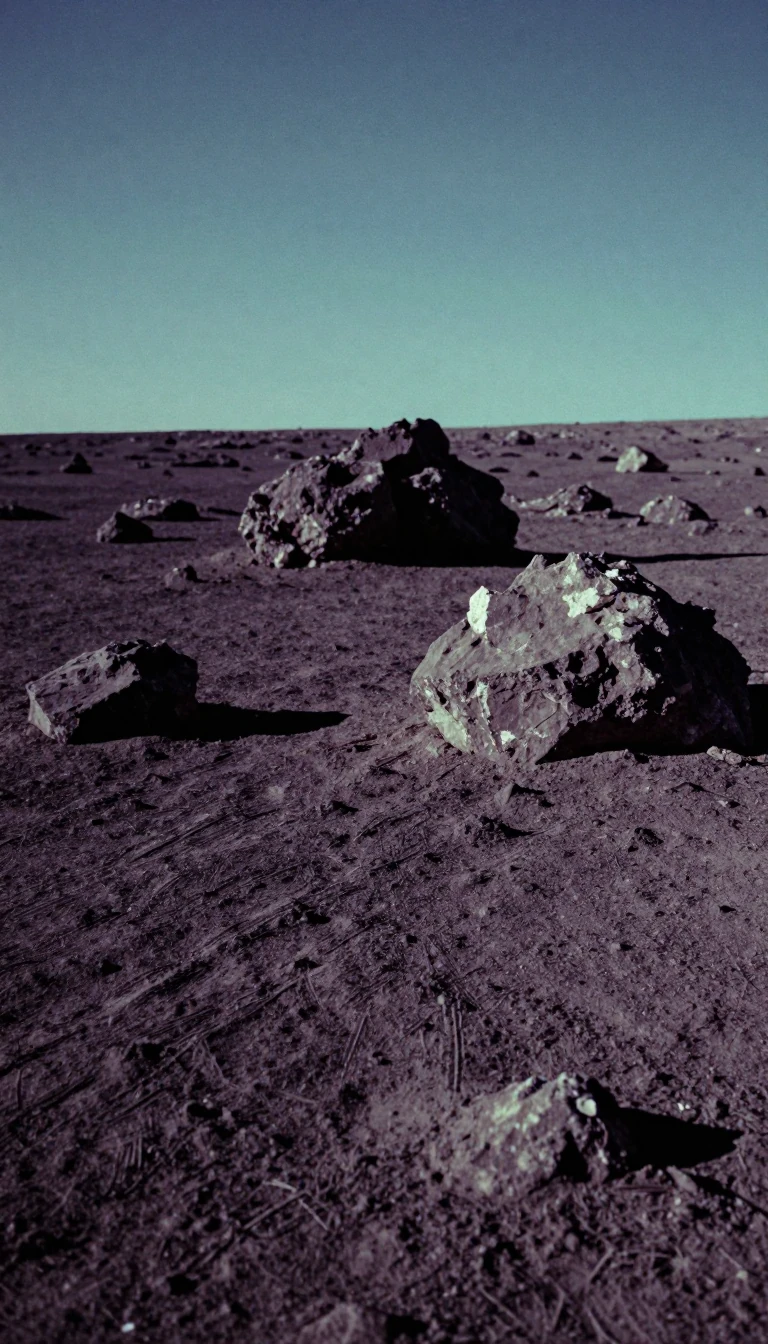
In short: Tidal forces are quietly reshaping our cosmic neighborhood. As Earth’s oceans bulge, they exert a gravitational torque that pushes the Moon into a higher orbit while simultaneously acting as a brake on our planet’s rotation. This exchange of angular momentum is a permanent, non-periodic process that has been occurring for billions of years.
The interaction between Earth and the Moon is a classic example of tidal acceleration. Because Earth rotates faster than the Moon orbits, the tidal bulges created by the Moon are dragged ahead of the direct Earth-Moon line. This misalignment creates a gravitational torque that transfers angular momentum from Earth’s rotation to the Moon’s orbital motion. As a result, the Moon recedes from Earth at a rate of about 38.30 millimeters per year, while Earth’s rotation slows down, gradually lengthening our day.
This process is not just a theoretical curiosity; it is a secular perturbation, meaning it causes unbounded, cumulative change rather than simple oscillation. While Earth loses rotational energy, most of it is dissipated as heat through friction in shallow seas, such as the European and Patagonian shelves. Only a small fraction—about 1/30th—is transferred to the Moon. This energy loss is essential; without tidal friction, the Moon’s gravitational pull would quickly synchronize the tides with its position, halting the recession.
Evidence for this long-term dance is etched into the geological record. Tidal rhythmites from 620 million years ago indicate that Earth’s day was then only 21.9 hours long, with 400 solar days in a year. Fossil mollusc shells from 70 million years ago suggest a 23.5-hour day. While we currently add leap seconds to our clocks to account for these discrepancies, the process is not infinite. In about 1 to 1.5 billion years, the Sun’s increasing radiation will likely vaporize Earth’s oceans, effectively ending the tidal friction that drives this acceleration long before the Earth-Moon system could ever reach a state of mutual tidal locking.
Interestingly, Earth’s rotation is also influenced by post-glacial rebound. As the planet’s crust continues to adjust from the weight of ice sheets that melted over 10,000 years ago, mass moves closer to the rotation axis, decreasing Earth's moment of inertia and slightly speeding up its rotation. This effect partially offsets the tidal braking, helping to explain why historical observations of the day's length differ from what tidal effects alone would predict.
Opens the Intellect+ feed with this card first. Swipe up for the next one.
Sources
- Summary by Intellect · source: Tidal acceleration
To cite this card, link to https://intellectplus.co.uk/app/space-tidal-acceleration.
How we source, check and correct cards: Editorial standards.
General information, not professional advice. Spotted an error? Flag the card or see corrections and complaints.
Intellect Plus is a visual educational discovery platform for exploring fascinating facts and ideas. Brain Food, Not Brain Rot. What is Intellect Plus?
Related
More in Celestial mechanics · More in Space · Latest · A–Z · All topics
