Why did humanity spend centuries convinced the Earth was a hollow shell?
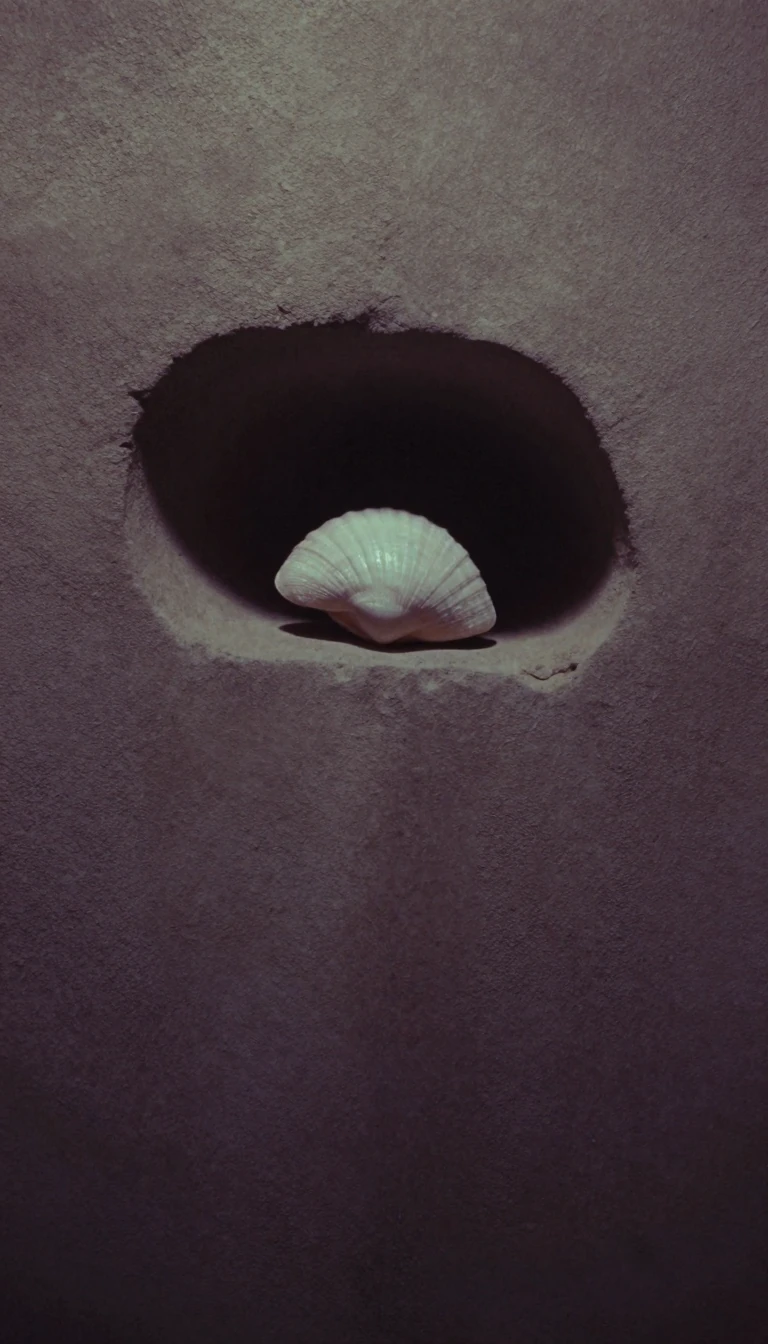
In short: Long before modern geology, the idea that our planet was a hollow, inhabited sphere captivated thinkers and myth-makers alike. From ancient legends of subterranean underworlds to 17th-century scientific conjectures, the hollow Earth hypothesis persisted as a serious, if ultimately disproven, attempt to map the mysteries beneath our feet.
The concept of a hollow Earth has deep roots in global mythology, appearing in stories ranging from the Greek underworld and Tibetan legends of Shamballa to the oral traditions of the Taino and Mandan peoples. These narratives often framed the interior as a place of origin or an afterlife. By the 17th century, this folklore began to merge with early scientific speculation. In 1665, Athanasius Kircher proposed a system of subterranean cavities and water channels, while Edmond Halley, in 1692, suggested the Earth consisted of concentric shells to explain anomalous compass readings.
Scientific interest in the hypothesis waned as empirical methods improved. In 1740, Pierre Bouguer’s vertical deflection experiments at the Chimborazo volcano provided early evidence against a hollow interior. This was definitively bolstered by the 1774 Schiehallion experiment led by Charles Hutton, which measured gravitational pull to confirm the Earth's density. By the mid-19th century, the idea had largely shifted into the realm of pseudoscience and fiction, though it remained a persistent theme in adventure literature and conspiracy theories.
Beyond the 'convex' model—where we live on the outside of a hollow sphere—some proponents argued for a 'concave' Earth, suggesting we live on the inside. Cyrus Teed, who founded the Koreshan Unity in 1869, even attempted to verify this through surveying. While mathematicians note that an inside-out universe can be mathematically modeled through coordinate transformations, such ideas are rejected by the principle of Occam's razor. Today, the hollow Earth remains a staple of subterranean fiction and folklore, a testament to our enduring fascination with what might lie hidden beneath the surface.
Opens the Intellect+ feed with this card first. Swipe up for the next one.
Sources
- Summary by Intellect · source: Hollow Earth
To cite this card, link to https://intellectplus.co.uk/app/nature-hollow-earth.
How we source, check and correct cards: Editorial standards.
General information, not professional advice. Spotted an error? Flag the card or see corrections and complaints.
Intellect Plus is a visual educational discovery platform for exploring fascinating facts and ideas. Brain Food, Not Brain Rot. What is Intellect Plus?
Related
More in Earth science · More in Nature · Latest · A–Z · All topics
