Island animals often evolve into giants or dwarfs compared with mainland relatives
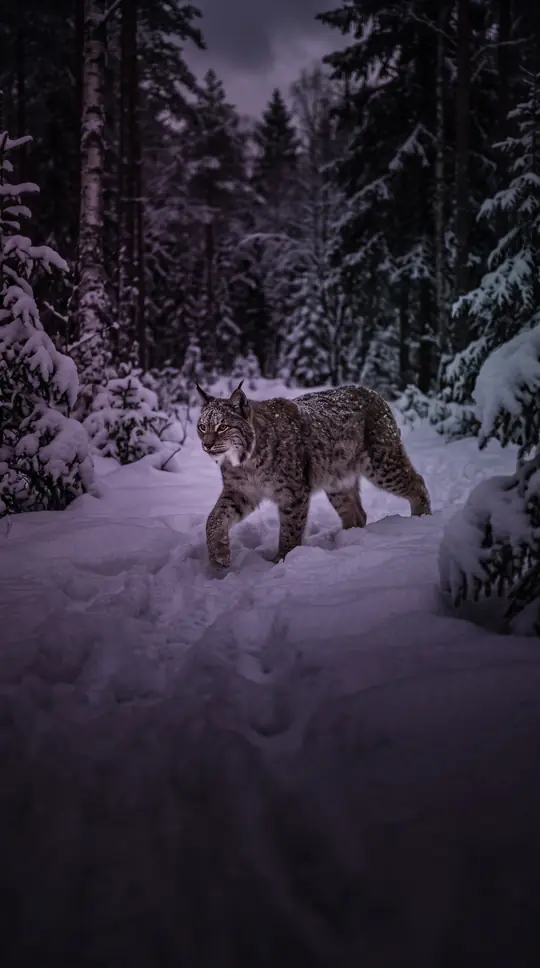
In short: Stranded on islands, animals can take surprising shapes. Dwarf elephants shrank, while mice and pigeons grew. Long debated, this pattern now has strong support from a large study of over a thousand vertebrate species, showing it is a general trend rather than a coincidence.
For decades, biologists have described a tendency called the island rule. Proposed in the 1960s and given its name in 1973, it says that when animals live apart from their mainland relatives, small species tend to grow larger and large species tend to grow smaller. Dwarf hippos and elephants that lived on Mediterranean islands about 10,000 years ago are often cited as shrinking examples, while the St Kilda field mouse, which grew to roughly double its mainland ancestor's size, and the dodo of Mauritius, a giant pigeon, show growth.
The debate arose because earlier studies gave conflicting results, leading some researchers to suspect that the famous examples were cherry-picked. A team including Imperial College London and Doñana Biological Station in Spain tested the idea using data from about 2,500 populations of more than 1,000 land animal species. They found that the island rule holds for mammals, birds and reptiles, and to a lesser extent for amphibians, which mostly tended towards gigantism.
The researchers also found that island size and isolation shape how strong the effect is. For mammals and reptiles, the changes were more pronounced on smaller, more remote islands. Climate and seasonality mattered too. Small mammals and birds grew larger on colder, harsher islands, apparently to conserve heat, while seasonal variation made food less predictable for reptiles, which pushed smaller species towards larger size.
Scientists offer explanations based on ecology. On islands, limited food and space may favour smaller body sizes in large animals, while fewer predators and less competition can release small animals from constraints on size. Researchers also note that the pattern is not uniform: large carnivores are often absent, and in some places birds or reptiles fill the predator role and grow large. Such results suggest that ecological processes, rather than coincidence, can explain many unusual outcomes on islands around the world.
Opens the Intellect+ feed with this card first. Swipe up for the next one.
Sources
- Summary by Intellect · source: Islands give rise to evolutionary giants and dwarfs | Imperial News | Imperial College London
- Also: Confirmed: Island gigantism and dwarfism result of evolutionary island rule
- Also: Island gigantism
To cite this card, link to https://intellectplus.co.uk/app/nature-island-gigantism.
How we source, check and correct cards: Editorial standards.
General information, not professional advice. Spotted an error? Flag the card or see corrections and complaints.
Intellect Plus is a visual educational discovery platform for exploring fascinating facts and ideas. Brain Food, Not Brain Rot. What is Intellect Plus?
Related
More in Arthropods · More in Nature · Latest · A–Z · All topics
