Why the long-finned pilot whale's tight-knit social structure became its greatest evolutionary vulnerability
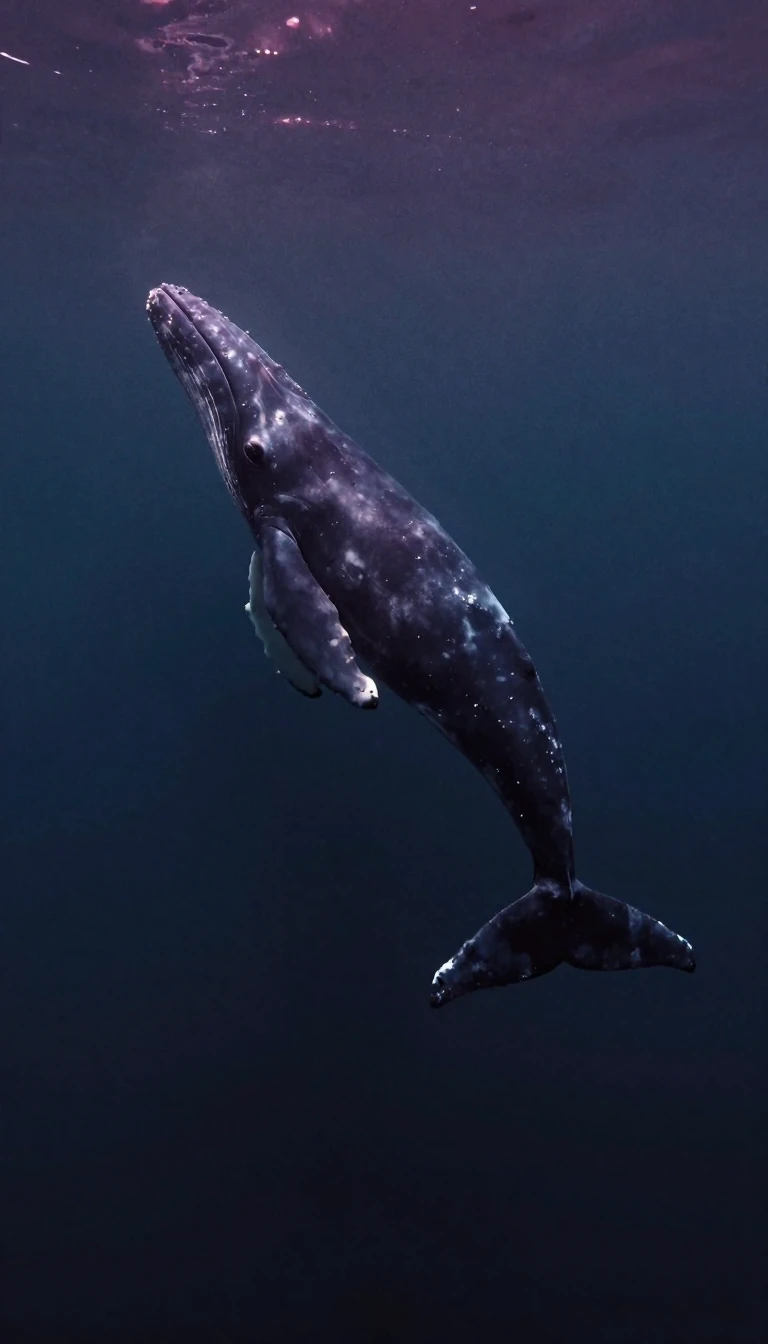
In short: Long-finned pilot whales live in highly cohesive, maternally based pods of up to 100 individuals. While this deep social bond helps them survive in the open ocean, it historically made them easy targets for whalers, who exploited their tendency to group together to herd them into fatal traps.
Long-finned pilot whales, or Globicephala melas, are robust, dark-colored oceanic dolphins characterized by a bulbous forehead known as a melon and long, sickle-shaped flippers. These animals are remarkably social, often gathering in groups of hundreds. Within these larger aggregations, they maintain close-knit pods of 20 to 100 individuals, which are primarily structured around maternal lineages. This social complexity is central to their biology, yet it has historically proven dangerous. During the 19th and 20th centuries, whalers in the North Atlantic capitalized on this behavior, driving and herding the whales into tight clusters to harpoon them for their blubber, oil, and meat.
Beyond their social nature, these whales are deep-diving specialists, capable of reaching depths of about 2,000 feet for up to 16 minutes. They primarily forage at night, targeting squid, octopus, and various fish like cod and mackerel. Their physical adaptations, including 16 to 26 peg-like teeth in each jaw, suggest an evolutionary focus on consuming soft-bodied prey. Despite their size—with females living at least 60 years and males reaching 35 to 45 years—they face modern threats beyond historical whaling. Entanglement in commercial fishing gear, such as gillnets and trawls, remains a significant danger, often leading to injury or drowning.
The species is also known for its involvement in mass strandings, a phenomenon researchers suspect may be linked to their intense social cohesion. While the exact causes of these events remain debated, some theories suggest that damage to their navigational sonar, potentially from anthropogenic noise pollution, plays a role. Their range is extensive, spanning temperate to subpolar waters across both hemispheres, though they are described as 'anti-tropical.' Because they are so similar to the short-finned pilot whale, distinguishing the two at sea is notoriously difficult, often requiring skull analysis to confirm the species. Today, these whales continue to navigate a changing ocean, balancing their ancient, group-dependent survival strategies against the pressures of human activity.
Opens the Intellect+ feed with this card first. Swipe up for the next one.
Sources
- Summary by Intellect · source: Long-Finned Pilot Whale
- Also: Pilot whale
To cite this card, link to https://intellectplus.co.uk/app/nature-pilot-whale.
How we source, check and correct cards: Editorial standards.
General information, not professional advice. Spotted an error? Flag the card or see corrections and complaints.
Intellect Plus is a visual educational discovery platform for exploring fascinating facts and ideas. Brain Food, Not Brain Rot. What is Intellect Plus?
Related
More in Organisms · More in Nature · Latest · A–Z · All topics
