Are the world's last wild horses actually the feral descendants of ancient domestic livestock?
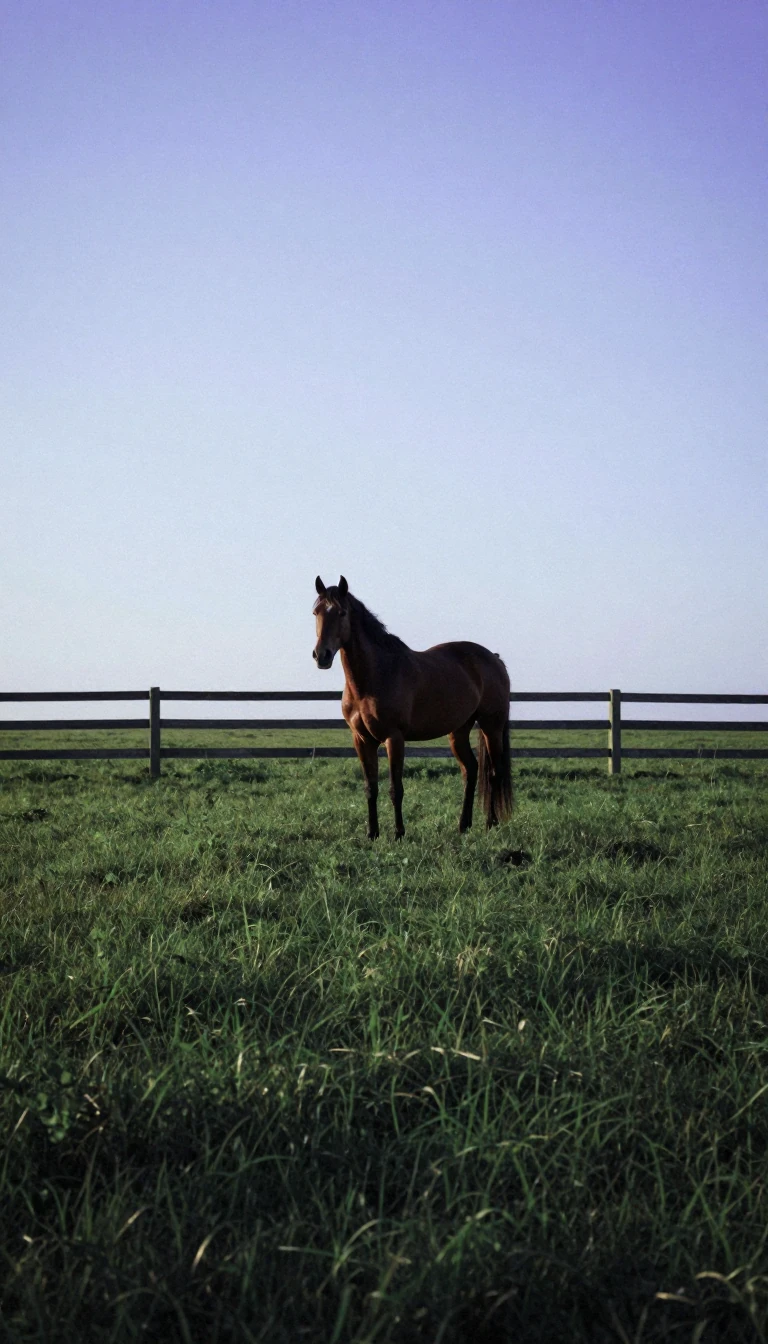
In short: Przewalski's horse was long considered the only truly wild horse, but genetic evidence has complicated this status. While they are distinct from modern domestic horses, some studies suggest they may be the feral descendants of the ancient Botai culture's domesticated animals, rather than a population that was never domesticated at all.
Przewalski's horse, or the takhi, is a stocky, dun-colored equine native to Central Asian steppes. It is genetically distinct from the modern domestic horse, possessing 33 chromosome pairs compared to the domestic horse's 32. This divergence occurred roughly 38,000 to 72,000 years ago, long before the domestication of horses began. Despite these differences, they can interbreed with domestic horses to produce fertile offspring.
The species' history is marked by a dramatic near-extinction. By the late 1960s, the last wild individual was observed in Mongolia, and the species was declared extinct in the wild for over three decades. The entire modern population descends from a tiny group of captives, as few as nine individuals following the devastation of World War II. This severe bottleneck significantly reduced their genetic diversity, though intensive international breeding programs have since helped the population recover.
The question of their 'wild' status remains a subject of intense scientific debate. A 2018 study suggested that modern takhis are the feral descendants of the 5,000-year-old Botai culture's horses, which were raised for meat and milk. However, other researchers argue that both the Botai horses and modern takhis might simply share a common wild ancestor. This uncertainty is compounded by the fact that the species was already rare and potentially pushed into marginal desert habitats by human pressure when it was first formally described by Ivan Semyonovich Polyakov in 1881.
Today, conservation efforts have successfully reintroduced the takhi to habitats in Mongolia, China, and parts of Europe, such as the Chernobyl Exclusion Zone. Following these successes, the IUCN reclassified the species from 'extinct in the wild' to 'endangered' by 2011. While their exact evolutionary path remains contested, the takhi stands as a testament to the power of managed breeding to pull a species back from the brink of total disappearance.
Opens the Intellect+ feed with this card first. Swipe up for the next one.
Sources
- Summary by Intellect · source: Przewalski's horse
To cite this card, link to https://intellectplus.co.uk/app/nature-przewalski-s-horse.
How we source, check and correct cards: Editorial standards.
General information, not professional advice. Spotted an error? Flag the card or see corrections and complaints.
Intellect Plus is a visual educational discovery platform for exploring fascinating facts and ideas. Brain Food, Not Brain Rot. What is Intellect Plus?
Related
More in Organisms · More in Nature · Latest · A–Z · All topics
