Are the horses roaming the American West actually wild, or just feral runaways?
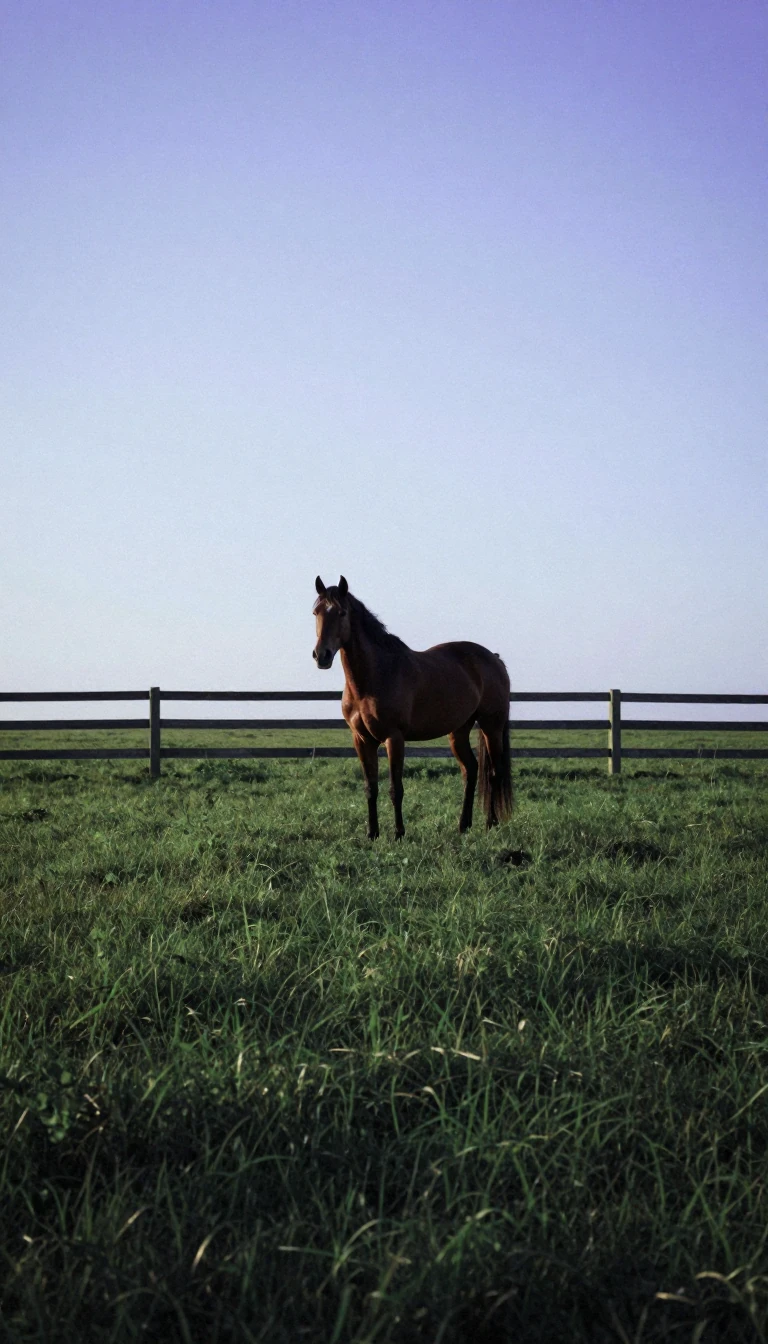
In short: Most horses we call wild are actually feral, meaning they are descendants of domesticated animals that escaped. True wild horses, which never underwent domestication, are vanishingly rare. The only subspecies to survive into modern times is the endangered Przewalski's horse, a distinct creature with a unique genetic makeup.
The definition of a wild horse is often confused with feral populations like the American mustang or the Australian brumby. These animals are members of the domestic horse subspecies, Equus ferus caballus, that have returned to an untamed state. In contrast, a truly wild horse is one that has never been domesticated. Historically, this group included the European tarpan, which went extinct in the early 20th century, and the Przewalski's horse, native to the steppes of Central Asia.
Przewalski's horse is biologically distinct from the domestic horse. While domestic horses and the extinct tarpan possess 64 chromosomes, Przewalski's horse has 66. This difference arises from a Robertsonian translocation, though the two groups can still produce fertile offspring. Genetic studies have further highlighted their uniqueness, revealing distinct Y-chromosome and mitochondrial DNA haplotypes. A 2015 study estimated that the lineages of Przewalski's and domestic horses diverged about 45,000 years ago.
The survival of Przewalski's horse has been a precarious journey. Once extinct in the wild, the species was saved through captive breeding and successful reintroduction programs in Mongolia. Despite their status, their history remains complex; a 2018 DNA study suggested that horses raised by the ancient Botai culture 5,500 years ago were Przewalski's horses, raising questions about whether modern populations are feral descendants of those early domesticated animals or separate lineages. Today, only about 2,000 individuals remain in zoos, with small, fragile populations living in the wild.
The taxonomy of these animals is a subject of ongoing debate. While the International Commission on Zoological Nomenclature mandated the use of Equus ferus for both wild and domestic horses if they are considered the same species, the classification of remains from the Pleistocene epoch continues to evolve. As researchers analyze ancient DNA and skeletal remains, our understanding of how these animals spread from North America across the Bering Land Bridge and adapted to diverse environments continues to be refined.
Opens the Intellect+ feed with this card first. Swipe up for the next one.
Sources
- Summary by Intellect · source: Wild horse
- Also: iNaturalist — Domestic Horse (Equus caballus) · CC BY-SA 4.0 (Wikipedia summary)
- Also: iNaturalist — Wild Horse (Equus ferus) · CC BY-SA 4.0 (Wikipedia summary)
To cite this card, link to https://intellectplus.co.uk/app/nature-wild-horse.
How we source, check and correct cards: Editorial standards.
General information, not professional advice. Spotted an error? Flag the card or see corrections and complaints.
Intellect Plus is a visual educational discovery platform for exploring fascinating facts and ideas. Brain Food, Not Brain Rot. What is Intellect Plus?
Related
More in Organisms · More in Nature · Latest · A–Z · All topics
