Honey is a bee's pantry, not a gift to humans
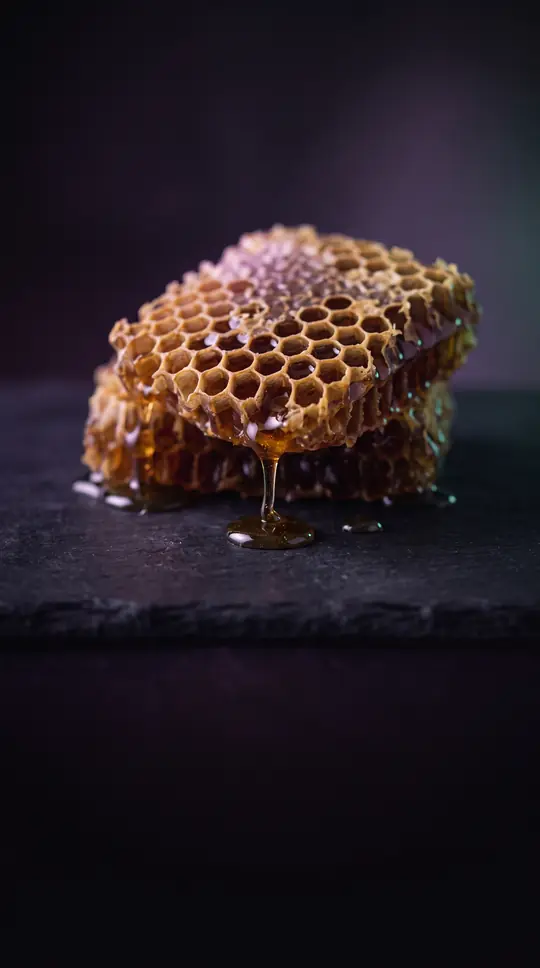
In short: Honeybees did not make honey for us. A colony stores it as concentrated energy, so it can keep flying, heating its nest and raising young when flowers are scarce. Bees turn watery nectar into honey through enzymes, repeated regurgitation and fanning. The result is a food that can stay edible for thousands of years.
Honey begins as nectar, a sugary liquid that flowers produce. Foraging honeybees sip it through a tube-like tongue called a proboscis and carry it in a honey stomach, a separate pouch from their regular stomach. Nectar from a flower is usually 70 to 80 percent water. Along the way, enzymes from the bee begin breaking complex sugars into simpler ones, which makes the liquid easier to store and digest.
Most of the work happens back at the hive. Returning foragers pass nectar to house bees, which chew and regurgitate it repeatedly, forming bubbles that give it a large surface area. Some of the water evaporates into the warm air of the hive. Bees also fan their wings over the cells to speed this up. The honey then reaches a storage moisture level of roughly 18 percent, and the bees seal the cell with wax. At higher water content, yeasts could grow and ferment the sugars, so the drying step is essential.
Colonies need the stored honey because winter is hard. Honeybees stay active in cold months, when few flowers bloom, and they rarely leave the hive. A cluster of bees shivers its flight muscles to generate heat, and that activity burns sugar. Honey also fuels flight, nursing and brood care. Honeybees are among the few insects in temperate regions that stay active through winter, which makes this stockpile far more important to them than it is to most other insects.
Not every bee stores honey in the same way. Honeybees keep large shared reserves in wax combs, while bumblebees keep smaller stores and solitary bees provision individual cells. Some stingless bees store honey in wax and resin pots. Honey is also remarkably durable: its low moisture, high sugar content and acidity make it hard for microbes to grow, and archaeologists have found edible honey thousands of years old. Its value to the colony is survival, and its value to people is a happy side effect.
Opens the Intellect+ feed with this card first. Swipe up for the next one.
Sources
- Summary by Intellect · source: What is honey and why do bees make it? | Natural History Museum
- Also: Why Bees Make Honey: Uncovering the Science Behind It - Beekeeper Corner
- Also: Why Do Bees Make Honey? The Real Reason Bees Produce Honey - Hive To Honey Why Do Bees Make Honey? The Real Biological Reason
- Also: Honey
To cite this card, link to https://intellectplus.co.uk/app/nature-why-do-bees-make-honey.
How we source, check and correct cards: Editorial standards.
General information, not professional advice. Spotted an error? Flag the card or see corrections and complaints.
Intellect Plus is a visual educational discovery platform for exploring fascinating facts and ideas. Brain Food, Not Brain Rot. What is Intellect Plus?
Related
More in Nature · Latest · A–Z · All topics
