Hidden among the shifting sands of China are the world's tallest stationary dunes.
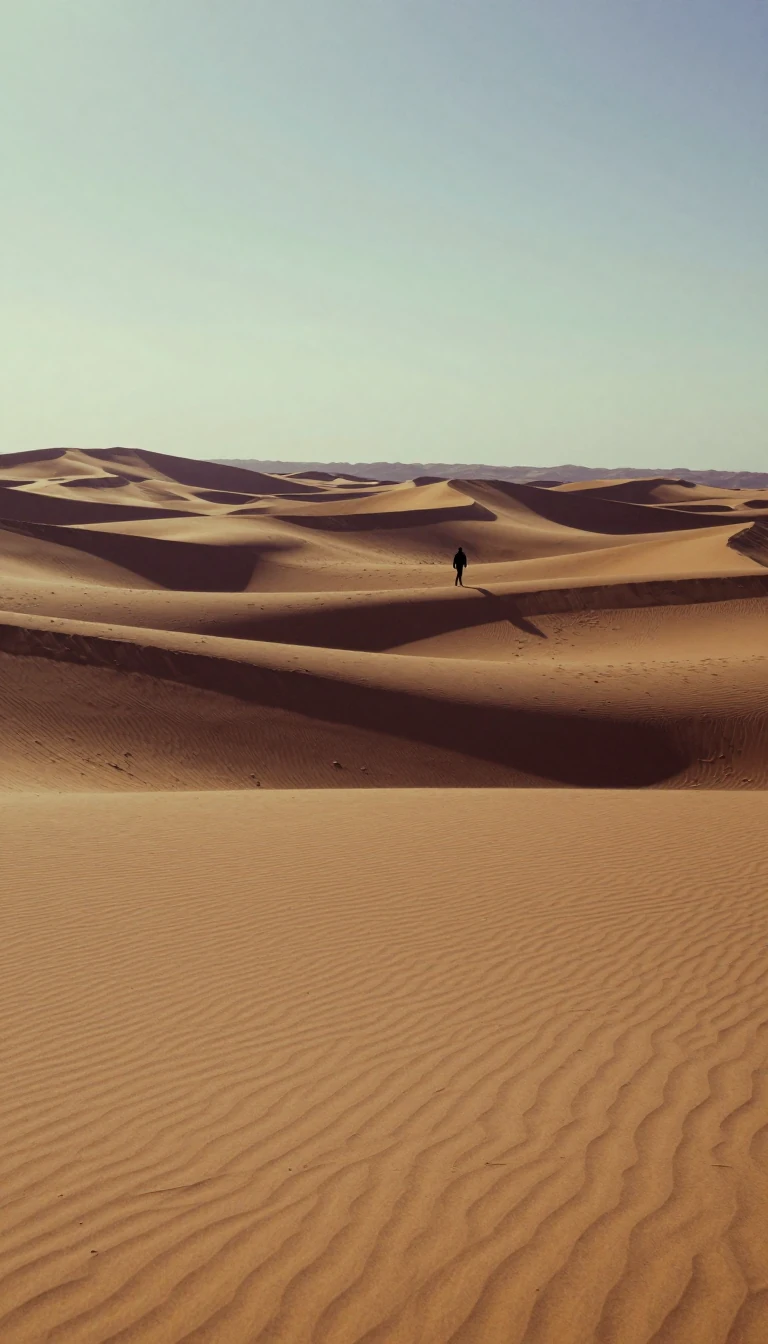
In short: The Badain Jaran Desert is a landscape of extremes, home to megadunes reaching 500 meters in height and over 140 mysterious, spring-fed lakes. Despite the arid climate, these massive sand structures remain fixed in place, creating a rare environment where singing sands rumble and ancient history lies buried beneath the surface.
Spanning 49,000 square kilometers across Gansu, Ningxia, and Inner Mongolia, the Badain Jaran is China's third-largest desert. Its most striking features are the stationary megadunes, which defy the typical shifting nature of desert landscapes. While smaller dunes move with the wind, the larger ones—often exceeding 200 meters—have been compacted for over 20,000 years. This hardening, combined with high internal moisture, creates a rigid structure capable of supporting peaks, gullies, and caves.
The desert's name, Mongolian for "mysterious lakes," refers to the more than 140 bodies of water scattered throughout its valleys. These lakes, ranging from fresh to extremely saline, are likely sustained by underground streams fed by mountain runoff. Some lakes exhibit dramatic color shifts due to algae, brine shrimp, and mineral deposits. This unique hydrology supports a fragile ecosystem of vegetation, camels, goats, and horses, while also providing a backdrop for the 1868 Badain Jaran Temple, which survived the Cultural Revolution due to its extreme isolation.
Beyond its geography, the desert holds complex human and acoustic histories. The "singing sand" phenomenon occurs on leeward slopes during dry summer months, where electrostatic charges can generate rumbles exceeding 105 decibels. Historically, the region hosted the Tangut empire's center, founded in 1032, before falling to Ming dynasty forces in 1372. More recently, the desert's edge became the site of the Jiabiangou Labor Camp. Between 1957 and 1961, the camp held intellectuals during the Anti-Rightist Movement; of the 3,000 prisoners, 2,500 perished during the Great Chinese Famine, leaving a somber legacy that remains heavily guarded by the government today.
Opens the Intellect+ feed with this card first. Swipe up for the next one.
Sources
- Summary by Intellect · source: Badain Jaran Desert
- Also: Wikidata — Badain Jaran Desert · CC0
To cite this card, link to https://intellectplus.co.uk/app/places-badain-jaran-desert.
How we source, check and correct cards: Editorial standards.
General information, not professional advice. Spotted an error? Flag the card or see corrections and complaints.
Intellect Plus is a visual educational discovery platform for exploring fascinating facts and ideas. Brain Food, Not Brain Rot. What is Intellect Plus?
Related
More in World Heritage Sites · More in Countries & Cities · Latest · A–Z · All topics
