The black panther is not a distinct species but a melanistic color variant
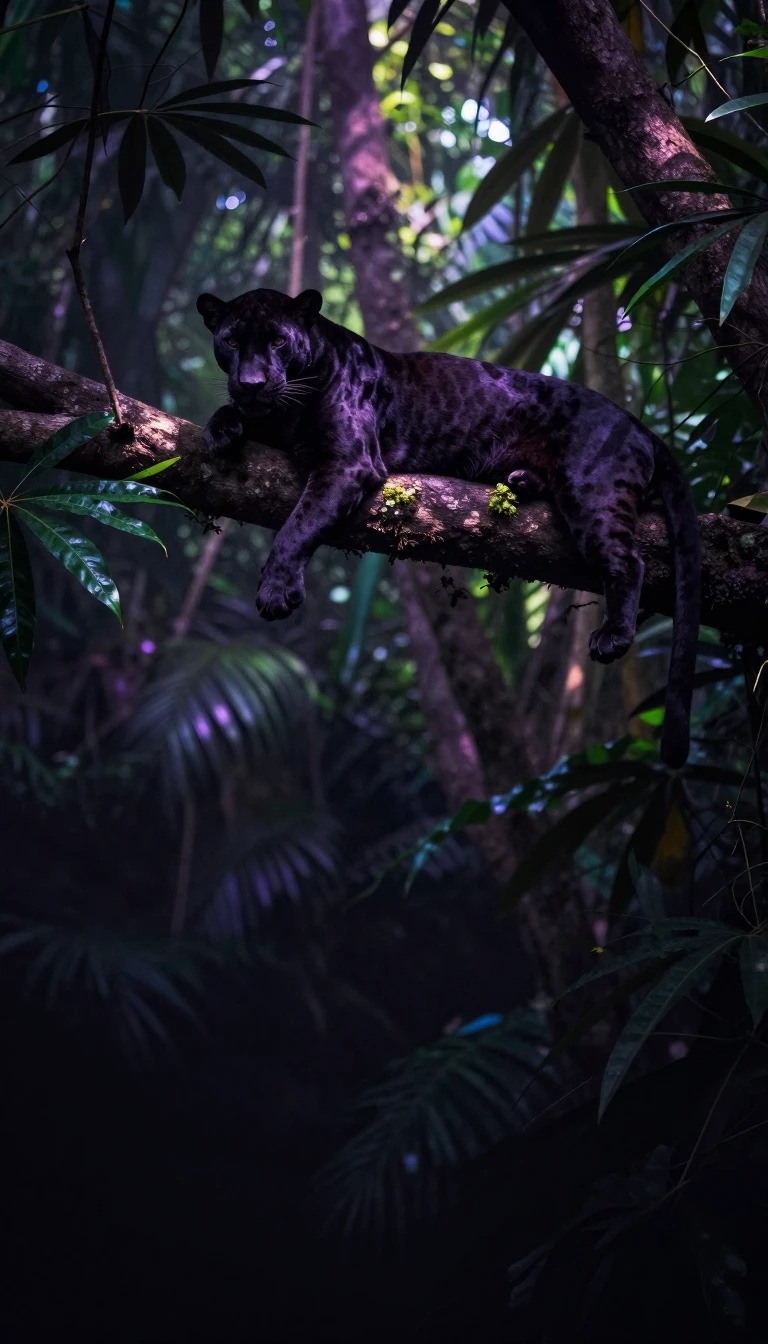
In short: The term black panther describes a striking genetic phenomenon rather than a unique animal. Whether it is a leopard in Africa or Asia, or a jaguar in the Americas, these cats carry excess pigment that hides their rosettes. Understanding this camouflage reveals how evolution favors dark coats in dense forests.
A black panther is defined by melanism, a condition where excess dark pigment obscures the animal's typical spotted coat. While the rosettes remain present, they are often invisible to the naked eye. This trait appears in two distinct species: the leopard, found across Africa and Asia, and the jaguar, native to Central and South America. The genetic mechanisms driving this are different for each; in leopards, melanism is conferred by a recessive allele, whereas in jaguars, it is driven by a dominant allele.
The prevalence of these dark-coated cats is not uniform. Research suggests that melanism occurs in approximately 11% of the global leopard population. These individuals are most frequently documented in tropical and subtropical moist broadleaf forests. Scientists hypothesize that this coloration provides a selective advantage in low-light, dense environments, where the dark coat offers superior camouflage. Some preliminary studies even suggest that the genetic mutations responsible for melanism might be linked to beneficial adaptations within the feline immune system.
Historical documentation of these animals dates back centuries. In 1788, a black leopard from Bengal was recorded at the Tower of London, and by the late 19th century, observers in India frequently noted both spotted and black cubs appearing in the same litter. Today, camera trap data provides a more precise look at their distribution. For instance, studies in Peninsular Malaysia between 1996 and 2009 showed that most leopards recorded south of the Kra Isthmus were black, indicating a near-fixation of the trait in that region. Conversely, there is no scientific evidence for the existence of a melanistic cougar, despite persistent folklore surrounding the so-called North American black panther.
Because the taxonomic status of captive black leopards is often uncertain, they are typically excluded from coordinated breeding programs in Western zoos. Their presence in these facilities is sometimes viewed as occupying space that could otherwise be used for breeding endangered leopard subspecies. As a result, the study of these cats relies heavily on wild sightings and camera trap monitoring in their native habitats, from the forests of Brazil to the mountains of Nepal.
Opens the Intellect+ feed with this card first. Swipe up for the next one.
Sources
- Summary by Intellect · source: Black panther
- Also: Wikidata — Black Panther · CC0
- Also: Wikidata — Black Panther · CC0
To cite this card, link to https://intellectplus.co.uk/app/places-black-panther.
How we source, check and correct cards: Editorial standards.
General information, not professional advice. Spotted an error? Flag the card or see corrections and complaints.
Intellect Plus is a visual educational discovery platform for exploring fascinating facts and ideas. Brain Food, Not Brain Rot. What is Intellect Plus?
Related
More in Countries and other regions · More in Countries & Cities · Latest · A–Z · All topics
