Why are there so many small villages but so few large cities?
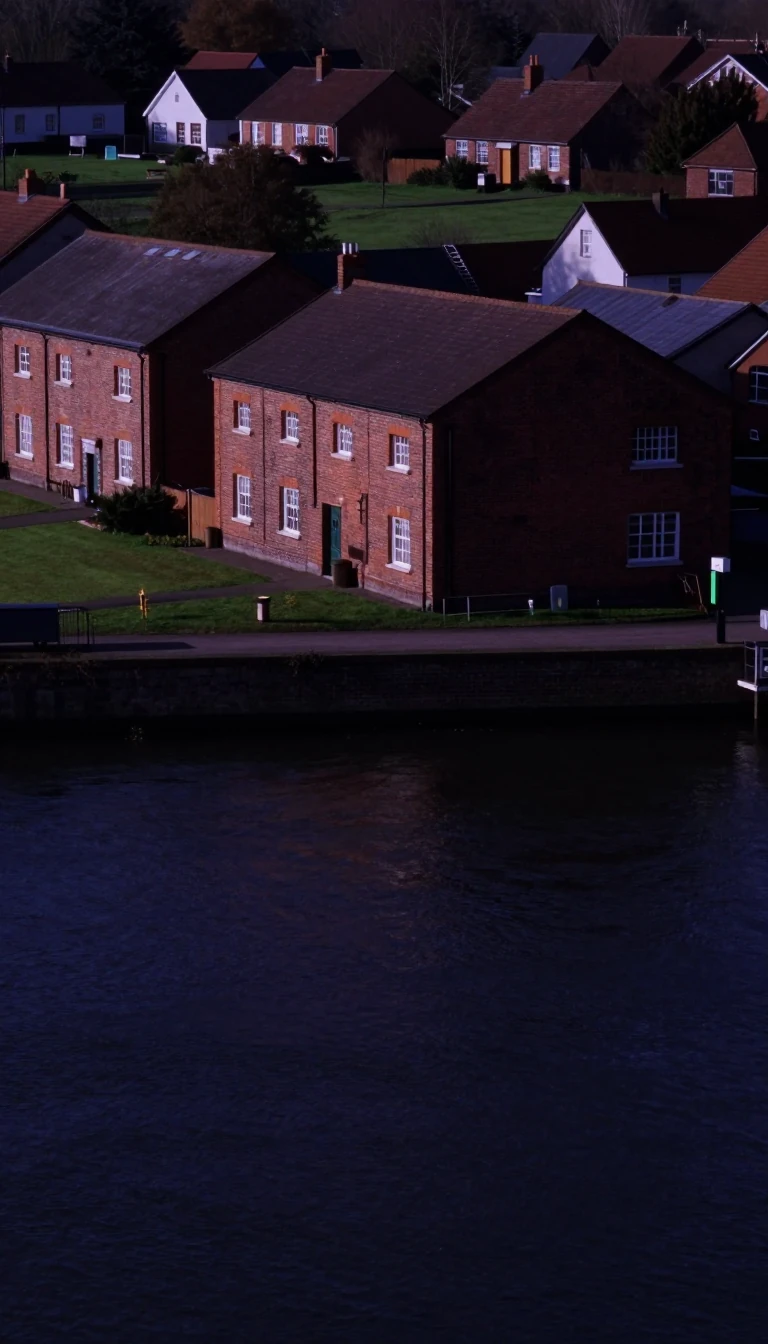
In short: Central-place theory explains the logic behind our urban landscape. By analyzing how settlements provide goods and services, geographers can predict why towns are spaced the way they are, why cities are rare, and how the distance you travel for a loaf of bread differs from your journey for jewelry.
Introduced by German geographer Walter Christaller in his 1933 book Central Places in Southern Germany, central-place theory provides a framework for understanding the size, number, and distribution of settlements. At its core, the theory posits that the primary function of a town is to act as a central place, providing goods and services to a surrounding market area. These settlements form a hierarchy: lower-order places, such as hamlets or villages, provide frequently purchased goods, while higher-order places, like cities, offer specialized services that are less frequently required.
The theory relies on two fundamental concepts: threshold and range. The threshold is the minimum market area—in terms of population or income—required to make a business economically viable. The range is the maximum distance a consumer is willing to travel to obtain a specific good. Because consumers act rationally to minimize travel costs, they visit the nearest location that offers the desired service. This behavior dictates that higher-order places, which require larger thresholds, are fewer in number and spaced further apart than lower-order places.
Christaller’s model assumes a uniform, flat plane with constant population density and equal purchasing power, where transportation is equally easy in all directions. To maximize efficiency without market overlap, he proposed that these settlements would organize into a triangular-hexagonal lattice. Later, in 1940, German economist August Lösch expanded this work in The Spatial Organization of the Economy, mathematically deriving various systems that allowed for specialized places and richer areas. While American geographers like Edward Ullman introduced these ideas to the United States in 1941, empirical research in places like Iowa and Wisconsin has shown that real-world geography only approximates these idealized theoretical conditions.
Opens the Intellect+ feed with this card first. Swipe up for the next one.
Sources
- Summary by Intellect · source: Central-place theory | Urban Planning, Geography & Economics | Britannica Money
- Also: Central place theory
To cite this card, link to https://intellectplus.co.uk/app/places-central-place-theory.
How we source, check and correct cards: Editorial standards.
General information, not professional advice. Spotted an error? Flag the card or see corrections and complaints.
Intellect Plus is a visual educational discovery platform for exploring fascinating facts and ideas. Brain Food, Not Brain Rot. What is Intellect Plus?
Related
More in Basics · More in Countries & Cities · Latest · A–Z · All topics
