Why do some towns stretch for miles instead of clustering around a central square?
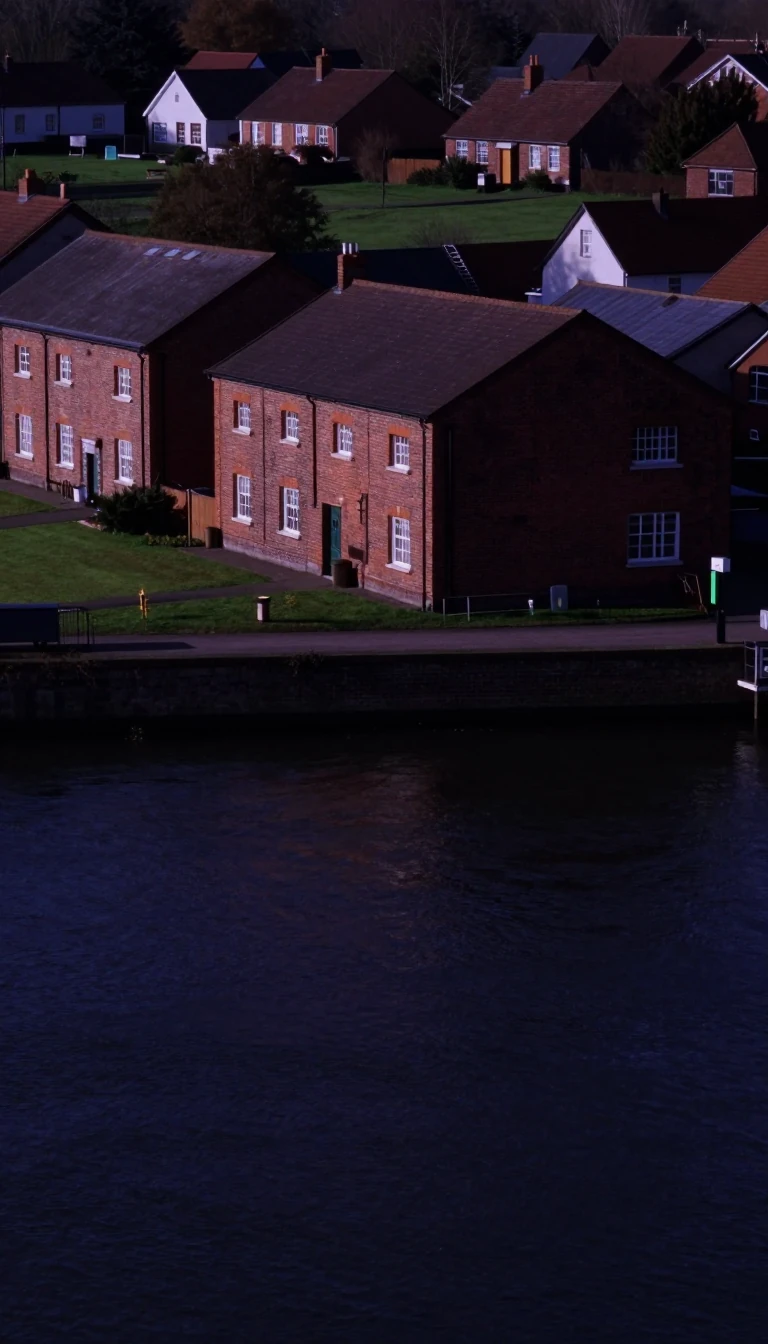
In short: Most towns grow around a central hub, but linear settlements defy this norm by stretching along a single axis. Whether shaped by the path of a river or the constraints of a valley, these elongated communities offer a unique alternative to the traditional, compact village structure we see today.
A linear settlement is defined by its long, narrow configuration, often lacking a distinct center. These settlements typically emerge along transport corridors like roads, railways, canals, or rivers, where the route existed before the houses were built. In some instances, physical geography forces this shape, as seen when villages are squeezed between coastlines, mountains, or steep valleys. While often small or medium-sized, these settlements can evolve; for example, Mileham in England represents a classic single-street pattern, while Southport demonstrates how such a layout can eventually expand with side streets and new districts.
The distinction between a linear settlement and other urban forms is crucial. Unlike a nucleated settlement, where buildings cluster tightly around a central point, linear settlements prioritize length. They also differ from ribbon development, which refers to the outward, unplanned spread of an existing town along a main road. Various cultures have developed specific terms for these layouts, such as the German Straßendorf or the Polish ulicówka. A striking modern example is Sułoszowa, Poland, where 3,500 residents live along a single street stretching nine kilometers, flanked by thin strips of farmland.
Beyond organic growth, planners have long proposed linear designs for new cities. Visionaries like Arturo Soria y Mata, and later Michael Graves and Peter Eisenman, championed the linear city concept, a vision echoed in contemporary projects like Saudi Arabia's The Line and Madrid's Ciudad Lineal district. However, these top-down designs face significant criticism. Skeptics argue that such models rely on a simplistic view of urban development, often ignoring the complex human factors that drive city life. Critics suggest that these rigid, elongated structures can lead to inherent inefficiencies and restricted growth potential, highlighting the tension between geometric planning and the organic, unpredictable nature of human habitation.
Opens the Intellect+ feed with this card first. Swipe up for the next one.
Sources
- Summary by Intellect · source: Linear settlement
- Also: Wikidata — linear settlement · CC0
To cite this card, link to https://intellectplus.co.uk/app/places-linear-settlement.
How we source, check and correct cards: Editorial standards.
General information, not professional advice. Spotted an error? Flag the card or see corrections and complaints.
Intellect Plus is a visual educational discovery platform for exploring fascinating facts and ideas. Brain Food, Not Brain Rot. What is Intellect Plus?
Related
More in Urban studies and planning · More in Countries & Cities · Latest · A–Z · All topics
