The Great Rift Valley is a tectonic masterpiece shaping Kenya's landscape and history
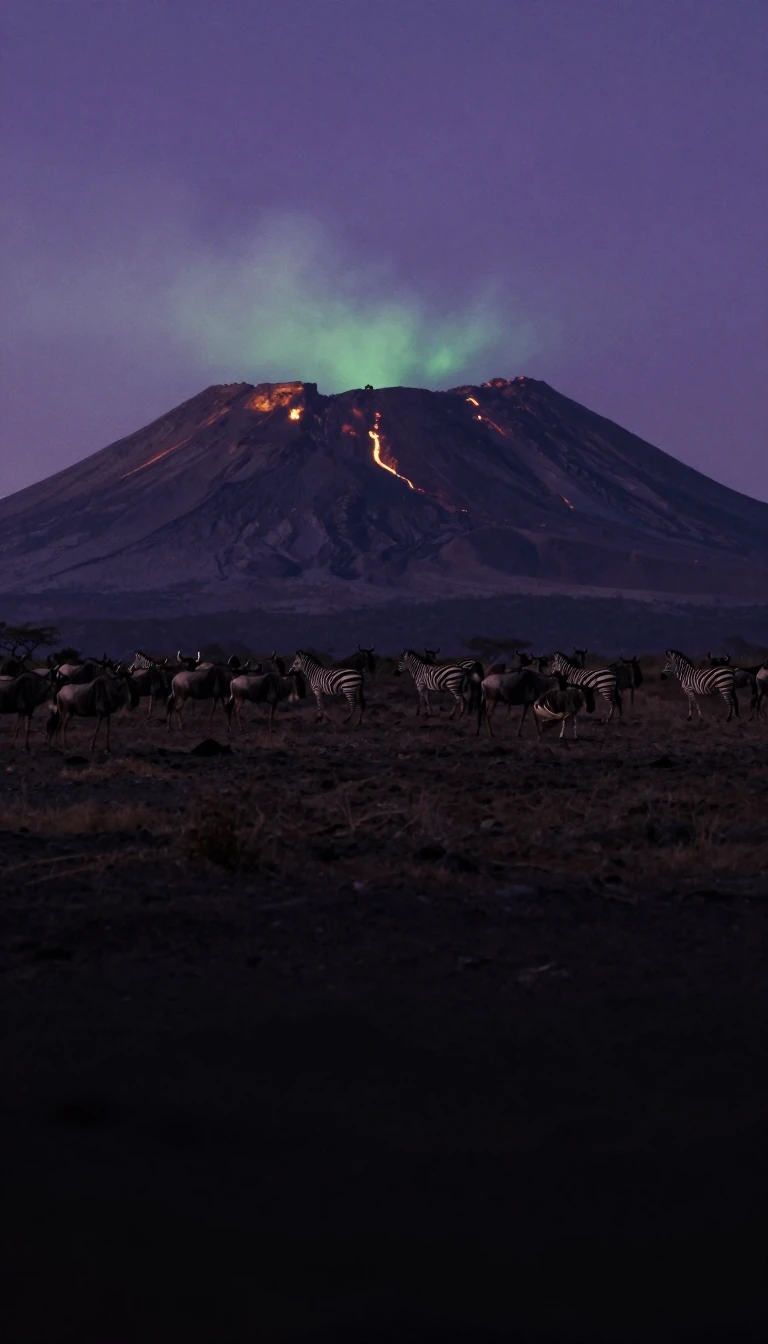
In short: Carved by the collision of three massive tectonic plates, Kenya's Great Rift Valley is a dramatic scar across the continent. This geological depression hosts active volcanoes, alkaline lakes, and ancient hominid fossils, serving as both a cradle for human ancestors and a vital sanctuary for diverse migratory bird populations.
The valley emerged from the Kenyan Dome, a vast geographical uplift driven by the interaction of the Arabian, Nubian, and Somali tectonic plates. Stretching north to south, this region is defined by towering escarpments and a floor punctuated by shield volcanoes. Some of these volcanic features remain active, while others, like the Menengai caldera, formed roughly 8,000 years ago. The landscape is not merely geological; it is a historical archive. In the Tugen Hills, lava flows have preserved fossils dating back 14 to 4 million years, offering a rare glimpse into the evolution of early human ancestors.
Water defines the valley's character, with eight primary lakes forming a unique chain. While Lake Baringo and Lake Naivasha contain fresh water, most others are shallow and alkaline, creating specialized habitats. These waters are rich in blue-green algae, which sustain vast populations of crustaceans and insect larvae. This food source attracts massive flocks of flamingos, whose feeding habits—such as probing the mud and trampling silt—actively reshape the lakeside topography. The Kenya Lake System, comprising Lake Bogoria, Lake Nakuru, and Lake Elmenteita, is a critical node on the West Asian-East African Flyway, supporting thirteen globally threatened bird species.
Beyond its ecological significance, the valley is a site of intense natural activity and resource wealth. Geothermal energy is evident at sites like Paka, and recent volcanic eruptions near Hell's Gate have left ash deposits less than a century old. Economically, the region is productive; Lake Magadi has supported trona mining for nearly a century, yielding approximately 250,000 metric tonnes annually. Meanwhile, the Kerio Valley holds significant fluorite deposits, and areas near Lake Baringo have yielded precious stones like rubies and pink sapphires. From the steep Mau Escarpment to the arid Suguta Mud Flats, the valley remains a dynamic, evolving environment.
Opens the Intellect+ feed with this card first. Swipe up for the next one.
Sources
- Summary by Intellect · source: Great Rift Valley, Kenya
- Also: Wikidata — Kenya Lake System in the Great Rift Valley · CC0
To cite this card, link to https://intellectplus.co.uk/app/places-great-rift-valley-kenya.
How we source, check and correct cards: Editorial standards.
General information, not professional advice. Spotted an error? Flag the card or see corrections and complaints.
Intellect Plus is a visual educational discovery platform for exploring fascinating facts and ideas. Brain Food, Not Brain Rot. What is Intellect Plus?
Related
More in World Heritage Sites · More in Countries & Cities · Latest · A–Z · All topics
