How China Built the World’s Longest High-Speed Rail Network in Two Decades
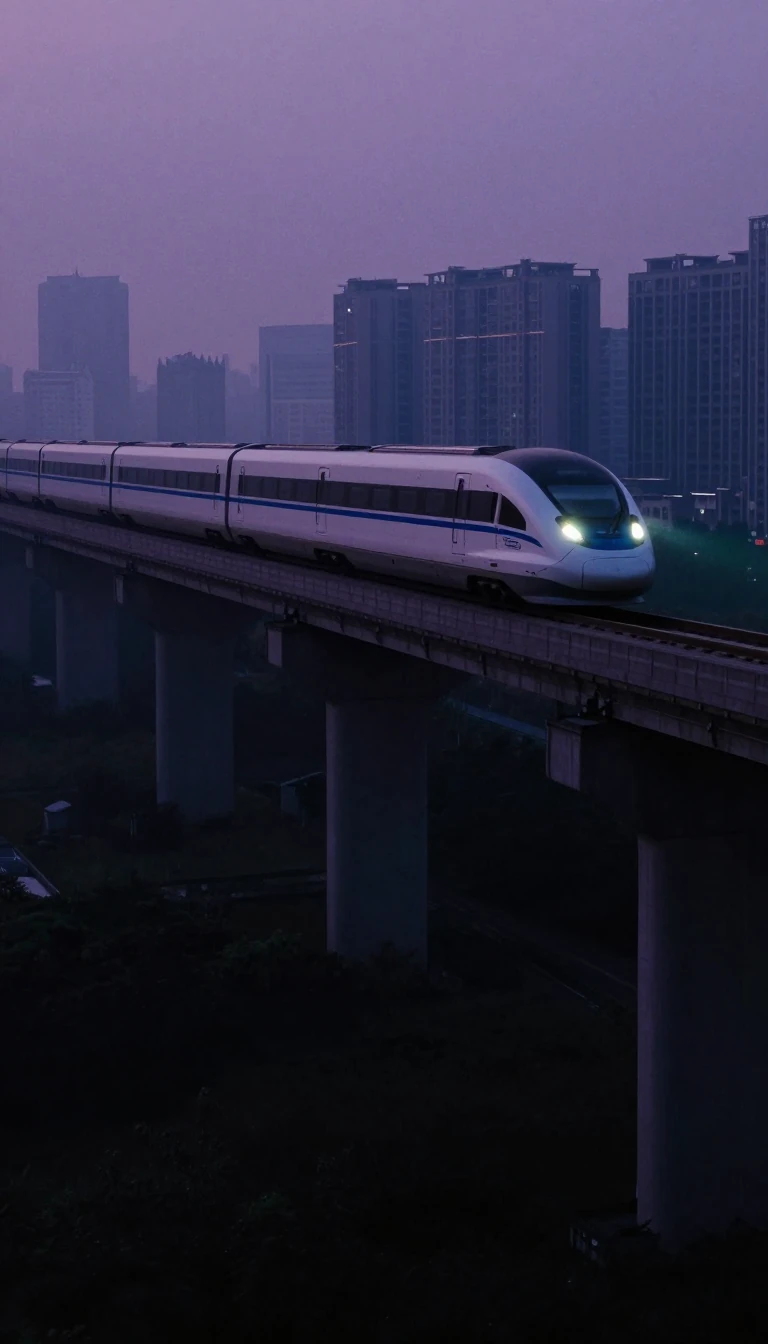
In short: China’s high-speed rail network spans over 50,000 kilometers, accounting for roughly two-thirds of the global total. This massive infrastructure feat, which connects every provincial-level division, was not merely a construction project but a strategic masterclass in technology transfer, domestic innovation, and the rapid evolution of national industrial policy.
The foundation of China's high-speed rail (HSR) network was laid in the 1990s, following Deng Xiaoping’s 1978 visit to Japan, where he was inspired by the Shinkansen. By 2004, the State Council officially prioritized conventional track technology over maglev for the national backbone. This decision followed a period of intense debate regarding economic viability and the potential for domestic industrial growth. To avoid relying solely on foreign imports, the Ministry of Railways mandated that international partners transfer advanced technology to local joint ventures.
Between 2004 and 2007, China secured expertise from global leaders like Alstom, Siemens, Bombardier, and Kawasaki. These companies provided the blueprints for the 'Hexie Hao' (Harmony) series, which served as the initial fleet. However, Chinese manufacturers quickly moved toward self-sufficiency. By 2008, firms like CSR began producing independently designed models, such as the CRH2B and CRH2C, leading to the development of the 'Fuxing Hao' (Rejuvenation) franchise, which utilizes indigenous technology to achieve speeds of 350 km/h. This transition allowed China to secure patents for internal components, though these remain valid only domestically.
Today, the system relies on advanced ballastless tracks—solid concrete slabs that reduce maintenance and improve stability. While the Shanghai Maglev remains the world's fastest commercial train at 431 km/h, its high cost and lack of technology sharing limited its expansion. Instead, China has focused on standard-gauge, passenger-dedicated lines. With the 2023 opening of the Whoosh line in Indonesia, China has transitioned from a technology importer to a global exporter, positioning its rail infrastructure as a competitive alternative to established European and Japanese suppliers.
Opens the Intellect+ feed with this card first. Swipe up for the next one.
Sources
- Summary by Intellect · source: High-speed rail in China
- Also: Wikidata — high-speed rail in China · CC0
To cite this card, link to https://intellectplus.co.uk/app/places-high-speed-rail-in-china.
How we source, check and correct cards: Editorial standards.
General information, not professional advice. Spotted an error? Flag the card or see corrections and complaints.
Intellect Plus is a visual educational discovery platform for exploring fascinating facts and ideas. Brain Food, Not Brain Rot. What is Intellect Plus?
Related
More in Cities · More in Countries & Cities · Latest · A–Z · All topics
