How China built the world's largest high-speed rail network in under two decades
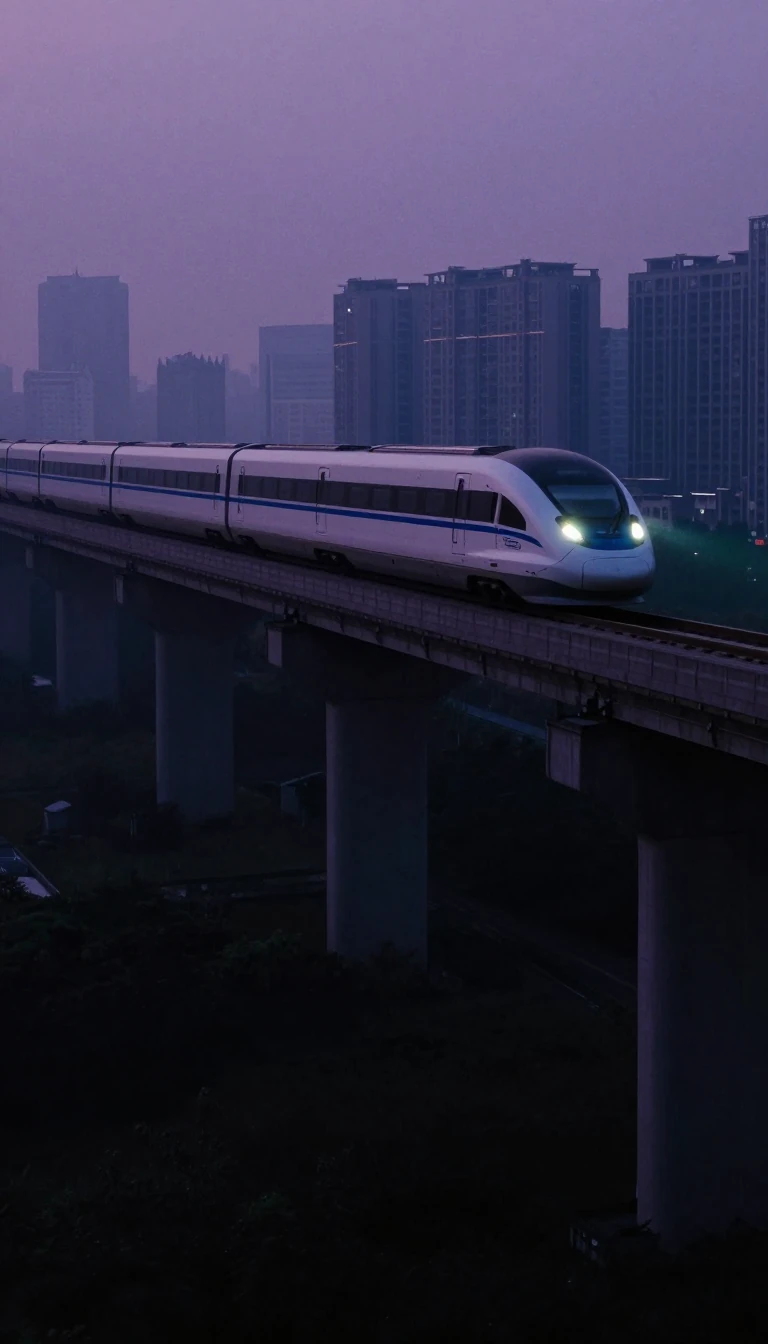
In short: China Railway High-speed transformed national transit, growing from its 2007 debut to a massive network spanning nearly 40,000 kilometers. By blending imported technology with indigenous innovation, China created the world's most utilized rail system, delivering billions of passenger trips annually while pushing the boundaries of commercial train speed and design.
The China Railway High-speed (CRH) system officially launched on April 18, 2007, as part of a national speedup initiative. By the end of 2020, the network reached just under 38,000 kilometers, representing roughly two-thirds of all high-speed rail tracks in global commercial service. With ambitious expansion plans, China aims to extend this infrastructure to 70,000 kilometers by 2035. The system is exceptionally busy, recording 2.29 billion trips in 2019 and 2.16 billion in 2020, bringing the cumulative total to 13 billion trips by the end of 2020.
Early development relied on technology transfers from foreign manufacturers, resulting in the 'Hexie' (Harmony) brand. Trains like the CRH1, derived from Bombardier’s Regina, and the CRH2, based on Japan’s Shinkansen E2-1000, formed the backbone of the fleet. While China secured domestic patents for internal modifications to boost speeds, these were limited to national borders. This intellectual property constraint hindered international exports, prompting the creation of the 'Fuxing' (Rejuvenation) brand, which utilizes fully indigenous technologies.
The network categorizes trains by speed, with G and some C-series trains reaching 350 km/h, while D-series trains typically operate at 250 km/h. While test sets like the CRH380BL have reached speeds of 487.3 km/h, practical constraints—including maintenance costs, passenger comfort, and safety—keep commercial operations capped at 350 km/h. Beyond standard daytime travel, the system also incorporates specialized sleeper EMU services, such as the 'Panda' CRH5E, which features Wi-Fi and berths that convert into seats, demonstrating the system's focus on long-haul convenience.
The network continues to evolve, with the CR200J entering service in 2019 to replace older locomotive-hauled trains. As the dedicated high-speed passenger network matures, service is increasingly shifting away from upgraded conventional lines toward dedicated high-speed tracks. This transition marks a shift from the early reliance on retrofitted infrastructure to a sophisticated, purpose-built rail ecosystem that serves as the backbone of modern Chinese transit.
Opens the Intellect+ feed with this card first. Swipe up for the next one.
Sources
- Summary by Intellect · source: China Railway High-speed
- Also: Wikidata — China Railway High-speed · CC0
To cite this card, link to https://intellectplus.co.uk/app/sport-china-railway-high-speed.
How we source, check and correct cards: Editorial standards.
General information, not professional advice. Spotted an error? Flag the card or see corrections and complaints.
Intellect Plus is a visual educational discovery platform for exploring fascinating facts and ideas. Brain Food, Not Brain Rot. What is Intellect Plus?
Related
More in Specific transportation systems · More in Sport & Games · Latest · A–Z · All topics
