Why did prehistoric artists paint deep inside a cave they never actually lived in?
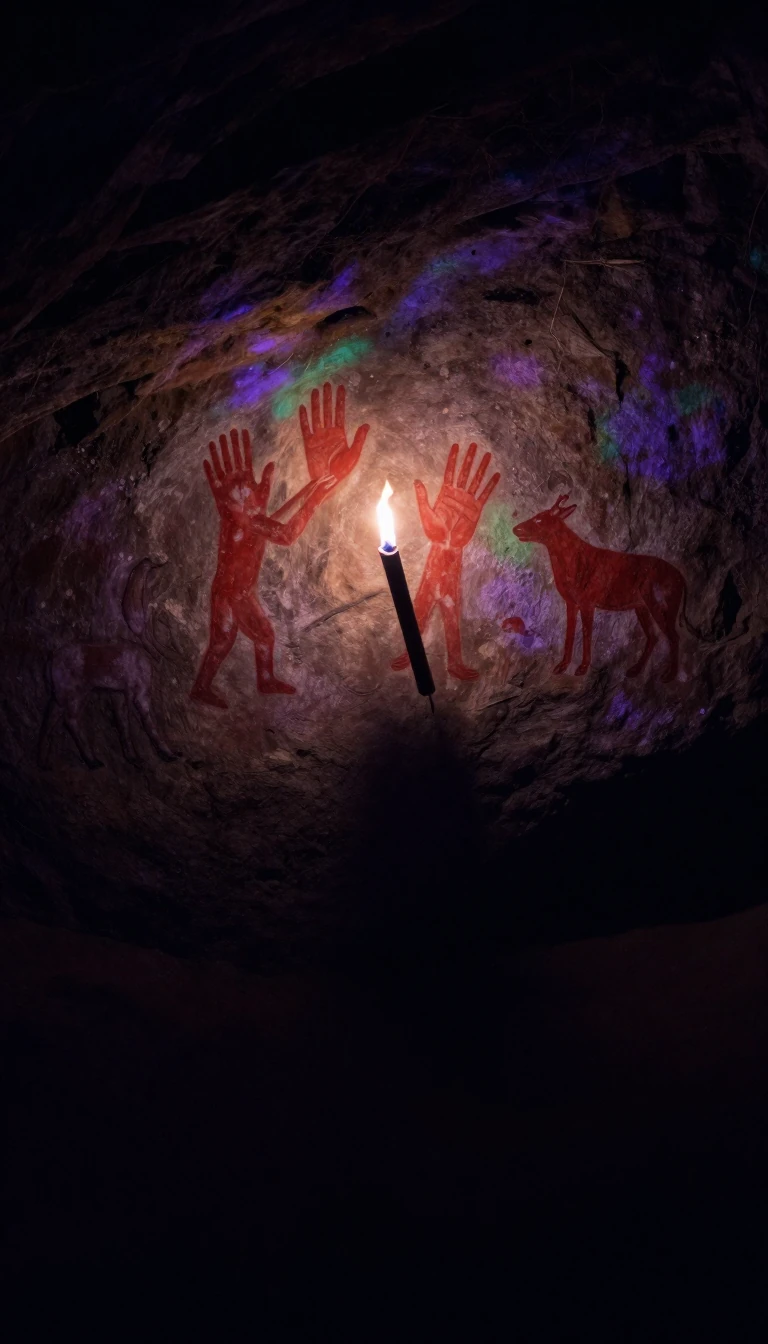
In short: Discovered by a teenager and his dog in 1940, the Lascaux cave contains nearly 6,000 prehistoric figures. While these paintings are world-famous, the cave was never a home. Instead, it served as a mysterious canvas for generations of artists who used scaffolding to reach ceilings, leaving behind enigmatic, haunting animal imagery.
Located in southwestern France, the Lascaux cave complex features over 600 wall paintings and thousands of engravings created during the early Magdalenian period, estimated between 17,000 and 22,000 years ago. The site is renowned for its sophisticated use of perspective, such as the 'Crossed Bison' in the Nave, which employs overlapping limbs to suggest depth. Despite the artistic mastery, the cave contains no depictions of the surrounding landscape or the reindeer that provided the artists' primary food source, suggesting the imagery was symbolic rather than documentary.
The purpose of these works remains a subject of intense academic debate. Structuralist theories, such as those proposed by André Leroi-Gourhan in 1965, suggest the cave was organized into a sanctuary based on masculine and feminine dualities. Other researchers, including David Lewis-Williams and Jean Clottes, draw parallels to the San people of Southern Africa, theorizing that the paintings represent spiritual visions experienced during ritualistic trances. Some experts even suggest that geometric patterns found alongside the animals mimic the hallucinations caused by sensory deprivation, potentially marking the very origin of human image-making.
Since its opening to the public in 1948, the cave has faced severe conservation crises. By 1955, the heat and humidity from 1,200 daily visitors caused visible degradation, leading to the cave's closure in 1963. Subsequent attempts to manage the environment, including new air conditioning systems, inadvertently triggered fungal infestations like Fusarium solani and the uniquely named Scolecobasidium lascauxense. Today, the original site is strictly monitored, with access limited to a few experts. To share this heritage, France has developed a series of high-fidelity replicas, culminating in Lascaux IV, which provides a full-scale reproduction of the entire cave system for the public.
The legacy of Lascaux extends beyond archaeology into the modern imagination. When Pablo Picasso visited the site in the mid-20th century, he famously remarked that humanity had 'learned nothing in twelve thousand years.' This sentiment reflects the enduring power of the art, which continues to inspire everything from symphonies to international scientific symposia dedicated to preserving the fragile remnants of our ancestors' creative lives.
Opens the Intellect+ feed with this card first. Swipe up for the next one.
Sources
- Summary by Intellect · source: Lascaux
- Also: Wikidata — Lascaux · CC0
- Also: Wikidata — Lascaux · CC0
To cite this card, link to https://intellectplus.co.uk/app/places-lascaux.
How we source, check and correct cards: Editorial standards.
General information, not professional advice. Spotted an error? Flag the card or see corrections and complaints.
Intellect Plus is a visual educational discovery platform for exploring fascinating facts and ideas. Brain Food, Not Brain Rot. What is Intellect Plus?
Related
More in Countries and other regions · More in Countries & Cities · Latest · A–Z · All topics
