Did ancient women create the world's oldest known cave art in Spain?
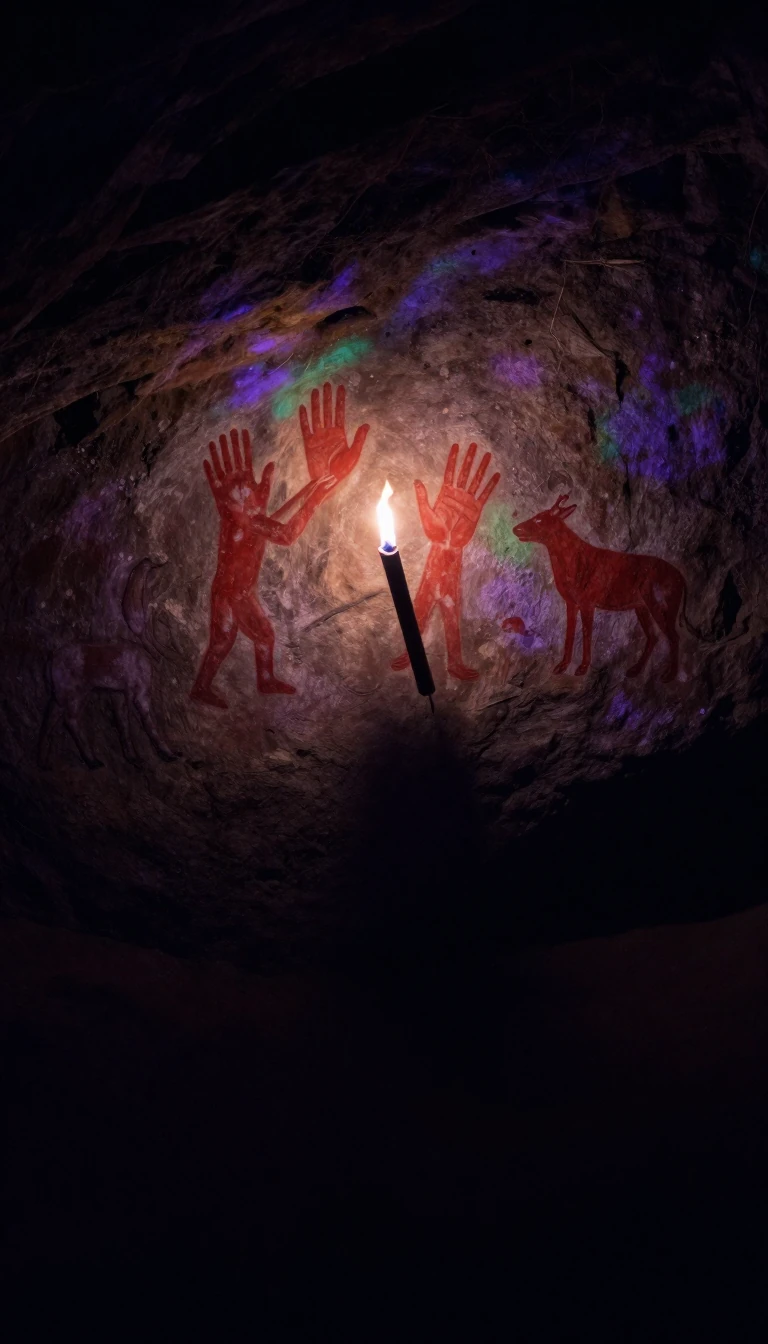
In short: Deep inside the Cueva del Castillo in Cantabria, Spain, lie thousands of ancient motifs dating back over 40,000 years. While long assumed to be the work of men, recent analysis of hand stencils suggests a different story, challenging our understanding of who the first artists of Europe really were.
Discovered in 1903 by Spanish archaeologist Hermilio Alcalde del Río, the Cueva del Castillo is a site of immense historical depth. Excavations have revealed a complex archaeological stratigraphy spanning approximately 19 layers, tracing human activity from the Proto-Aurignacian period through the Bronze Age. While the first major monograph in 1911 catalogued only about 200 motifs, a comprehensive study conducted between 2003 and 2023 by Marc and Marie-Christine Groenen identified 2,698 distinct motifs and pieces of archaeological evidence, including animals, human figures, and lithophones.
The cave gained international attention in 2012 when uranium-thorium dating placed certain discs at over 40,000 years old. This suggests that cave painting may have emerged alongside the arrival of anatomically modern humans in Europe, though these findings remain a subject of active debate among scholars. The cave's walls, decorated with charcoal and red ochre, serve as a primary record of this early creative impulse.
Perhaps most provocative is the re-evaluation of the cave's hand stencils. A 2013 study applied the Manning index—a ratio comparing index and ring finger lengths—to Paleolithic handprints found in France and Spain. The results indicated that the majority of these prints were likely made by women, overturning the long-held belief that such art was a male-dominated activity. However, this methodology is not without its critics; many researchers now urge caution, arguing that applying modern anthropological ratios to ancient remains is inherently complex and contested.
Ultimately, the Cueva del Castillo remains a site of both discovery and scientific friction. Whether through the dating of its oldest marks or the gendered interpretation of its handprints, the cave forces us to confront the limitations of our current knowledge. It stands as a testament to the enduring mystery of human expression, where every new study adds a layer of nuance to our understanding of the Paleolithic world.
Opens the Intellect+ feed with this card first. Swipe up for the next one.
Sources
- Summary by Intellect · source: Cave of El Castillo
To cite this card, link to https://intellectplus.co.uk/app/art-cave-of-el-castillo.
How we source, check and correct cards: Editorial standards.
General information, not professional advice. Spotted an error? Flag the card or see corrections and complaints.
Intellect Plus is a visual educational discovery platform for exploring fascinating facts and ideas. Brain Food, Not Brain Rot. What is Intellect Plus?
Related
More in Visual arts · More in Art · Latest · A–Z · All topics
