A remote Arctic island holds five massive ice caps and a nuclear-powered lighthouse
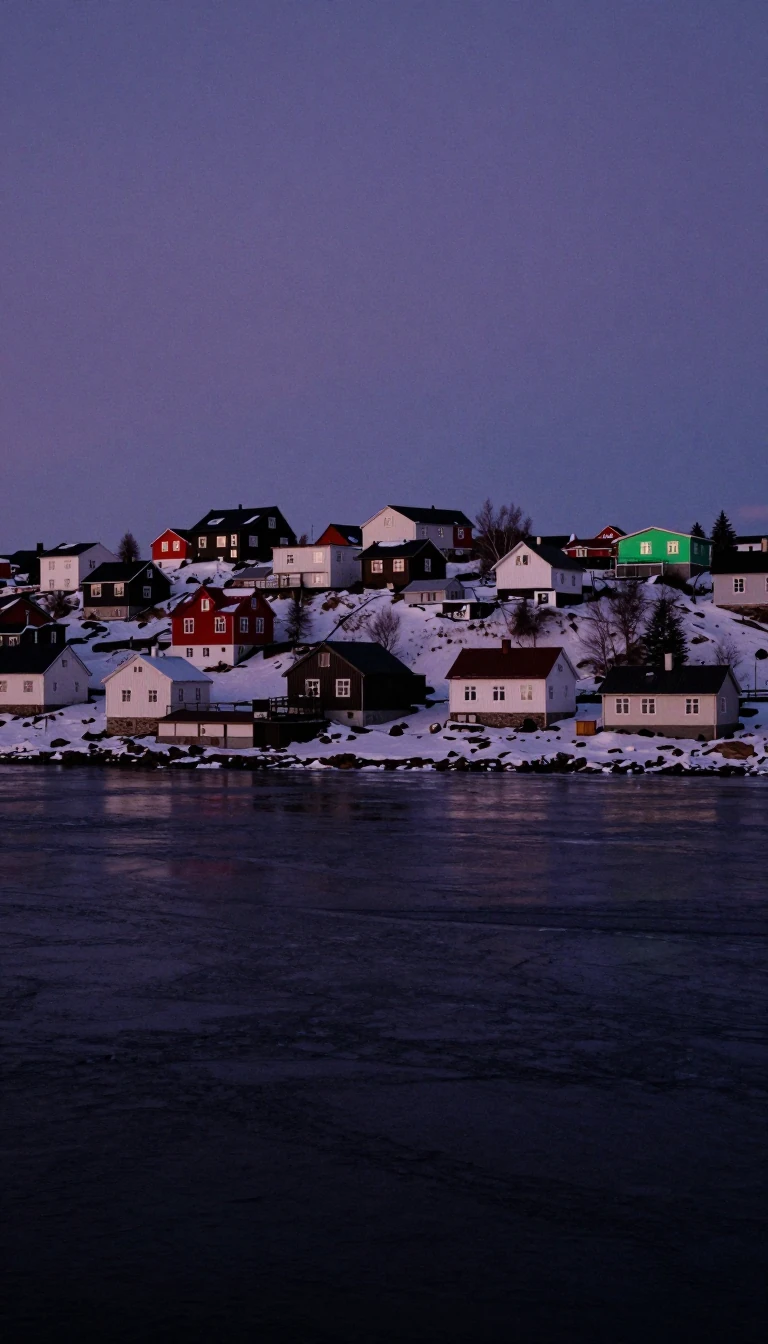
In short: Spanning over 14,000 square kilometers, October Revolution Island is the largest landmass in the Severnaya Zemlya archipelago. Half of its surface is buried under permanent ice, yet this frozen wilderness hides ancient fossilized secrets and a history of Soviet-era scientific outposts that once monitored the shifting Arctic climate.
Located in the Russian Arctic, October Revolution Island is a rugged expanse defined by its dramatic topography and glacial activity. Rising to a peak of 965 meters at Mount Karpinsky, the island is dominated by five distinct domed ice caps: Rusanov, Karpinsky, University, Vavilov, and Albanov. These glaciers are not static; they actively shape the coastline, feeding into fjords like the Matusevich and Marat. The island's geography is further defined by its uneven coast, characterized by deep coves and headlands, while the Red Army and Shokalsky Straits serve as vital maritime passages connecting the Kara and Laptev Seas.
The island’s modern history is marked by a transition from exploration to scientific observation. Discovered by Boris Vilkitsky in 1913, its status as an island was only confirmed during a 1930–1932 expedition led by Georgy Ushakov and Nikolay Urvantsev. In the decades that followed, the island became a site for meteorological research, notably hosting the Vavilov Meteorological Station from 1974 until 1988. Following the closure of this facility, a nuclear-powered lighthouse was established in 1989 to aid navigation in the harsh northern environment.
Beyond its modern infrastructure, the island serves as a geological archive. Paleontologists have recovered fossilized thelodont scales from Ordovician and Silurian deposits, including species such as Stroinolepis maenniki and Loganellia grossi. These findings, alongside various conodont collections, offer a window into ancient marine life. However, the island is also a site of rapid environmental change. In 2015, the Vavilov Glacier began to shift at an accelerated rate, advancing four kilometers and shedding 4.5 cubic kilometers of ice over the following year, highlighting the volatile nature of this remote, ice-bound landscape.
Opens the Intellect+ feed with this card first. Swipe up for the next one.
Sources
- Summary by Intellect · source: October Revolution Island
- Also: Wikidata — October Revolution Island · CC0
To cite this card, link to https://intellectplus.co.uk/app/places-october-revolution-island.
How we source, check and correct cards: Editorial standards.
General information, not professional advice. Spotted an error? Flag the card or see corrections and complaints.
Intellect Plus is a visual educational discovery platform for exploring fascinating facts and ideas. Brain Food, Not Brain Rot. What is Intellect Plus?
Related
More in Islands · More in Countries & Cities · Latest · A–Z · All topics
