Known as the Roof of the World, the Pamir Mountains hold ancient, icy secrets.
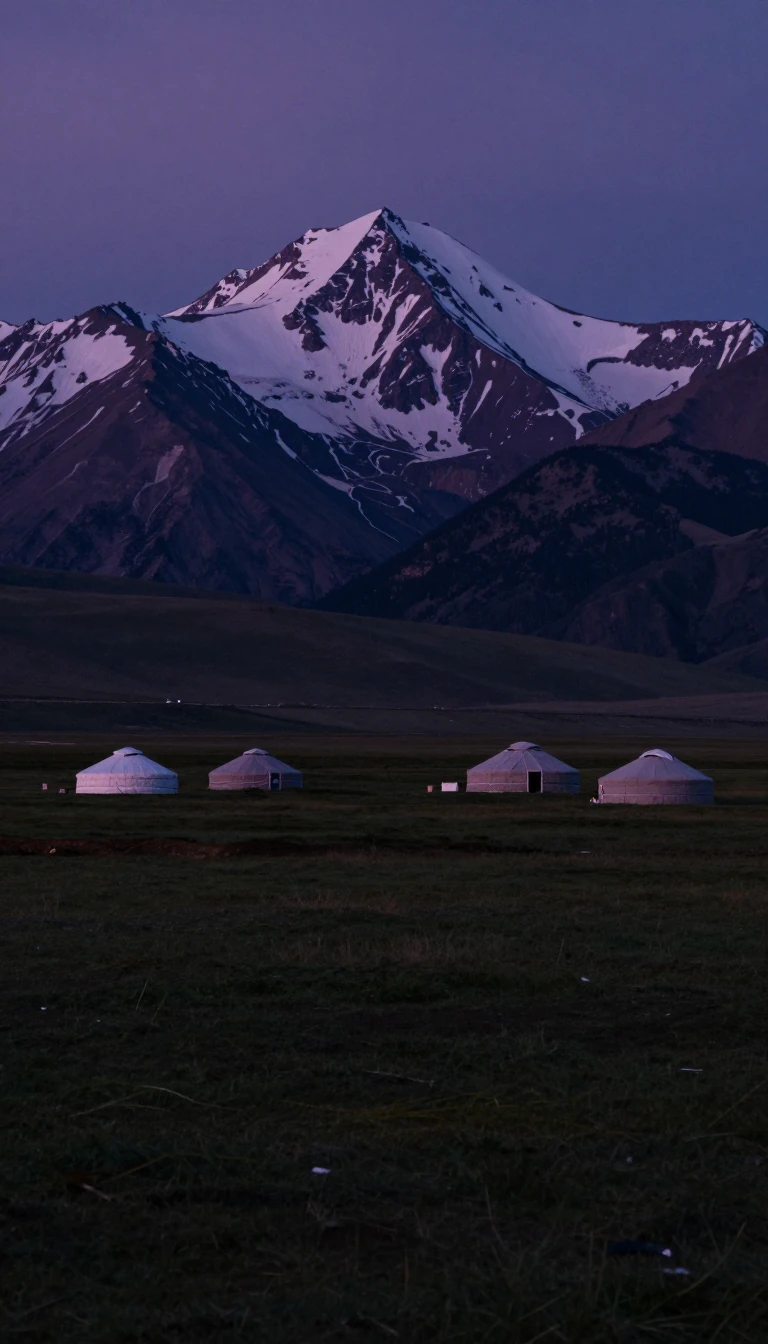
In short: Spanning four nations in Central Asia, the Pamir Mountains are a rugged, high-altitude junction of the world's greatest ranges. Beyond their strategic importance as a historic Silk Road corridor, these peaks hide ancient archaeological mysteries, vast glaciers, and a unique geological landscape shaped by the slow, grinding retreat of ice.
The Pamir Mountains, often called the Roof of the World since the Victorian era, serve as a massive intersection for the Tian Shan, Karakoram, Kunlun, Hindu Kush, and Himalayan ranges. While the region is primarily located within Tajikistan's Gorno-Badakhshan province, its reach extends into Afghanistan, Pakistan, and China. Geologically, a 'pamir' refers to a flat, U-shaped valley or plateau formed by melting glaciers, which locals historically utilize for summer pasture. The region's climate is harsh, characterized by tundra conditions, minimal annual precipitation of about 130 mm, and long, bitter winters.
The range is home to some of the world's highest peaks, including Ismoil Somoni Peak at 7,495 meters and the Eastern Pamirs' Kongur Tagh at 7,649 meters. Glacial activity is a defining feature; approximately 12,500 square kilometers of the range is glaciated, including the 77-kilometer-long Vanch-Yakh Glacier. While glaciers in the Southern Pamirs are retreating rapidly, those in the North-Western Pamirs maintain relatively stable mass balances. Paleoclimatological evidence suggests that during the last ice age, snowlines were 820 to 1,250 meters lower than today, indicating a temperature depression of at least 5 to 7.5 degrees Celsius.
Human history in the Pamirs is as deep as its valleys. Archaeological finds at the Jirzankal Cemetery provide the earliest known evidence of human cannabis use. The region has long been a crossroads for trade and conquest, from ancient Buddhist pilgrims and the Silk Road to the 19th-century 'Great Game' between the British and Russian Empires. In the modern era, the Pamirs have seen the Tajikistan Civil War and the establishment of various international military bases. Today, the region is shifting toward tourism as its fastest-growing economic sector, even as it remains a place of profound isolation and rugged, high-altitude beauty.
Opens the Intellect+ feed with this card first. Swipe up for the next one.
Sources
- Summary by Intellect · source: Pamir Mountains
- Also: Wikidata — Pamir Mountains · CC0
To cite this card, link to https://intellectplus.co.uk/app/places-pamir-mountains.
How we source, check and correct cards: Editorial standards.
General information, not professional advice. Spotted an error? Flag the card or see corrections and complaints.
Intellect Plus is a visual educational discovery platform for exploring fascinating facts and ideas. Brain Food, Not Brain Rot. What is Intellect Plus?
Related
More in Countries and other regions · More in Countries & Cities · Latest · A–Z · All topics
