Why did the Romans build a massive stone fortress around the town of Lugo?
In short: Stretching over two kilometers, the Roman walls of Lugo remain a remarkably intact relic of the third century. Built to protect the colonia of Lucus Augusti from invaders, these fortifications represent the finest example of late Roman defensive architecture in western Europe, still standing guard over the Spanish city today.
Constructed between 263 and 276 A.D., the walls of Lugo were designed to secure the Roman town of Lucus Augusti against threats from local tribesmen and Germanic invaders. The structure is a feat of ancient engineering, spanning 2,120 metres in length and enclosing an area of 34.4 hectares. The walls are substantial, with a width of approximately 4.2 metres and heights reaching between 8 and 12 metres. Their composition reflects a practical approach to building: an internal and external stone facing holds a core of earth, gravel, pebbles, and recycled Roman stone, all cemented with water.
The defensive system was complex, incorporating a moat and an intervallum, or clearing, between the walls and the town. While the original design featured ten gates, only five date back to the Roman era, with the Porta Falsa and Porta Miña remaining the best-preserved examples. The fortifications were further strengthened by numerous towers, of which 49 remain intact and 39 partially survive. These towers, mostly semicircular in shape, were built at irregular intervals using a mix of materials, typically featuring dressed granite bases topped with slate.
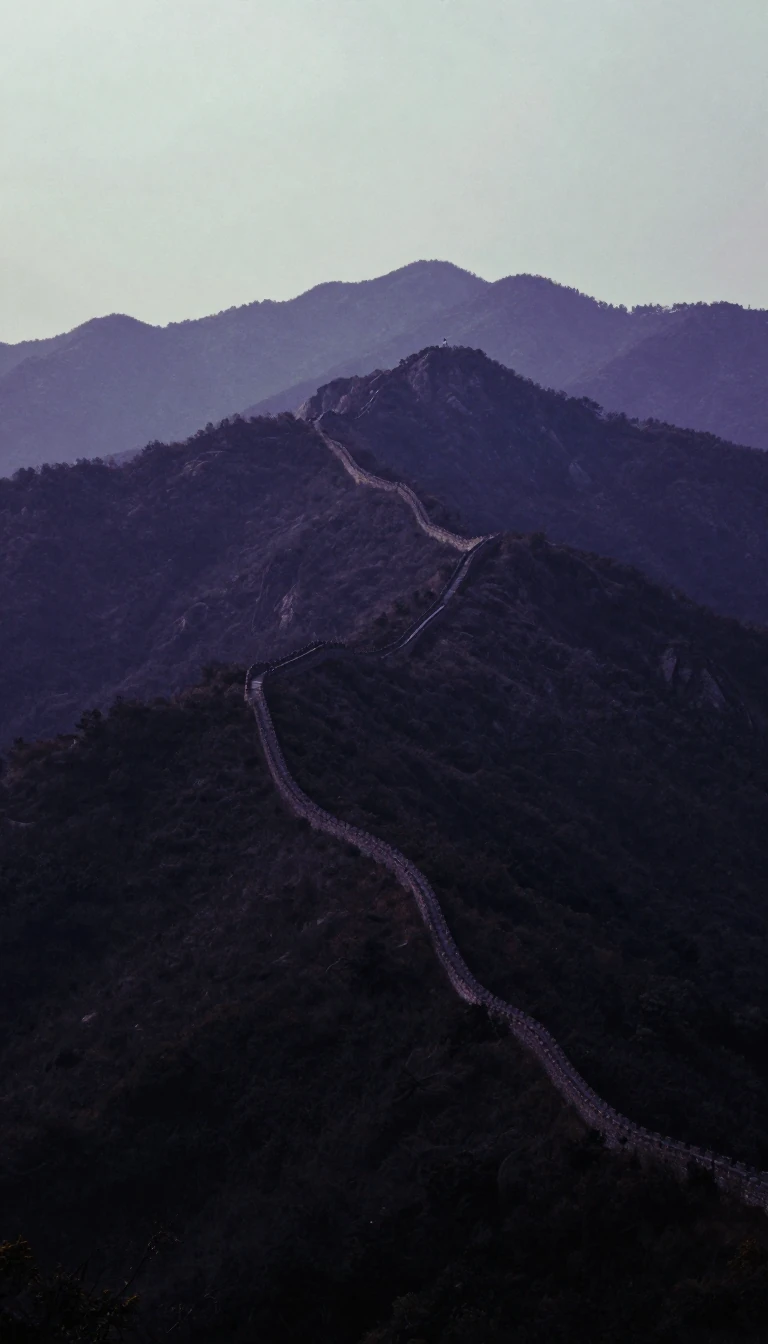
Beyond their military function, the walls have played a significant role in history and culture. During the Middle Ages, they served as a gateway for pilgrims traveling to Santiago de Compostela. Their historical importance was formally recognized in 1921 when they were granted Spanish monument status, and later in 2000, when UNESCO designated them a World Heritage Site. Today, the walls are a central part of Lugo's identity, celebrated through the annual Arde Lucus festival and connected to global history through a 2007 twinning ceremony with the Great Wall of China.
Visitors can now experience these ancient defenses firsthand by walking the entire length of the parapet. Access is provided by five stairways and a ramp, while internal double staircases allow for movement between the towers. The site is supported by the Centro de Interpretación da Muralla, which provides context for the fortifications that once defined the limits of the Roman world in the province of Hispania Tarraconensis.
Opens the Intellect+ feed with this card first. Swipe up for the next one.
Sources
- Summary by Intellect · source: Roman walls of Lugo
- Also: Wikidata — Roman Walls of Lugo · CC0
To cite this card, link to https://intellectplus.co.uk/app/places-roman-walls-of-lugo.
How we source, check and correct cards: Editorial standards.
General information, not professional advice. Spotted an error? Flag the card or see corrections and complaints.
Intellect Plus is a visual educational discovery platform for exploring fascinating facts and ideas. Brain Food, Not Brain Rot. What is Intellect Plus?
Related
More in World Heritage Sites · More in Countries & Cities · Latest · A–Z · All topics
