Did a race of giants create the ancient murals of Baja California?
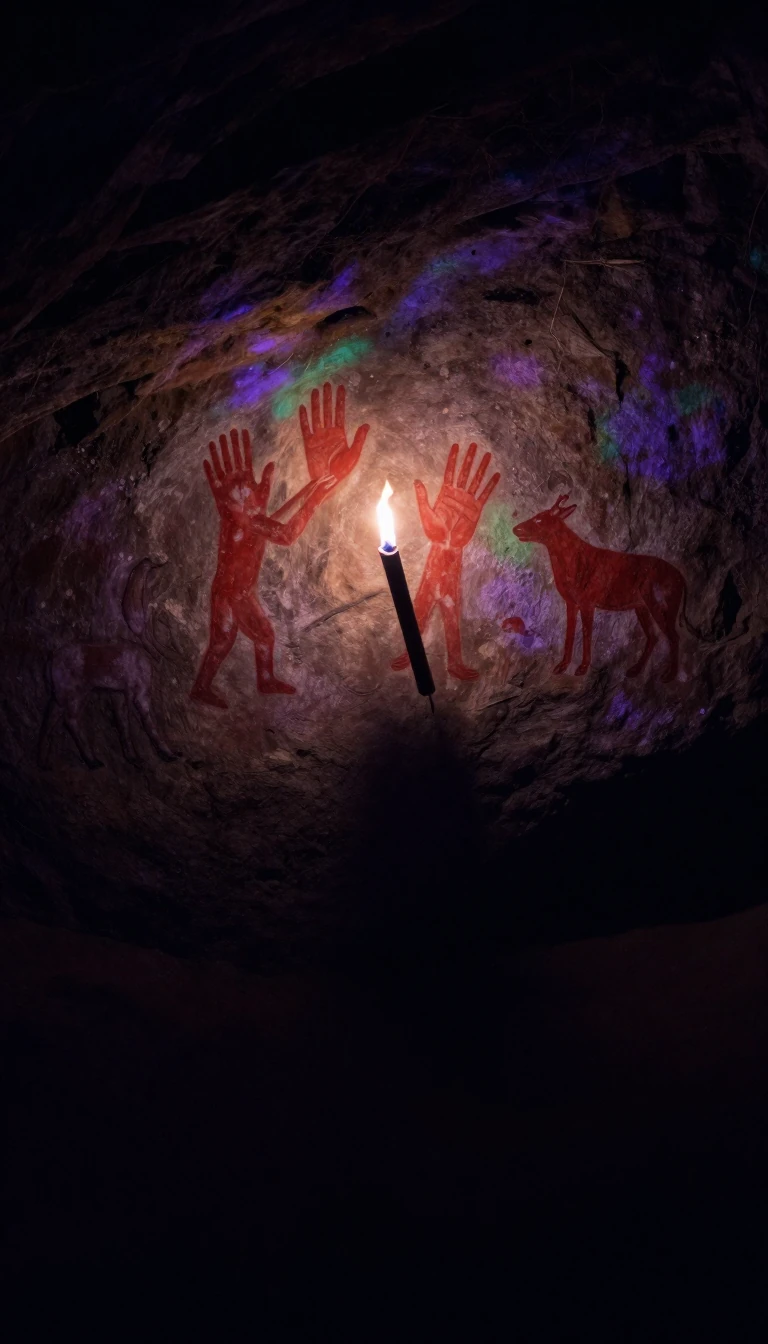
In short: Hidden within the remote mountain ranges of Mexico, hundreds of prehistoric rock shelters house an extraordinary collection of ancient art. While early legends once attributed these massive, vibrant figures to a race of giants, modern science suggests a more human origin, revealing a complex history spanning thousands of years.
Located in the Sierra de San Francisco mountains of Baja California Sur, these pictographs represent one of the most significant concentrations of Pre-Columbian art on the peninsula. Spread across approximately 250 sites, the paintings are found on the walls and ceilings of rock shelters. Their remarkable state of preservation is largely due to the extreme isolation of the terrain, which has shielded these fragile works from human interference and vandalism.
The art features a diverse array of subjects, including deer, rabbits, whales, fish, and various birds, alongside abstract forms and human figures. Many of these depictions are larger than life, a characteristic that likely fueled the local belief—recorded by Jesuit missionaries—that the murals were the work of giants. Scientific investigation, however, has moved past this myth since the late nineteenth century. Researchers now attribute the works to the Cochimi people, a group that became culturally extinct during the nineteenth century but remains documented through the accounts of eighteenth-century Jesuit missionaries.
Determining the exact age of these works has been a long-term challenge, but radiocarbon dating has provided a broad timeline. Current evidence suggests the paintings were created over a vast period, ranging from as early as 5500 BCE up until the arrival of Europeans in the eighteenth century. Despite their prominence, the precise purpose of the art remains a subject of debate. While some observers propose connections to hunting rituals, religious practices, or ancestor worship, there is no academic consensus on their specific meaning. The site gained international recognition in 1993 when it was officially designated a UNESCO World Heritage Site, cementing its status as a vital record of human history.
Opens the Intellect+ feed with this card first. Swipe up for the next one.
Sources
- Summary by Intellect · source: Rock Paintings of Sierra de San Francisco
To cite this card, link to https://intellectplus.co.uk/app/places-rock-paintings-of-sierra-de-san-francisco.
How we source, check and correct cards: Editorial standards.
General information, not professional advice. Spotted an error? Flag the card or see corrections and complaints.
Intellect Plus is a visual educational discovery platform for exploring fascinating facts and ideas. Brain Food, Not Brain Rot. What is Intellect Plus?
Related
More in World Heritage Sites · More in Countries & Cities · Latest · A–Z · All topics
