The world's oldest continuously inhabited monastery holds secrets hidden beneath layers of erased text.
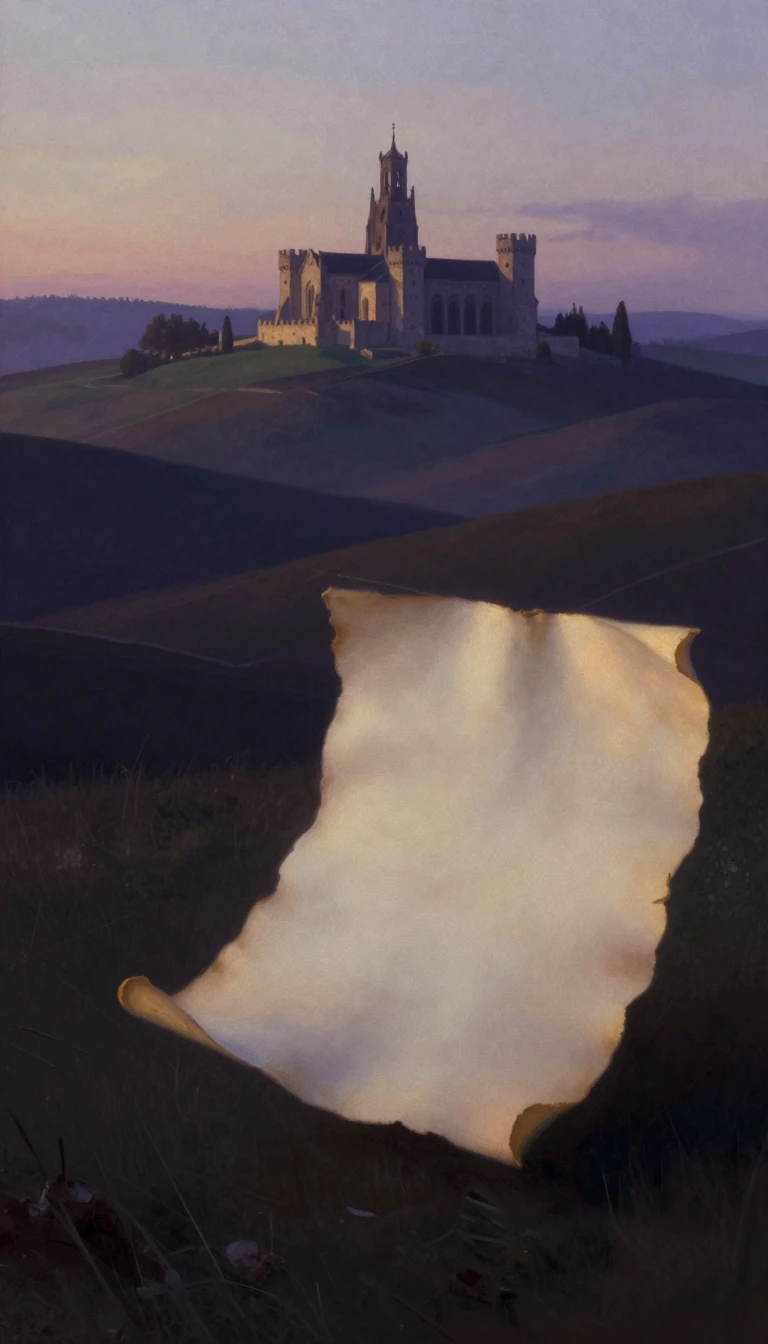
In short: Nestled at the base of Mount Sinai, this ancient fortress has survived for over 1,400 years. Beyond its massive walls lies a library containing the world's second-largest collection of early manuscripts, including palimpsests—parchments where monks once scraped away original writings to reuse the expensive material for new prayers.
Commissioned by Byzantine Emperor Justinian I between 548 and 565, Saint Catherine’s Monastery stands as a testament to religious endurance. It was built to enclose the site traditionally identified as the burning bush encountered by Moses. Today, it remains the oldest continuously inhabited Christian monastery in the world, serving as a sacred intersection for Judaism, Christianity, and Islam. Its library, established alongside the monastery, holds the title of the world's oldest continuously operating library, housing a vast array of rare codices and manuscripts in languages ranging from Greek and Syriac to Geʽez and Church Slavonic.
The library’s collection is a treasure trove for scholars, particularly due to its palimpsests. Because parchment was historically costly, monks often erased earlier texts—sometimes using orange juice or mechanical scraping—to write over them. Modern multispectral imaging has allowed researchers to recover over 6,800 pages of these hidden texts, revealing lost Greek poems, early medical recipes attributed to Hippocrates, and previously unknown martyrdom accounts. These discoveries provide unparalleled insight into dead languages like Caucasian Albanian and Christian Palestinian Aramaic.
The monastery’s history is marked by both preservation and controversy. While it escaped the destruction of Byzantine iconoclasm, it has faced modern legal and political challenges, including recent Egyptian court rulings regarding land ownership and administrative authority. Furthermore, the dispersal of its manuscripts—such as the 19th-century removal of the Codex Sinaiticus—has sparked long-standing debates over ownership. To protect its remaining treasures from the desert climate and potential disasters, the Saint Catherine Foundation has begun housing thousands of parchment manuscripts in custom-engineered, fireproof stainless steel boxes.
Despite its isolation, the site remains a vibrant hub of activity. It retains the world's premier collection of early Christian icons and continues to host a functioning mosque, preserved since the 12th century. Whether through the ongoing digitization of its archives or the complex diplomatic negotiations surrounding its future, Saint Catherine’s remains a vital, living monument to the intellectual and spiritual history of the Abrahamic traditions.
Opens the Intellect+ feed with this card first. Swipe up for the next one.
Sources
- Summary by Intellect · source: Saint Catherine's Monastery
- Also: Wikidata — Saint Catherine Monastery · CC0
- Also: Wikidata — Saint Catherine's Monastery · CC0
To cite this card, link to https://intellectplus.co.uk/app/places-saint-catherine-s-monastery.
How we source, check and correct cards: Editorial standards.
General information, not professional advice. Spotted an error? Flag the card or see corrections and complaints.
Intellect Plus is a visual educational discovery platform for exploring fascinating facts and ideas. Brain Food, Not Brain Rot. What is Intellect Plus?
Related
More in Historical cities · More in Countries & Cities · Latest · A–Z · All topics
