Why did a medieval caliphate build a massive capital only to abandon it?
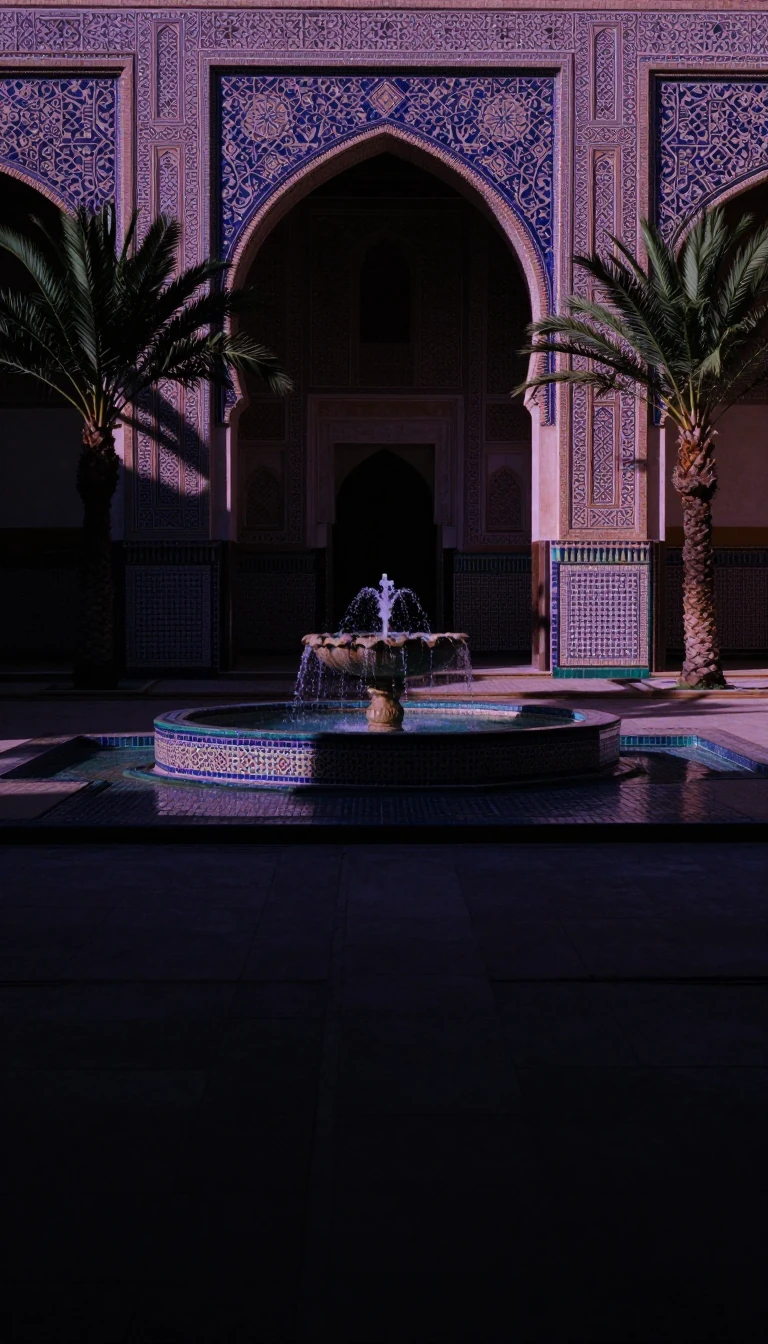
In short: Founded in 836 CE as a grand administrative center, Samarra was once the heart of the Abbasid Empire. Yet, within decades, the caliphs retreated to Baghdad, leaving behind a sprawling landscape of palaces and a famous spiral minaret. Today, this UNESCO World Heritage site remains a complex intersection of history.
In 836 CE, the Abbasid Caliph al-Mu'tasim established Samarra as a new capital on the banks of the Tigris. The city was designed to house the caliph's extensive palace complexes and garrison settlements for his elite guards, who were recruited from Central Asia, Iran, and North Africa. Under Caliph al-Mutawakkil, the city reached its architectural zenith with the construction of the Great Mosque of Samarra, featuring its iconic spiral minaret, the Malwiya, completed in 847. The city even briefly hosted the patriarchal seat of the Church of the East between 860 and 872.
Despite its rapid expansion, Samarra's status as the imperial capital was short-lived. By 892, Caliph al-Mu'tadid returned the seat of power to Baghdad, leading to the looting and subsequent decline of the city. While it persisted as a market center, its strategic importance waned further in the 12th and 13th centuries when the Tigris shifted its course, forcing trade routes to move to the west bank. The city's history is also marked by the 1730–1735 Ottoman–Persian War, where the Battle of Samarra resulted in over 50,000 casualties.
Modern Samarra is defined by its dual identity as a site of profound religious significance and a flashpoint for conflict. Home to the Al-Askari Shrine, it is a major pilgrimage center for Imami Shias, housing the mausolea of the tenth and eleventh Imams. However, the city was central to the Sunni Triangle during the Iraq War. The 2006 bombing of the Al-Askari dome triggered widespread sectarian violence, and the city faced further instability during the 2014 offensive by the Islamic State of Iraq and the Levant. Today, the archaeological remains of the prehistoric Samarra culture, first excavated by Ernst Herzfeld and Friedrich Sarre between 1911 and 1914, continue to offer insights into one of the Near East's earliest town states.
Opens the Intellect+ feed with this card first. Swipe up for the next one.
Sources
- Summary by Intellect · source: Samarra
- Also: Wikidata — Samarra · CC0
- Also: Wikidata — Samarra · CC0
To cite this card, link to https://intellectplus.co.uk/app/places-samarra.
How we source, check and correct cards: Editorial standards.
General information, not professional advice. Spotted an error? Flag the card or see corrections and complaints.
Intellect Plus is a visual educational discovery platform for exploring fascinating facts and ideas. Brain Food, Not Brain Rot. What is Intellect Plus?
Related
More in World Heritage Sites · More in Countries & Cities · Latest · A–Z · All topics
