Why does this austere fortress hide one of Europe's most opulent Baroque interiors?
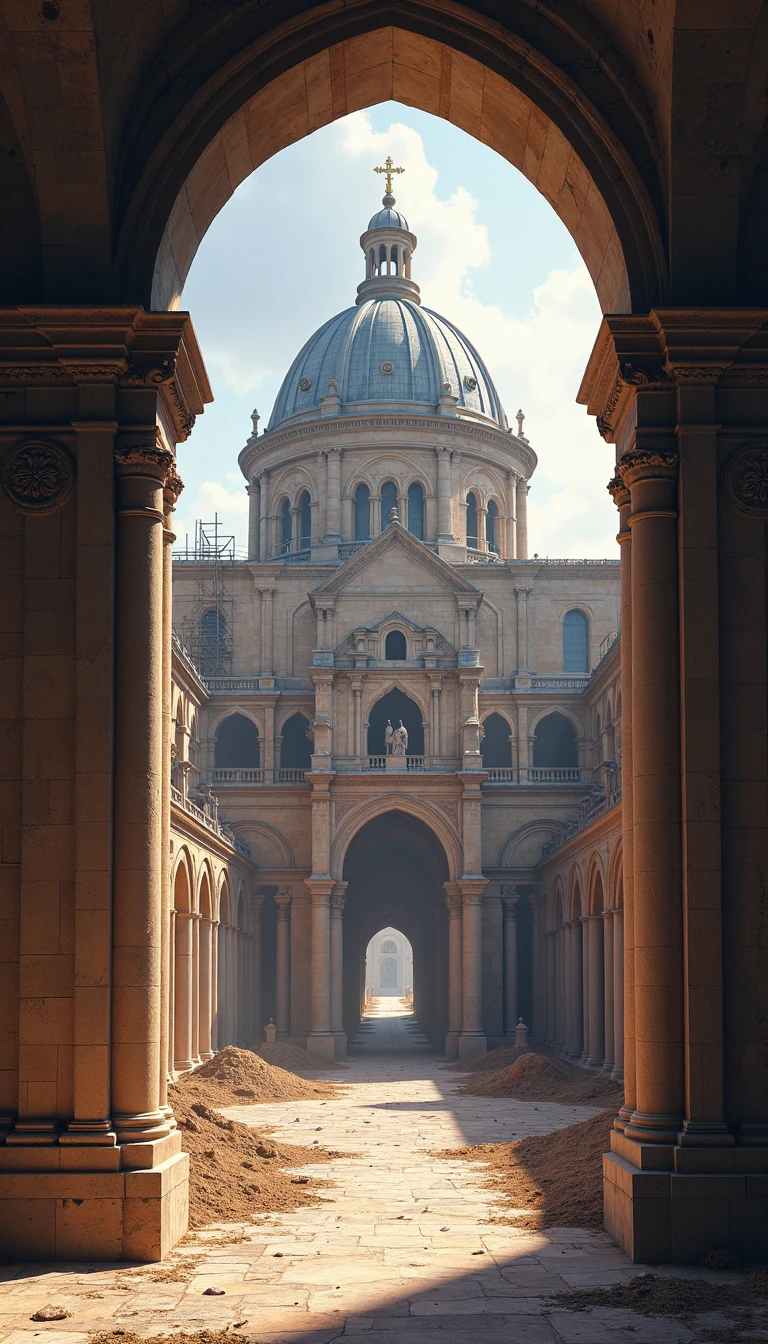
In short: Commissioned in 1572 by the Order of St. John, this Valletta landmark appears as a fortress from the outside. Yet, stepping inside reveals a breathtaking transformation ordered in the 1660s to rival the grandeur of Rome, creating a stark, deliberate contrast between military austerity and high Baroque artistic excess.
Designed by Maltese architect Girolamo Cassar, the cathedral was built between 1573 and 1578 as the Conventual Church for the Order of St. John. Its exterior reflects the mood of the Order following the Great Siege of 1565, featuring a plain, fortress-like Mannerist façade. While Cassar was the sole architect, it is believed he drew inspiration from a church in Rhodes that had been converted into a mosque, though he ultimately modified the plans to suit the site in Valletta.
The interior remained modest for nearly a century until Grand Master Raphael Cotoner commissioned a total redecoration in the 1660s. The Calabrian artist Mattia Preti took charge, covering the walls with intricate stone carvings and painting the vaulted ceiling. Preti used clever shadow and placement techniques to create an illusion of three-dimensional figures, a feat made possible by the unique properties of local Maltese limestone. Unlike traditional stucco, all carving was performed in-situ, directly onto the stone walls.
Beyond its architecture, the cathedral serves as a monumental necropolis. The marble floor is composed of approximately 400 individual tombstones belonging to knights and officers of the Order, each inlaid with coats of arms and imagery depicting their triumphs. The crypt houses the remains of several Grand Masters, including Jean Parisot de Valette. The cathedral also preserves masterpieces like Caravaggio's 1608 painting, The Beheading of Saint John the Baptist, which remains in the Oratory for which it was originally commissioned.
The site has survived significant challenges, including aerial bombardment in 1941 during World War II, which caused minor exterior damage but left the art collection unharmed. Today, the cathedral functions as a co-cathedral alongside the see at Mdina. It is managed by the St. John's Co-Cathedral Foundation, established in 2001 to oversee ongoing conservation efforts, including extensive exterior restorations that began in 2014.
Opens the Intellect+ feed with this card first. Swipe up for the next one.
Sources
- Summary by Intellect · source: St John's Co-Cathedral
- Also: Wikidata — St John's Co-Cathedral Museum · CC0
- Also: Wikidata — St. John's Co-Cathedral · CC0
To cite this card, link to https://intellectplus.co.uk/app/places-st-john-s-co-cathedral.
How we source, check and correct cards: Editorial standards.
General information, not professional advice. Spotted an error? Flag the card or see corrections and complaints.
Intellect Plus is a visual educational discovery platform for exploring fascinating facts and ideas. Brain Food, Not Brain Rot. What is Intellect Plus?
Related
More in World Heritage Sites · More in Countries & Cities · Latest · A–Z · All topics
