A Renaissance masterpiece built entirely of stone without a single drop of mortar
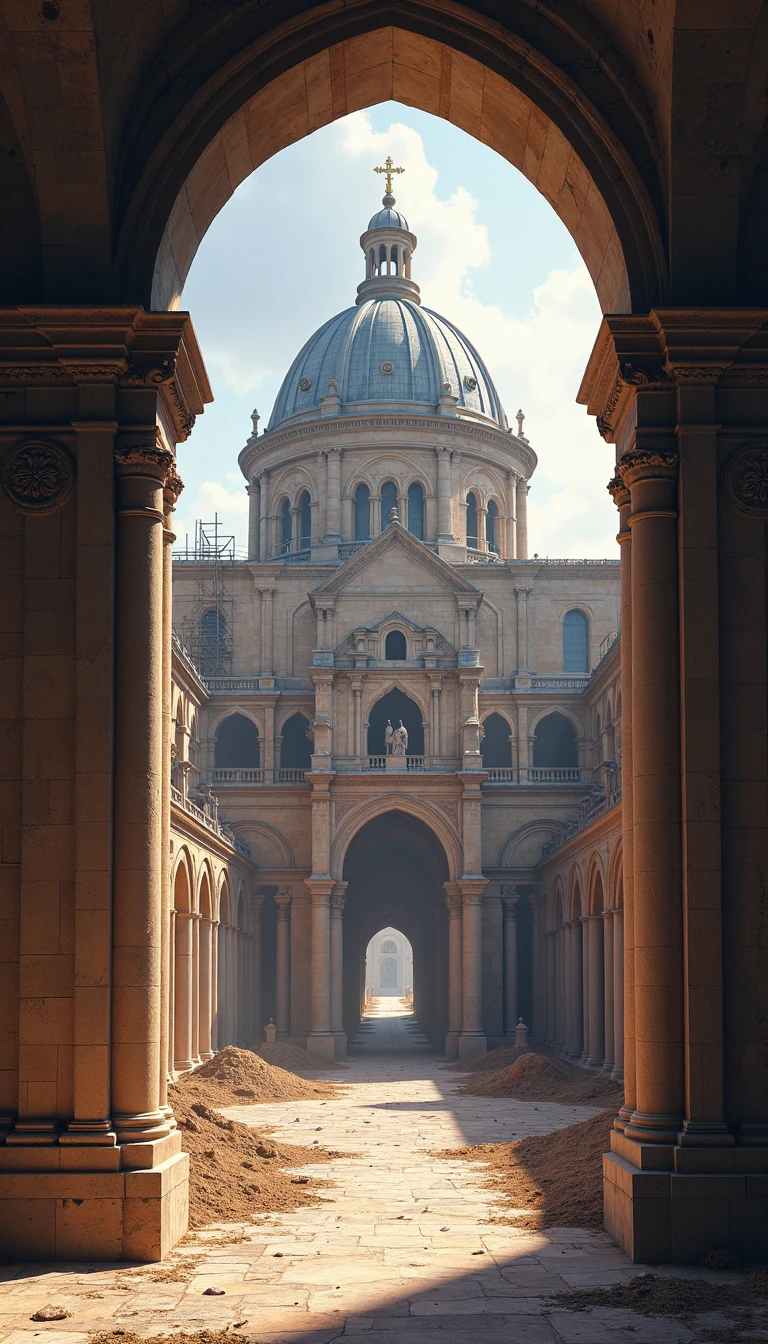
In short: The Cathedral of St. James in Šibenik is an architectural anomaly. Constructed between 1431 and 1536, this UNESCO World Heritage site was built using an innovative technique of interlocking stone slabs, eschewing mortar entirely. It remains the only pre-19th-century building in Europe to achieve such a feat of structural engineering.
The cathedral represents the symbolic culmination of Šibenik's long struggle for civic and religious independence. After the city achieved bishopric status in 1298, the growing community required a grander church. Construction began in 1431 under Venetian master builder Francesco di Giacomo, but the project truly transformed under the leadership of Juraj Dalmatinac, who took over in 1441. Dalmatinac expanded the design into a cross-shaped plan, introducing Renaissance humanism through a famous frieze of 74 sculpted heads that adorn the apses, capturing individual portraits of Dalmatian contemporaries.
Following Dalmatinac's death in 1475, Niccolò di Giovanni Fiorentino oversaw the completion of the upper structure. He faced the challenge of unifying the previously disconnected sections of the sanctuary and nave. Fiorentino introduced complex engineering solutions, including hidden metal ties and cantilevered flat arches, to support the massive barrel vaults. By 1499, he had completed the octagonal drum and dome, a structural achievement that predated similar innovations by Bramante and Michelangelo. The building was finally consecrated in 1555, having been completed by Bartolomeo of Mestre and his son Jakov.
The cathedral's structural integrity relies on a technique akin to carpentry, where precisely cut stone slabs are joined with stepped or tongue-and-groove overlaps. This system allowed for a monumental stone dome reaching 38 meters in height. Despite its resilience, the structure has faced modern challenges, including significant damage from shelling during the Croatian War of Independence in 1991. Subsequent restorations, most notably between 1996 and 1997, successfully repaired the dome, ensuring that this unique synthesis of Gothic and Renaissance architecture remains a testament to the ingenuity of its medieval builders.
Opens the Intellect+ feed with this card first. Swipe up for the next one.
Sources
- Summary by Intellect · source: Šibenik Cathedral
- Also: Wikidata — Šibenik Cathedral · CC0
To cite this card, link to https://intellectplus.co.uk/app/places-ibenik-cathedral.
How we source, check and correct cards: Editorial standards.
General information, not professional advice. Spotted an error? Flag the card or see corrections and complaints.
Intellect Plus is a visual educational discovery platform for exploring fascinating facts and ideas. Brain Food, Not Brain Rot. What is Intellect Plus?
Related
More in World Heritage Sites · More in Countries & Cities · Latest · A–Z · All topics
