The Thar Desert is the world's most densely populated arid wilderness.
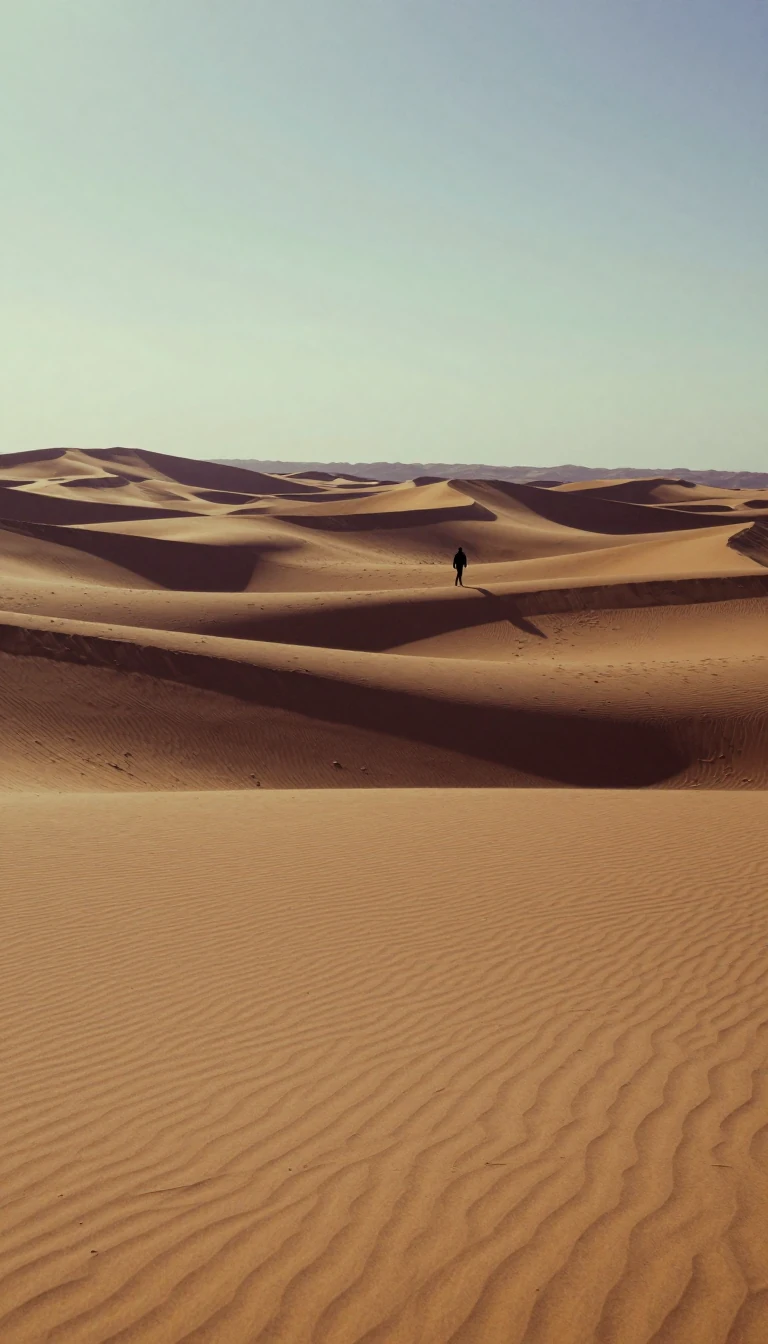
In short: Spanning over 264,000 square kilometers across India and Pakistan, the Thar Desert is far from an empty wasteland. It is a vibrant, inhabited landscape where nomadic cultures, ancient civilizations, and modern energy projects collide. Beneath its shifting dunes lies a complex history of climate shifts and lost rivers.
The Thar Desert, or Great Indian Desert, covers 264,091 square kilometers, with about two-thirds lying in India and the remainder in Pakistan. Unlike many of the world's desolate regions, it supports a population density of 83 people per square kilometer. This arid expanse is defined by extreme temperature swings, ranging from peak summer highs above 50 °C to winter lows that can dip to -2 °C. Rainfall is sparse, averaging less than 500 mm annually, and the region relies heavily on the southwest monsoon and limited water sources like the Luni River system.
The desert's current aridity is a relatively recent geological development. During the Last Glacial Maximum, 26,000 to 20,000 years ago, a massive ice sheet over the Tibetan Plateau disrupted monsoon patterns, leading to widespread desertification. Later, the upliftment of the Aravalli Range during the early Holocene period further altered the region's hydrography, depriving the Ghaggar-Hakra River system of its headwaters. This shift contributed to the decline of the urban Harappan civilization, which had previously flourished along the river's course between 3300 BCE and 1300 BCE.
Today, the Thar is a mosaic of traditional and modern life. While nomadic herding and small-scale agriculture remain central to the economy, the region has seen significant industrial development, including the discovery of natural gas in the Jaisalmer basin in 1988 and the establishment of massive solar parks like the 2-gigawatt Bhadla Solar Park. The desert also serves as a critical habitat for unique fauna, including the critically endangered Great Indian Bustard and the recently discovered sauropod dinosaur, Tharosaurus indicus, unearthed in 2023 from Middle Jurassic rock formations.
Despite its harsh environment, the Thar remains a cultural crossroads. Its history is marked by the rise and fall of empires, from the Mauryan and Gupta dynasties to the Rajput states and the British Raj. Following the 1947 partition, the desert became a geopolitical border, leading to mass migrations and population exchanges in 1965 and 1971. Today, it stands as a testament to human resilience, where communities continue to adapt through ingenious water storage techniques like taankas and khadins.
Opens the Intellect+ feed with this card first. Swipe up for the next one.
Sources
- Summary by Intellect · source: Thar Desert
- Also: Wikidata — Thar Desert · CC0
To cite this card, link to https://intellectplus.co.uk/app/places-thar-desert.
How we source, check and correct cards: Editorial standards.
General information, not professional advice. Spotted an error? Flag the card or see corrections and complaints.
Intellect Plus is a visual educational discovery platform for exploring fascinating facts and ideas. Brain Food, Not Brain Rot. What is Intellect Plus?
Related
More in Cities · More in Countries & Cities · Latest · A–Z · All topics
