West Berlin was a Cold War island of freedom, legally trapped in limbo.
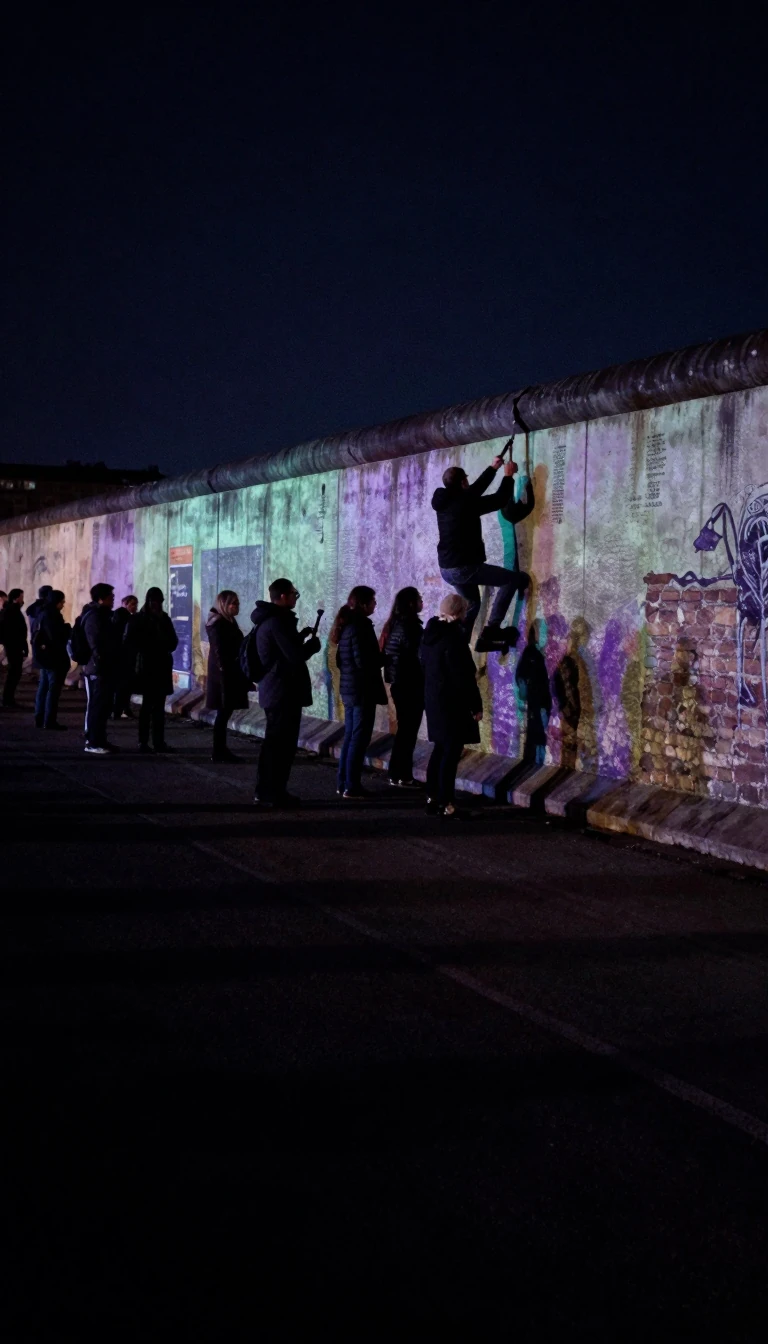
In short: For over four decades, West Berlin existed as a political anomaly: a wealthy, cosmopolitan showcase of the West, physically isolated deep within East German territory. Though it functioned as a de facto state, it lacked true sovereignty, remaining under Allied military occupation until the wall finally fell in 1990.
Following the 1944 London Protocol and the Potsdam Agreement, Germany was divided into four occupation zones. Berlin, located entirely within the Soviet zone, was similarly split. While the Western Allies controlled the American, British, and French sectors, the city remained an occupied territory rather than a sovereign state. This legal ambiguity meant that the Basic Law of the Federal Republic of Germany was not fully applicable, and the city's governing mayor and senate required Allied approval to exercise authority.
The city’s status as an island of freedom was tested repeatedly. In 1948, the Soviet Union attempted to force the Allies out via the Berlin Blockade, which was countered by the massive Berlin Airlift. Tensions escalated further in 1961 with the construction of the Berlin Wall, which physically severed the city. Despite these pressures, West Berlin flourished as a cultural hub, heavily subsidized by West Germany. Its unique status even offered a loophole for young West Germans, who moved there to avoid compulsory military service, fueling a vibrant counterculture.
West Berliners occupied a strange middle ground in the democratic process. They were not permitted to vote in federal elections, though they were indirectly represented in the Bundestag and Bundesrat by non-voting delegates. Furthermore, they held auxiliary identity cards rather than standard passports for international travel. It was only with the 1990 Two Plus Four Treaty that the occupation formally ended, allowing East and West Berlin to reunite as a single city-state within the Federal Republic of Germany.
The city's infrastructure also reflected this divide. To bypass East German wiretapping, West Berlin relied on microwave radio relay connections, including a 358-meter tower in Berlin-Frohnau completed in 1980. Even postal services and telephone networks were integrated with the West, yet the city remained a point of intense geopolitical friction, symbolized by the famous visits of U.S. Presidents John F. Kennedy and Ronald Reagan, who used the city as a stage to challenge Soviet influence.
Opens the Intellect+ feed with this card first. Swipe up for the next one.
Sources
- Summary by Intellect · source: West Berlin
- Also: Wikidata — West Berlin · CC0
- Also: Wikidata — West Berlin · CC0
To cite this card, link to https://intellectplus.co.uk/app/places-west-berlin.
How we source, check and correct cards: Editorial standards.
General information, not professional advice. Spotted an error? Flag the card or see corrections and complaints.
Intellect Plus is a visual educational discovery platform for exploring fascinating facts and ideas. Brain Food, Not Brain Rot. What is Intellect Plus?
Related
More in History · Latest · A–Z · All topics
