Why the standard pH scale fails to measure the world's most powerful acids
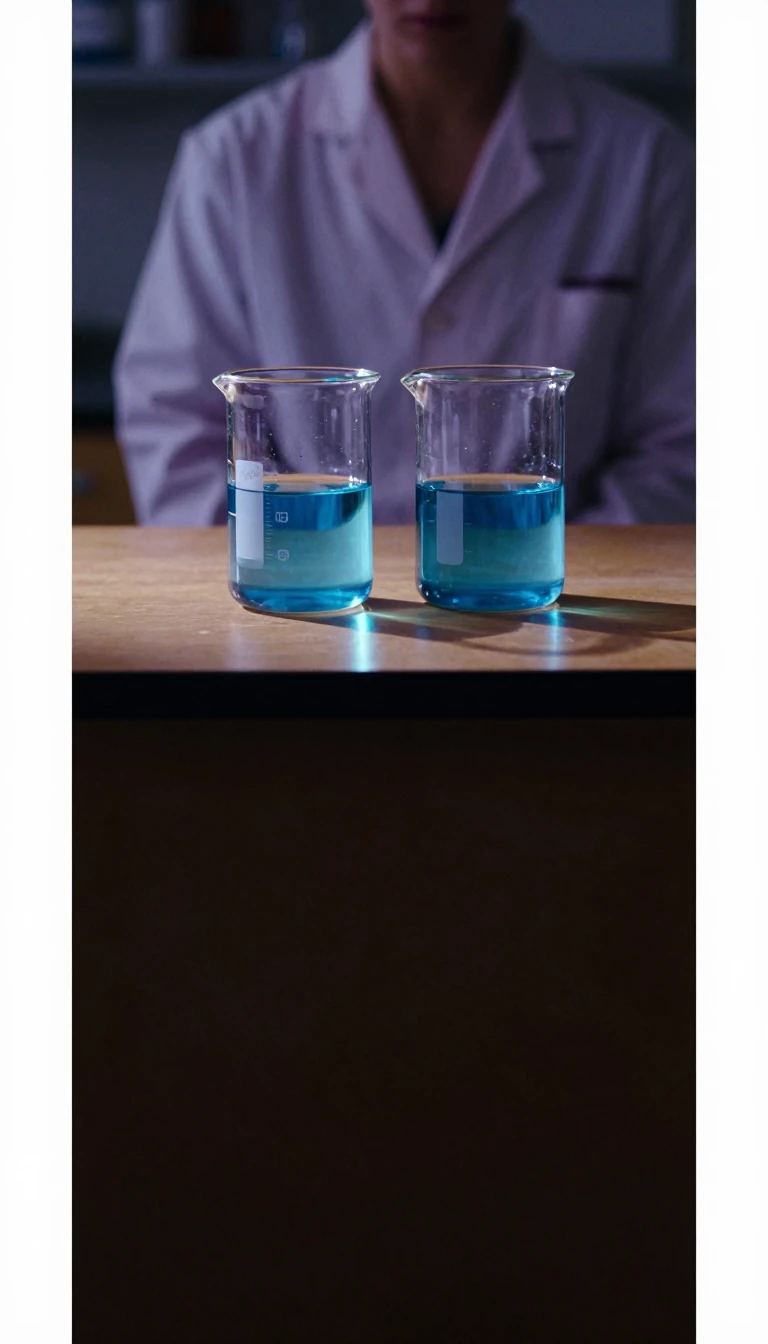
In short: We rely on pH to gauge acidity, but this familiar scale breaks down in extreme environments. When dealing with superacids, scientists turn to the Hammett acidity function. It does not measure simple hydrogen ion concentration, but rather the sheer protonating power of a medium, revealing reactivity levels that defy conventional logic.
The pH scale is the gold standard for dilute aqueous solutions, where the hydrated hydrogen ion is the primary actor. However, chemistry often ventures into environments where water is absent or the medium is far more aggressive. In these cases, the Hammett acidity function, denoted as H0, provides a necessary extension. It is defined by the equilibrium between a weak base and its conjugate acid, allowing researchers to quantify acidity in non-aqueous or highly concentrated systems.
The mechanism relies on spectroscopic techniques, such as UV-visible spectroscopy or NMR, to measure the concentrations of protonated and unprotonated forms of specific indicators. By using the pKa of these indicators, chemists calculate the H0 value. A parallel function, H−, serves a similar purpose for strong basic systems. While these functions align with pH in dilute water, they diverge dramatically in extreme conditions. For instance, an H0 value of −21 in a mixture of SbF5 and HSO3F does not represent a literal concentration of 10^21 moles per cubic decimeter, which would be physically impossible.
Instead, this extreme negative value signifies that the medium is 10^21 times more effective at donating protons than a standard aqueous solution at pH 0. This disparity arises because hydrogen ions are never truly solitary in condensed phases; they are always solvated. In superacid mixtures, the solvation of the hydrogen ion is significantly weaker than in water, making the proton far more available for reactions. Ultimately, the Hammett acidity function shifts our perspective from counting ions to measuring the chemical reactivity of the environment itself, providing a robust framework for understanding substances that far exceed the limits of traditional acid-base theory.
Opens the Intellect+ feed with this card first. Swipe up for the next one.
Sources
- Summary by Intellect · source: Acidity function
To cite this card, link to https://intellectplus.co.uk/app/science-acidity-function.
How we source, check and correct cards: Editorial standards.
General information, not professional advice. Spotted an error? Flag the card or see corrections and complaints.
Intellect Plus is a visual educational discovery platform for exploring fascinating facts and ideas. Brain Food, Not Brain Rot. What is Intellect Plus?
Related
More in Acids and bases · More in Science · Latest · A–Z · All topics
