Why heavy steel ships float while small stones sink
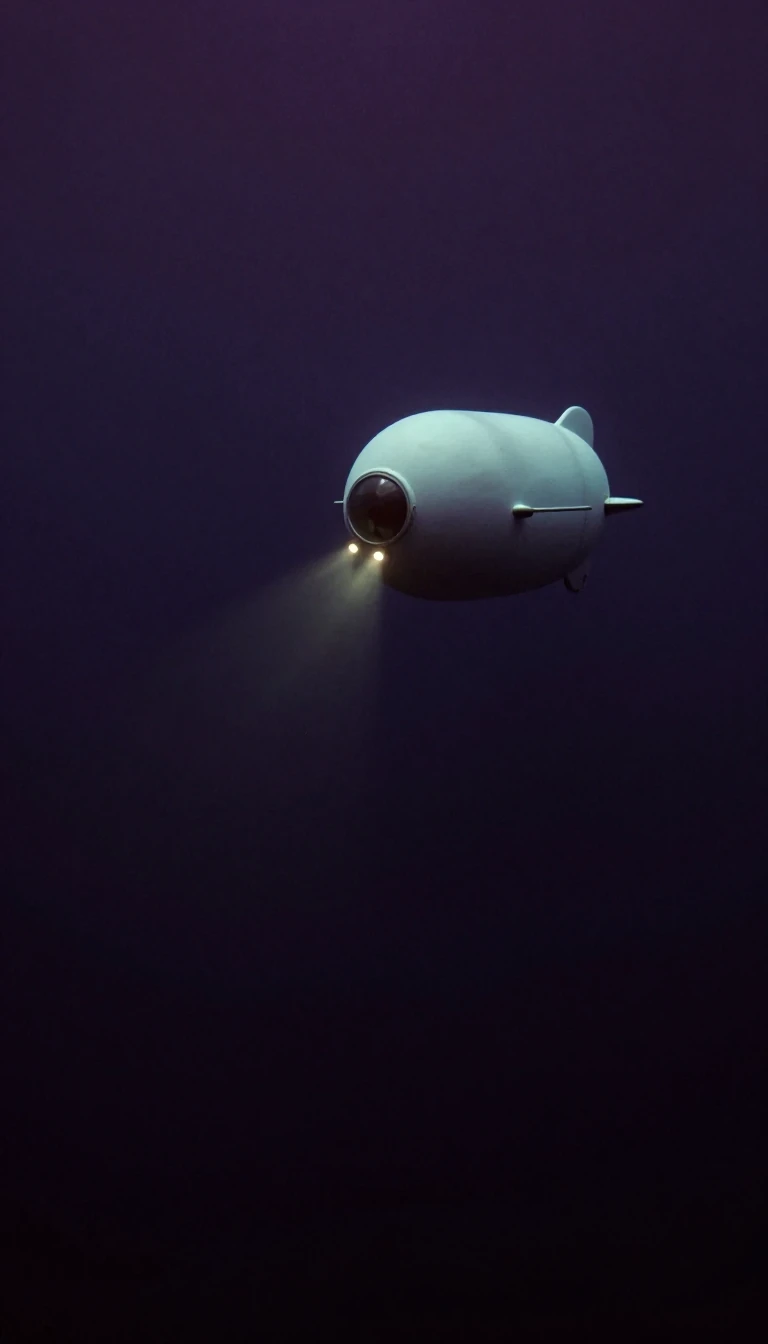
In short: It seems like a contradiction: how can a massive cargo ship stay afloat while a tiny pebble drops to the bottom? The answer lies in a balance of weight and volume. By mastering the physics of displacement, humans have learned to trick gravity using nothing but shape.
Archimedes' principle explains that any object submerged in a fluid—whether liquid or gas—experiences an upward buoyant force. This force is exactly equal to the weight of the fluid the object moves out of the way. For an object to float, it must be shaped so that the weight of the displaced water exceeds its own total mass. This means even incredibly heavy materials can stay on the surface if they occupy enough volume.
The mechanism relies on fluid pressure. Because gravity pulls fluid toward the earth, pressure increases with depth. This creates a pressure difference between the top and bottom of a submerged object, resulting in an upward push. While Archimedes formulated these ideas around 246 BC, he did so before gravity was fully conceptualized as a force. Today, we understand this relationship through density—the ratio of mass to volume—and specific gravity, which compares an object's density to that of the surrounding fluid.
In naval architecture, this principle is used with extreme precision. Engineers calculate 'longitudinal weight and buoyancy moments' by dividing a ship's hull into many segments, sometimes 40 or more for large vessels. They must ensure the underwater volume is sufficient to support every gram of cargo, fuel, and crew. If the center of gravity (G) and the center of buoyancy (B) are not perfectly balanced relative to the mid-length, the ship will not float level. This same logic allows submarines to dive by filling ballast tanks with water to increase density or surface by using compressed air to push it out.
Nature also utilizes these mechanics. Fish use a swim bladder as an internal balloon; by expanding it, they increase their volume without adding mass, lowering their specific gravity and allowing them to rise. Similarly, hot-air balloons achieve lift because heating the air inside makes it less dense than the cooler atmosphere outside.
Opens the Intellect+ feed with this card first. Swipe up for the next one.
Sources
- Summary by Intellect · source: Archimedes’ principle | Description & Facts | Britannica
- Also: Archimedes' principle
To cite this card, link to https://intellectplus.co.uk/app/science-archimedes-principle.
How we source, check and correct cards: Editorial standards.
General information, not professional advice. Spotted an error? Flag the card or see corrections and complaints.
Intellect Plus is a visual educational discovery platform for exploring fascinating facts and ideas. Brain Food, Not Brain Rot. What is Intellect Plus?
Related
More in Mechanics · More in Science · Latest · A–Z · All topics
