How electrons move through crystals like waves in a perfectly repeating landscape
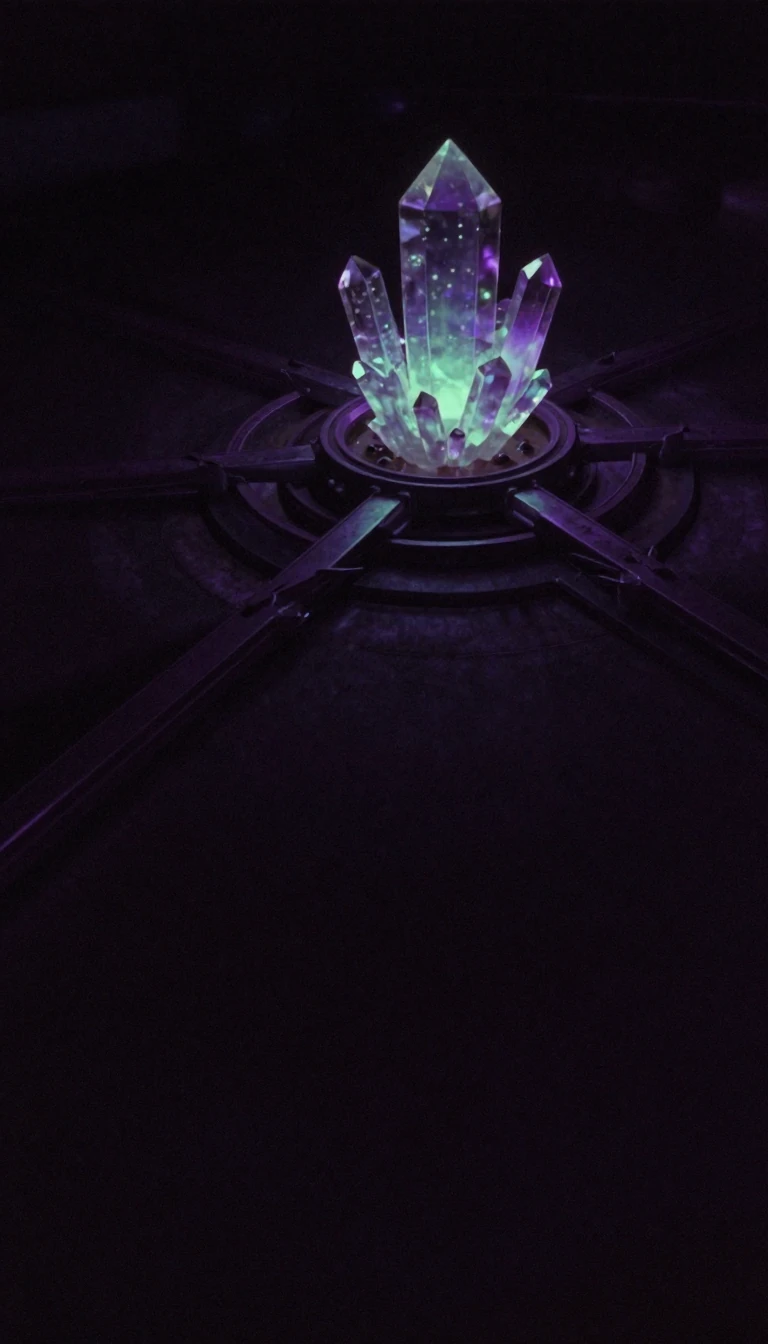
In short: In 1929, physicist Felix Bloch discovered that electrons in a crystalline solid do not move like isolated particles. Instead, they behave as waves modulated by the repeating structure of the lattice. This fundamental insight explains electronic band structures and governs how energy flows through everything from metals to photonic crystals.
Bloch's theorem provides the mathematical framework for understanding how quantum particles, such as electrons, interact with periodic potentials. When an electron travels through a crystal, its wave function is not a simple plane wave. Instead, it is expressed as a plane wave multiplied by a function that shares the same periodicity as the underlying crystal lattice. These solutions are known as Bloch states, and they serve as the essential building blocks for describing the electronic properties of solids.
A central feature of this description is the wave vector, which characterizes the state of the electron. Because the crystal lattice is periodic, these wave vectors are not unique; they are equivalent if they differ by a reciprocal lattice vector. To avoid redundancy, physicists restrict these vectors to the first Brillouin zone, a specific region that captures every unique state. Within this zone, the wave vector, when scaled by the reduced Planck constant, defines the electron's crystal momentum. This concept is not identical to standard physical momentum but functions similarly within the context of canonical transformations.
The utility of Bloch's theorem extends far beyond simple electronic systems. Because the theorem is rooted in the symmetry of periodic structures, it applies to any wave-like phenomenon moving through a repeating medium. This includes electromagnetic waves in photonic crystals and acoustic waves in phononic crystals. By analyzing how energy levels vary with the wave vector, researchers can calculate group velocities and predict the behavior of charge carriers. This semi-classical approach allows for equations that formally resemble Newton's second law, bridging the gap between quantum mechanical wave functions and observable physical dynamics in complex materials.
Opens the Intellect+ feed with this card first. Swipe up for the next one.
Sources
- Summary by Intellect · source: Bloch's theorem
To cite this card, link to https://intellectplus.co.uk/app/science-bloch-s-theorem.
How we source, check and correct cards: Editorial standards.
General information, not professional advice. Spotted an error? Flag the card or see corrections and complaints.
Intellect Plus is a visual educational discovery platform for exploring fascinating facts and ideas. Brain Food, Not Brain Rot. What is Intellect Plus?
Related
More in Condensed matter physics · More in Science · Latest · A–Z · All topics
