Why water boils at different temperatures depending on where you stand on Earth.
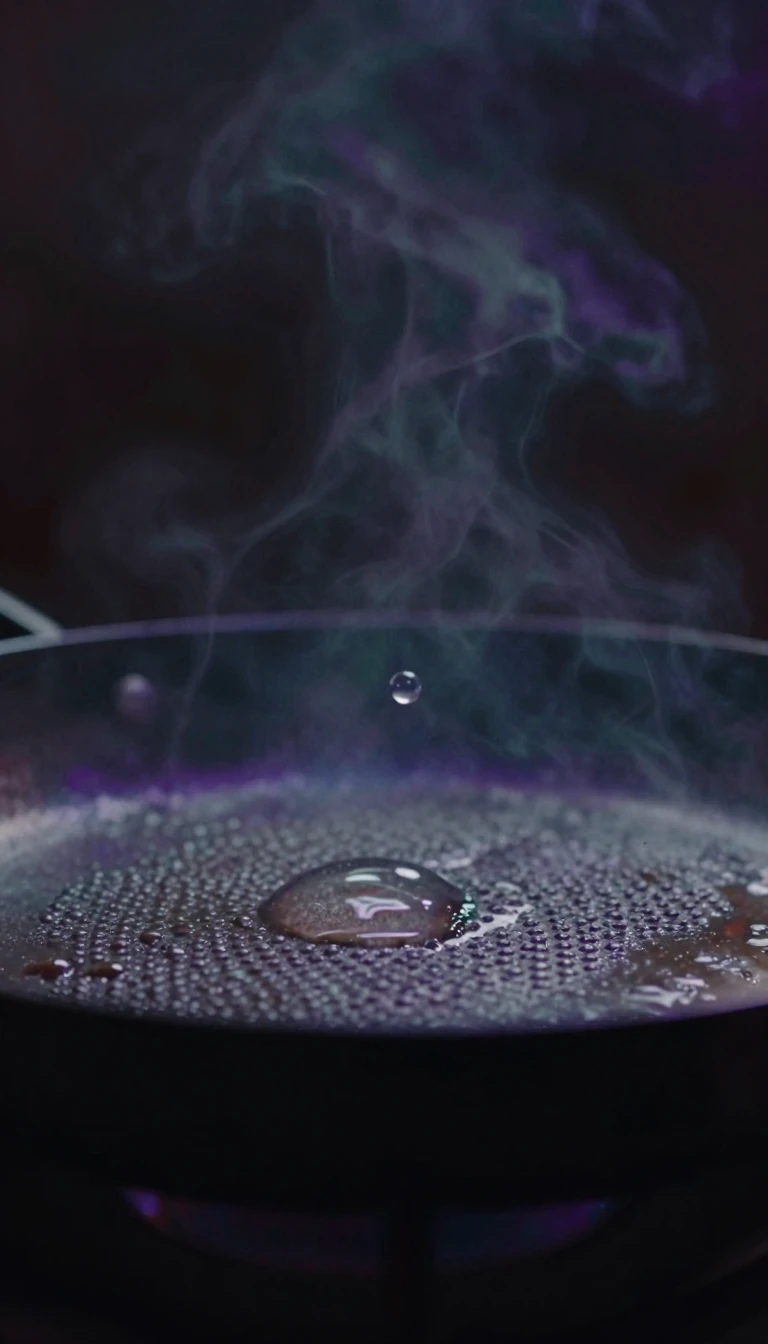
In short: Boiling is not a fixed property of a substance, but a dynamic dance between internal vapor pressure and external environmental force. When these two pressures equalize, a liquid transforms into gas. This means your altitude determines the temperature at which your morning tea actually begins to boil.
At its core, boiling occurs when a liquid's vapor pressure matches the surrounding atmospheric pressure. Under standard sea-level conditions, water boils at 100 °C. However, as you ascend to higher altitudes, the external atmospheric pressure drops significantly. Because the environment exerts less force on the liquid, the vapor pressure required to initiate boiling is reached at a lower temperature. For instance, at 1,905 meters, water boils at approximately 93.4 °C, and at the summit of Mount Everest, the boiling point plummets to about 71 °C.
This relationship between pressure and temperature is fundamental to understanding phase transitions. The boiling point is not an absolute constant; it is a variable that shifts based on external conditions. While the normal boiling point is defined at standard atmospheric pressure—either 101.325 kPa or 100 kPa depending on the convention—the range of a substance's boiling point is bounded by its triple point at the low end and its critical point at the high end. Beyond the critical point, the distinction between liquid and gas vanishes entirely, resulting in a single phase often described as a superheated gas.
Molecular structure also dictates how easily a substance reaches this state. Factors such as molecular mass, polarity, and the ability to form hydrogen bonds influence how tightly molecules are held in the liquid phase. Larger, more polar molecules generally require more energy to escape into the vapor phase, leading to higher boiling points. Conversely, adding non-volatile impurities like salt can elevate the boiling point of a liquid by decreasing its overall volatility. Understanding these mechanisms allows scientists to predict the behavior of substances across diverse environments, from the depths of the Dead Sea to the highest peaks on the planet.
Opens the Intellect+ feed with this card first. Swipe up for the next one.
Sources
- Summary by Intellect · source: Boiling point
- Also: Boiling point | Definition, Examples, Temperature, & Facts | Britannica
To cite this card, link to https://intellectplus.co.uk/app/science-boiling-point.
How we source, check and correct cards: Editorial standards.
General information, not professional advice. Spotted an error? Flag the card or see corrections and complaints.
Intellect Plus is a visual educational discovery platform for exploring fascinating facts and ideas. Brain Food, Not Brain Rot. What is Intellect Plus?
Related
More in Condensed matter physics · More in Science · Latest · A–Z · All topics
