How a Swedish chemist accidentally dismantled his mentor's greatest discovery to find hidden elements
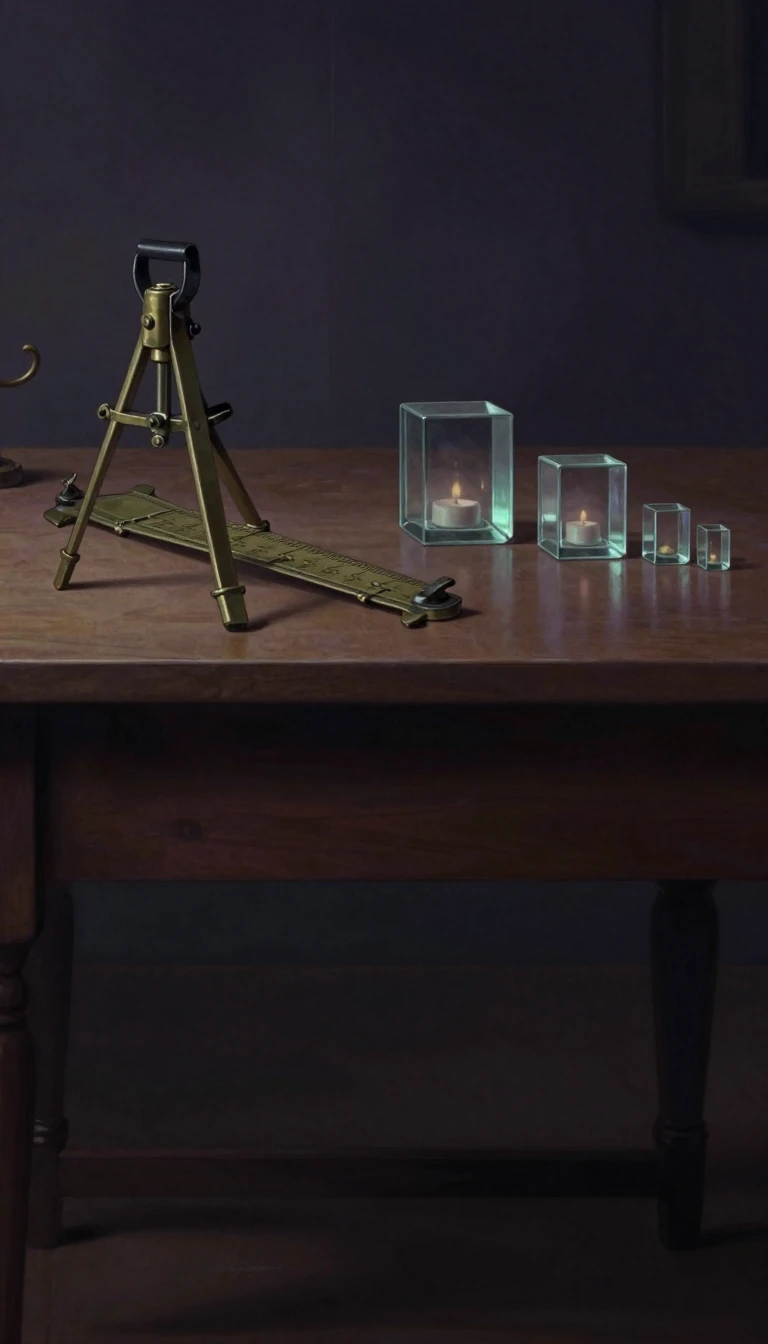
In short: Carl Gustaf Mosander was a cautious apprentice who feared embarrassing his mentor, Jöns Jakob Berzelius. Yet, his meticulous work in the laboratory led him to decompose what was thought to be a single element, revealing a hidden world of rare earth metals that redefined the periodic table forever.
Born in 1797, Carl Gustaf Mosander began his career as a pharmacy apprentice before rising to become a professor of chemistry and pharmacy at the Karolinska Institute in 1832. His scientific journey was deeply intertwined with his mentor, Jöns Jakob Berzelius, who had previously identified cerium in 1803. By 1838, Mosander began investigating ceria, a white oxide derived from the mineral Cerite-(Ce). Through careful heating and treatment with dilute nitric acid, he suspected that ceria was not a pure element, but a mixture of components. He was initially hesitant to publish his findings, fearing he might discredit Berzelius, but his mentor eventually encouraged the discovery, naming the new component lanthanum, derived from the Greek word for hidden.
Mosander’s work continued to challenge established chemical knowledge. By 1840, he further separated cerium oxide into yellow cerium, white lanthanum, and a pinkish substance he dubbed didymium, or twin. Although didymium was long accepted as an element—even appearing in Dmitri Mendeleev’s periodic table—it was later revealed to be a complex mixture. In 1885, Carl Auer von Welsbach finally separated it into praseodymium and neodymium through repeated fractional crystallizations. This pattern of discovery and subsequent refinement was a hallmark of Mosander’s career, as he constantly pushed the boundaries of what was considered elemental.
His later work in 1843 involved the isolation of terbium and erbium from yttria, a discovery that proved highly contentious. Spectroscopist Nils Johan Berlin famously denied the existence of these elements, leading to a period of scientific confusion. It was not until 1864 that Marc Delafontaine used optical spectroscopy to confirm their status as distinct elements. Ironically, the naming conventions were scrambled during the dispute; the names Mosander originally proposed for the yellow and amethyst compounds were swapped, a legacy that persists today. Mosander, who spent his final years battling cataracts, died in 1858, leaving behind a complex, often disputed, but foundational legacy in the study of rare earth elements.
Opens the Intellect+ feed with this card first. Swipe up for the next one.
Sources
- Summary by Intellect · source: Carl Gustaf Mosander
To cite this card, link to https://intellectplus.co.uk/app/science-carl-gustaf-mosander.
How we source, check and correct cards: Editorial standards.
General information, not professional advice. Spotted an error? Flag the card or see corrections and complaints.
Intellect Plus is a visual educational discovery platform for exploring fascinating facts and ideas. Brain Food, Not Brain Rot. What is Intellect Plus?
Related
More in Chemistry · More in Science · Latest · A–Z · All topics
