Why your camera lens struggles to focus every color of light at once
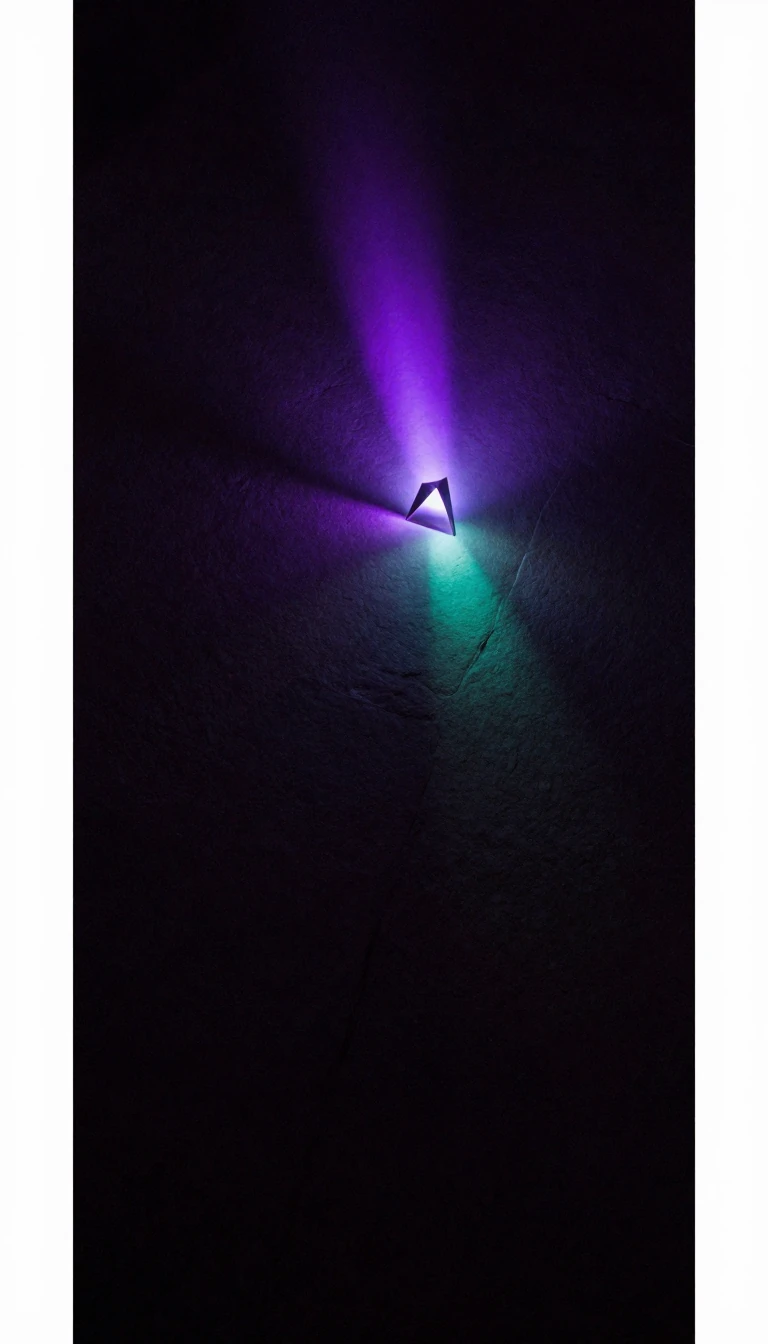
In short: Chromatic aberration occurs when a lens fails to focus different wavelengths of light at the same point, creating distracting color fringes. While modern engineering and digital post-processing offer clever workarounds, the physics of light dispersion means that perfect optical correction remains a fundamental challenge for lens designers and photographers alike.
Chromatic aberration, or color fringing, arises because the refractive index of glass varies with the wavelength of light. Since a lens's focal length depends on this index, different colors focus at different distances or magnifications. This phenomenon manifests as two primary types: axial, where wavelengths focus at varying distances along the optical axis, and transverse, where they focus at different positions across the focal plane.
Historically, scientists like Isaac Newton sought to bypass these limitations. Newton, recognizing that uneven refraction caused the issue, developed the reflecting telescope in 1668 to avoid the problem entirely by using mirrors. Today, engineers use achromatic doublets—combining crown and flint glass—to align two wavelengths, or apochromats to align three. Advanced techniques now include using diffractive optical elements, which possess negative dispersion characteristics to counteract the positive dispersion of standard glass.
While digital cameras can mitigate transverse aberration by scaling color channels, axial aberration is significantly harder to fix. Post-processing is limited by the fact that sensors capture discrete color channels, whereas aberration occurs across a continuous spectrum. Furthermore, issues like cross-channel contamination and the limitations of demosaicing algorithms mean that software corrections rarely match the clarity of an optically well-corrected lens. Even in black-and-white photography, chromatic aberration remains a factor, as it can blur images regardless of color presence.
Beyond photography, this optical quirk has practical applications. Optometrists use it during the duochrome eye test to verify lens prescriptions by observing how red and green light focus relative to the retina. It even appears in electron microscopy, where varying electron energies create focal shifts analogous to chromatic aberration in light optics. Understanding these mechanisms reveals why high-end lenses remain a complex balance of material science and geometric precision.
Opens the Intellect+ feed with this card first. Swipe up for the next one.
Sources
- Summary by Intellect · source: Chromatic aberration
To cite this card, link to https://intellectplus.co.uk/app/science-chromatic-aberration.
How we source, check and correct cards: Editorial standards.
General information, not professional advice. Spotted an error? Flag the card or see corrections and complaints.
Intellect Plus is a visual educational discovery platform for exploring fascinating facts and ideas. Brain Food, Not Brain Rot. What is Intellect Plus?
Related
More in UK & Ireland: science · More in Science · Latest · A–Z · All topics
