A lucky accident in a vacuum chamber proved that matter behaves like a wave
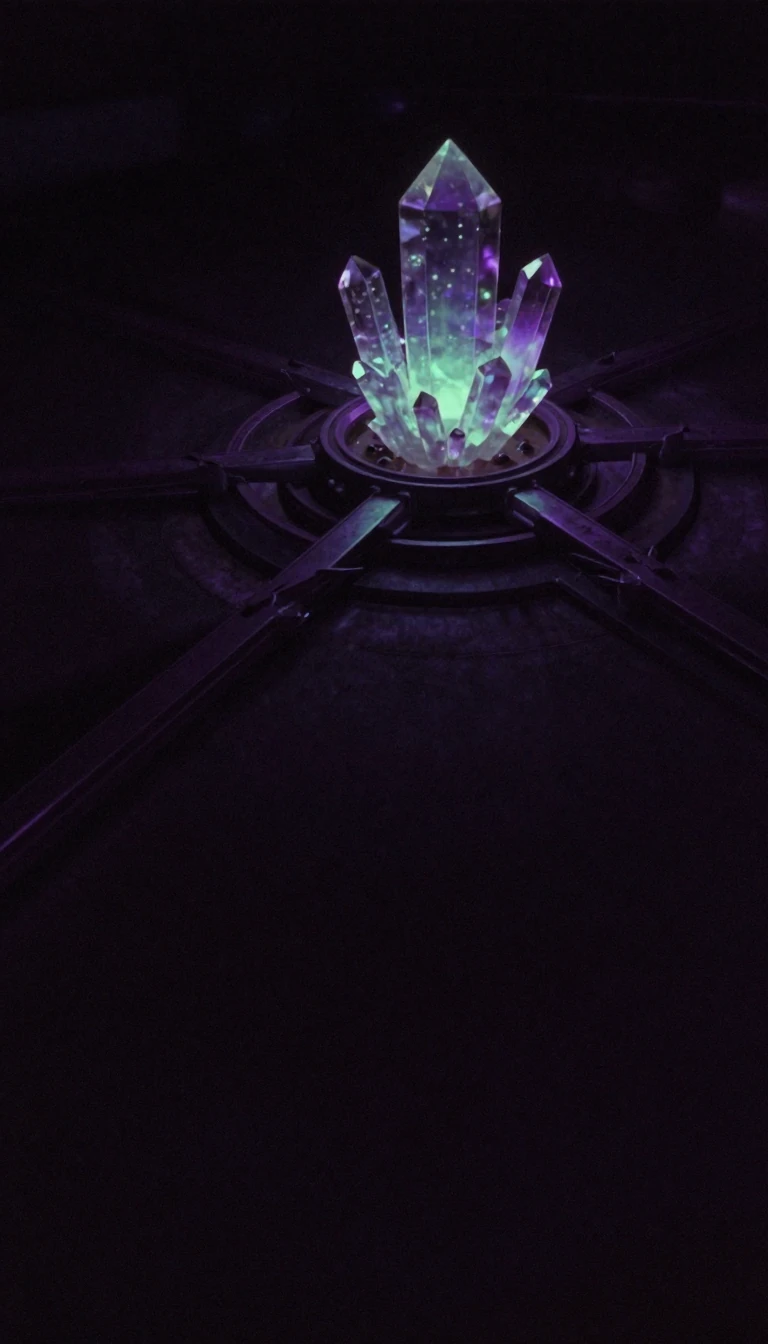
In short: In the 1920s, two researchers set out to study nickel surfaces, not quantum theory. When a laboratory accident accidentally recrystallized their metal target, they stumbled upon a diffraction pattern that confirmed a radical hypothesis: electrons, like light, possess wave-like properties. It was a milestone that reshaped our understanding of physics.
In 1924, Louis de Broglie proposed that all matter exhibits wave-particle duality, suggesting that particles possess an associated wavelength linked to their momentum. While this theory was revolutionary, experimental confirmation remained elusive. At Bell Labs, Clinton Davisson and Lester Germer were initially focused on a far more mundane task: studying the surface of nickel using electron bombardment. Their early attempts were plagued by the assumption that even smooth crystal surfaces would be too rough for electron reflection, leading to diffused results.
The breakthrough occurred following an accidental entry of air into their vacuum chamber, which oxidized the nickel. To clean the specimen, they heated it in an oven, unintentionally transforming the polycrystalline nickel into large single-crystal areas. When they resumed their experiment in 1925, the electrons scattered off these regularly spaced atoms, creating an unexpected diffraction pattern. This pattern mirrored the behavior of X-rays, which Max von Laue had previously demonstrated could be diffracted by crystal structures.
Although the initial data did not perfectly align with Bragg's law for X-ray diffraction, the results provided the evidence needed to support de Broglie's hypothesis. Hans Bethe later provided the full theoretical explanation by solving the Schrödinger equation for electron diffraction. The experiment, which utilized low-energy electron diffraction (LEED), ultimately earned Davisson a Nobel Prize in 1937, shared with George Paget Thomson, who had independently demonstrated the same effect. The exclusion of Germer from this honor remains a point of historical curiosity among physicists.
This work serves as a reminder of how experimental serendipity can drive scientific progress. Davisson and Germer’s attention to detail, combined with the freedom to conduct basic research at Western Electric, allowed them to turn a failed surface study into a cornerstone of quantum mechanics. Their methodology laid the groundwork for modern surface science, enabling researchers to explore atomic spacing and crystal structures with unprecedented precision.
Opens the Intellect+ feed with this card first. Swipe up for the next one.
Sources
- Summary by Intellect · source: Davisson–Germer experiment
To cite this card, link to https://intellectplus.co.uk/app/science-davisson-germer-experiment.
How we source, check and correct cards: Editorial standards.
General information, not professional advice. Spotted an error? Flag the card or see corrections and complaints.
Intellect Plus is a visual educational discovery platform for exploring fascinating facts and ideas. Brain Food, Not Brain Rot. What is Intellect Plus?
Related
More in Mechanics · More in Science · Latest · A–Z · All topics
