How a walk in a garden unlocked the secret structure of crystals
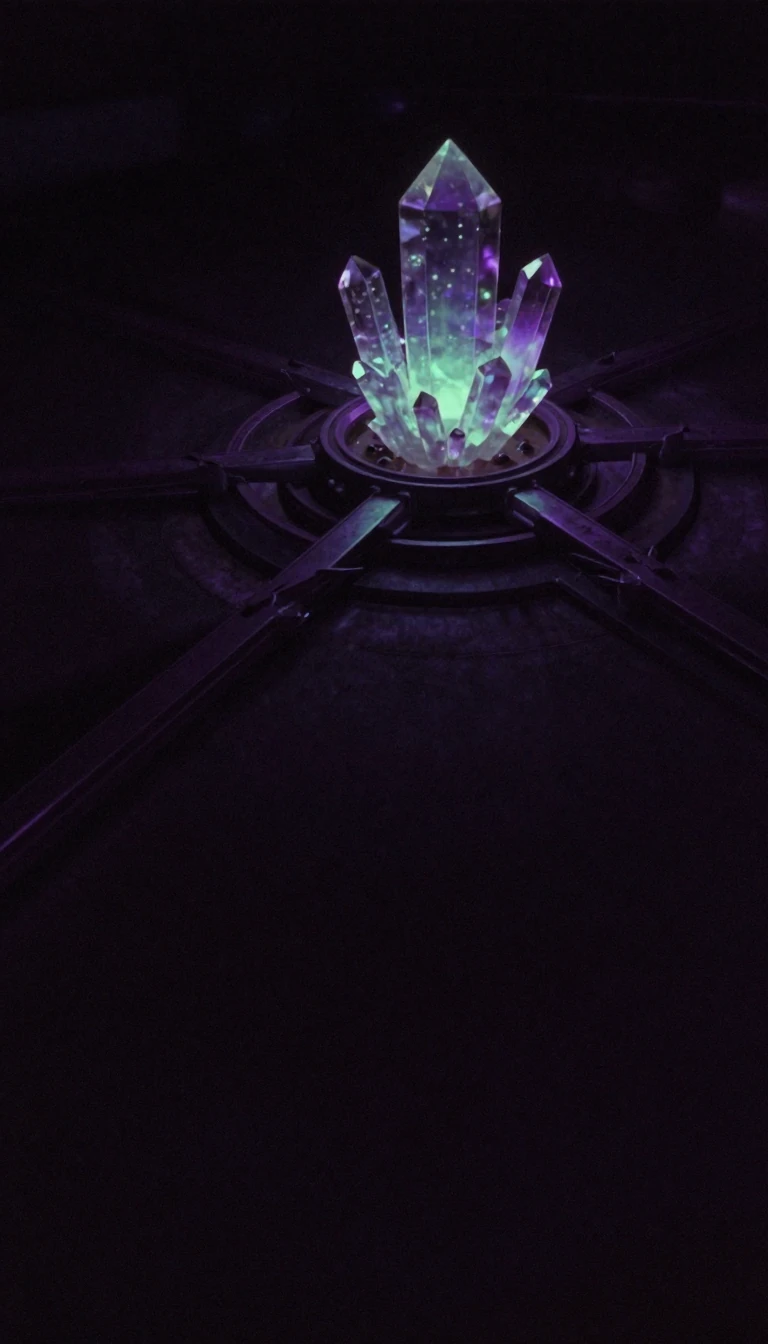
In short: In 1912, Max von Laue proposed that crystals could act as diffraction gratings for X-rays. This insight, sparked by a conversation during a stroll through a Munich park, proved that X-rays were waves and provided a revolutionary tool to map the symmetrical arrangement of atoms within solid matter.
Max von Laue’s Nobel-winning discovery fundamentally changed how scientists perceive the atomic world. By suggesting that X-rays would diffract when passing through a crystal, Laue provided the first experimental proof that crystals possess a regularly repeating atomic structure. This breakthrough confirmed that X-rays behave as electromagnetic radiation, similar to light, and established the foundation for the field of solid-state physics, which remains vital to modern electronics.
The path to this discovery was rooted in collaboration and curiosity. While at the Ludwig-Maximilians-Universität München, Laue discussed theoretical models with Paul Peter Ewald, who was investigating how light waves interacted with crystal resonators. Laue realized that if the wavelengths were significantly smaller than the spacing between atoms, diffraction would occur. He directed his students, Walter Friedrich and Paul Knipping, to test this hypothesis. Their successful experiment in 1912 produced a distinct pattern on a photographic plate, confirming the symmetrical internal geometry of the crystal.
Beyond this discovery, Laue was a central figure in 20th-century physics. He was a vocal champion of Albert Einstein’s theory of relativity and made significant contributions to quantum theory and the study of superconductivity. His career spanned decades of administrative leadership, including his tenure as director of the Institute for Theoretical Physics in Berlin. Throughout his life, Laue remained a principled figure, notably opposing the Nazi regime and later playing a crucial role in the post-war reconstruction of German scientific research institutions.
Opens the Intellect+ feed with this card first. Swipe up for the next one.
Sources
- Summary by Intellect · source: Max von Laue | X-ray diffraction, Nobel Prize, quantum theory | Britannica
- Also: Max von Laue
- Also: Nobel Prize in Physics 1914
To cite this card, link to https://intellectplus.co.uk/app/science-max-von-laue.
How we source, check and correct cards: Editorial standards.
General information, not professional advice. Spotted an error? Flag the card or see corrections and complaints.
Intellect Plus is a visual educational discovery platform for exploring fascinating facts and ideas. Brain Food, Not Brain Rot. What is Intellect Plus?
Related
More in Physics · More in Science · Latest · A–Z · All topics
