How the tiny mass difference in decaying atoms powers our most remote technology
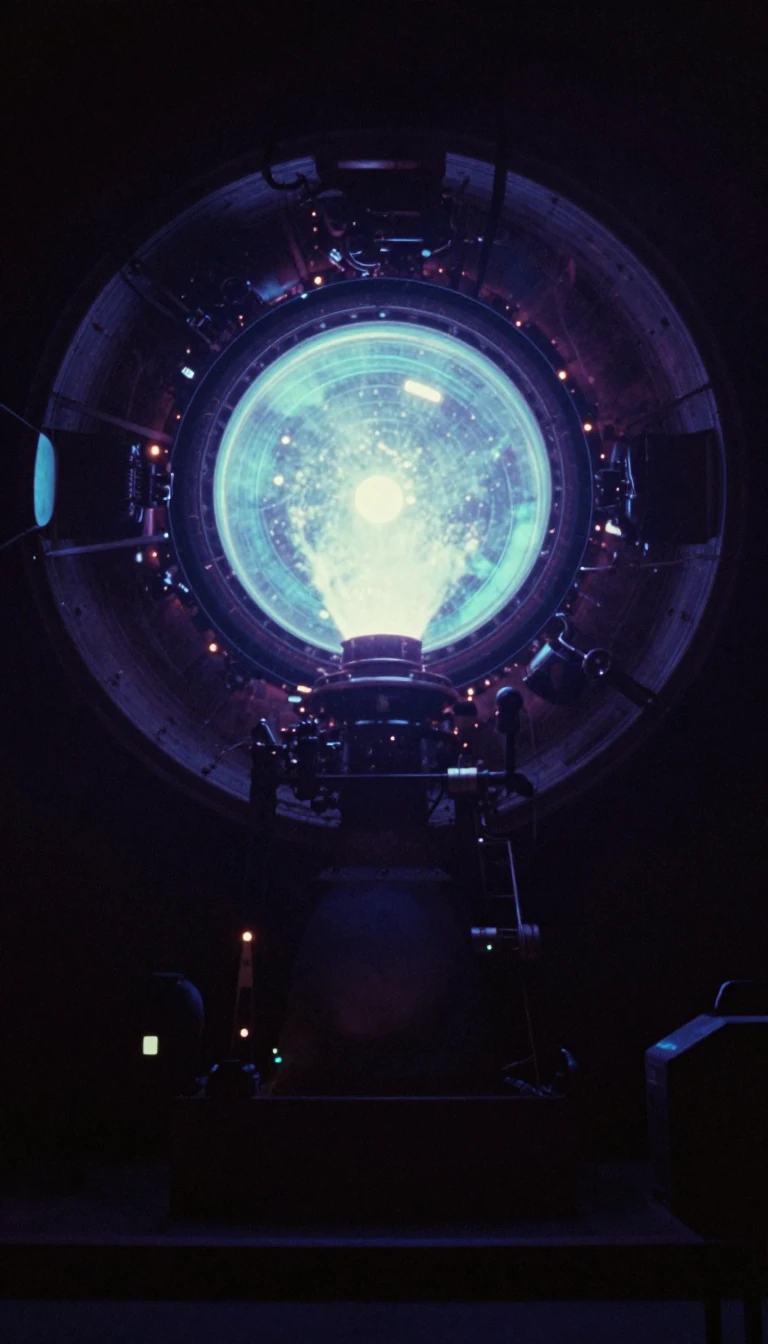
In short: Radioactive decay is more than just a breakdown of matter; it is a precise conversion of mass into energy. When an unstable nucleus transforms into a new element, the leftover mass is released as radiation. This process, measured in millions of electronvolts, fuels everything from deep-space probes to remote beacons.
At the heart of radioactive decay lies a fundamental transformation: a parent nuclide sheds energy to become a daughter nuclide. This energy change, denoted as Q, is essentially the difference in rest mass between the starting reactants and the final products. According to the principle of mass-energy equivalence, this lost mass is released as kinetic energy or radiation. Scientists typically quantify this release in million electronvolts (MeV) or thousand electronvolts (keV), with the magnitude of the energy depending entirely on the specific isotopes involved in the transition.
The scale of this phenomenon is vast, ranging from the incredibly subtle to the highly energetic. For instance, the decay of Indium-115 into Tin-115 releases a mere 147 electronvolts, representing the lowest known nuclear decay energy. Conversely, isotopes like Cobalt-60 release significantly more energy, approximately 2.8 MeV, as they transition into Nickel-60. This energy release is not merely theoretical; it is a measurable power source. By calculating the radioactive activity—the number of atoms transforming over time—and the molar mass of the substance, engineers can determine the specific radiation power of a material, such as the 17.9 watts per gram produced by Cobalt-60.
Harnessing this energy for practical applications, like radioisotope thermoelectric generators (RTGs), requires a delicate balance. Ideal isotopes must possess high decay energy and a long half-life to provide consistent power over decades. Furthermore, shielding requirements are critical; isotopes that emit intense gamma radiation, such as Cobalt-60 or Strontium-90, are often impractical due to the weight and cost of the necessary protection. This is why Plutonium-238, with its roughly eighty-year half-life and manageable alpha emissions, remains the preferred choice for long-term missions, despite its significant production costs. Understanding these decay mechanisms allows us to turn the inherent instability of the atomic nucleus into a reliable engine for exploration.
Opens the Intellect+ feed with this card first. Swipe up for the next one.
Sources
- Summary by Intellect · source: Decay energy
To cite this card, link to https://intellectplus.co.uk/app/science-decay-energy.
How we source, check and correct cards: Editorial standards.
General information, not professional advice. Spotted an error? Flag the card or see corrections and complaints.
Intellect Plus is a visual educational discovery platform for exploring fascinating facts and ideas. Brain Food, Not Brain Rot. What is Intellect Plus?
Related
More in Nuclear physics · More in Science · Latest · A–Z · All topics
