How scientists use electron spin to map the hidden behavior of complex molecules.
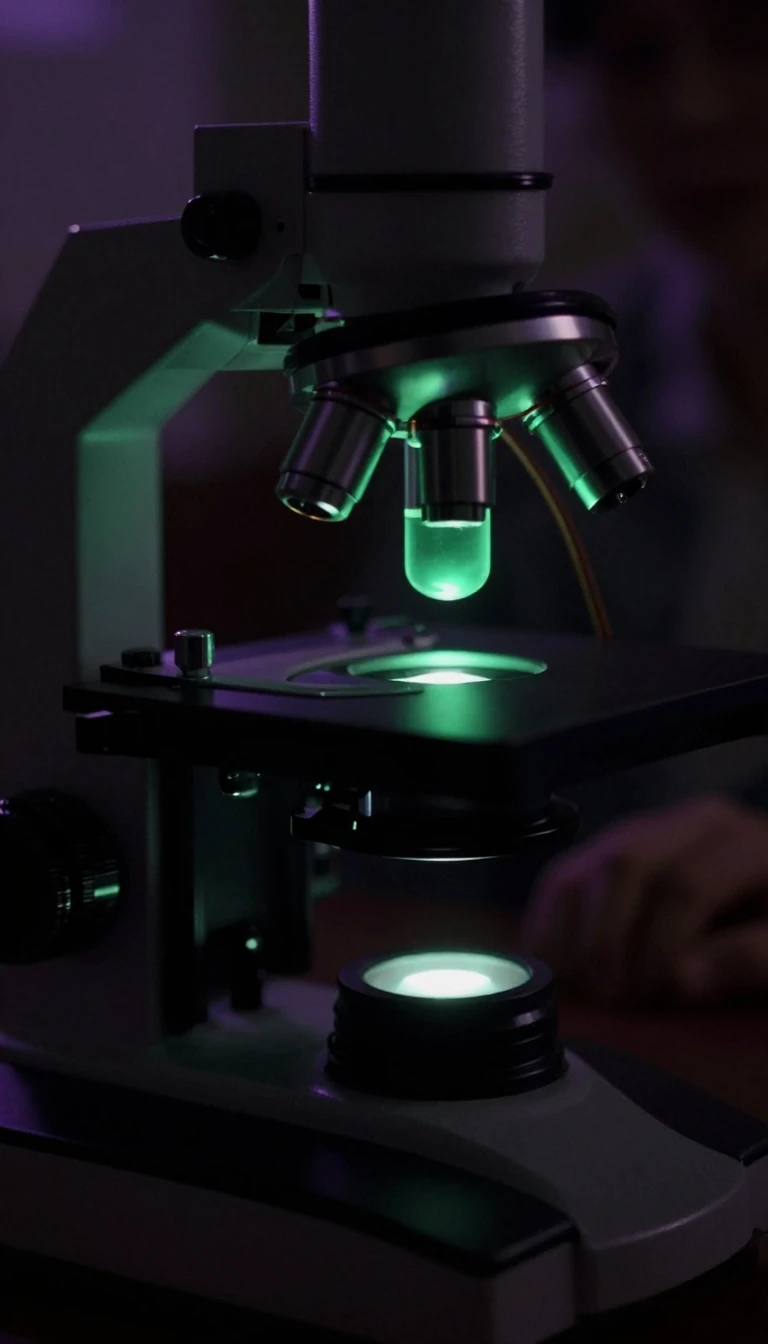
In short: Electron Paramagnetic Resonance is a sophisticated spectroscopic technique that detects unpaired electrons within materials. By observing how these electrons interact with magnetic fields and microwave radiation, researchers can map molecular structures, track reaction kinetics, and identify free radicals, providing a high-resolution window into the dynamics of chemical systems.
At its core, this method functions as the electron-based counterpart to Nuclear Magnetic Resonance. While NMR focuses on atomic nuclei, this technique targets paramagnetic species—materials containing unpaired electrons. When placed in an external magnetic field, these electrons align their magnetic moments either parallel or antiparallel to the field, creating distinct energy states. By applying microwave radiation, researchers can induce transitions between these states, with the resulting absorption patterns serving as a unique fingerprint for the sample's electronic environment.
The technique is remarkably versatile, allowing scientists to probe everything from transition metal ions and defects in solid materials to transient radicals in chemical reactions. Because the electron's magnetic moment is significantly larger than that of a nucleus, the resonance requires much higher electromagnetic frequencies than NMR. For instance, at a field strength of 3350 Gauss, an electron resonates near 9388.2 MHz, whereas a hydrogen nucleus requires only about 14.3 MHz. This sensitivity makes it an essential tool for studying complex systems, such as the conformational flexibility of supramolecular assemblies or the degradation mechanisms in redox flow batteries.
First observed by Yevgeny Zavoisky in 1944 at Kazan State University, the method was developed independently by Brebis Bleaney at the University of Oxford. Today, it encompasses a broad range of approaches, including continuous wave and pulsed methods. In standard continuous wave experiments, researchers typically keep the microwave frequency fixed while sweeping the external magnetic field. By applying field modulation and phase-sensitive detection, they can record the spectrum as the first derivative of the absorption, which significantly improves the signal-to-noise ratio and provides precise data on radical identity, spin dynamics, and electron transfer kinetics.
The power of this spectroscopy lies in its ability to reveal structural nuances that other methods might miss. Whether characterizing the electronic structure of metallocenes or monitoring electrolyte decomposition in real time, the technique provides fundamental insights at the molecular level. As researchers continue to refine these methods, they unlock new ways to balance renewable energy storage and understand the intricate behavior of materials at the edge of chemical stability.
Opens the Intellect+ feed with this card first. Swipe up for the next one.
Sources
- Summary by Intellect · source: Introduction to Electron Paramagnetic Resonance - EPSRC National Service for Electron Paramagnetic Resonance Spectroscopy - The University of Manchester
- Also: Electron paramagnetic resonance
To cite this card, link to https://intellectplus.co.uk/app/science-electron-paramagnetic-resonance.
How we source, check and correct cards: Editorial standards.
General information, not professional advice. Spotted an error? Flag the card or see corrections and complaints.
Intellect Plus is a visual educational discovery platform for exploring fascinating facts and ideas. Brain Food, Not Brain Rot. What is Intellect Plus?
Related
More in Nuclear physics · More in Science · Latest · A–Z · All topics
