Why frost forms on leaves without ever turning into liquid water first
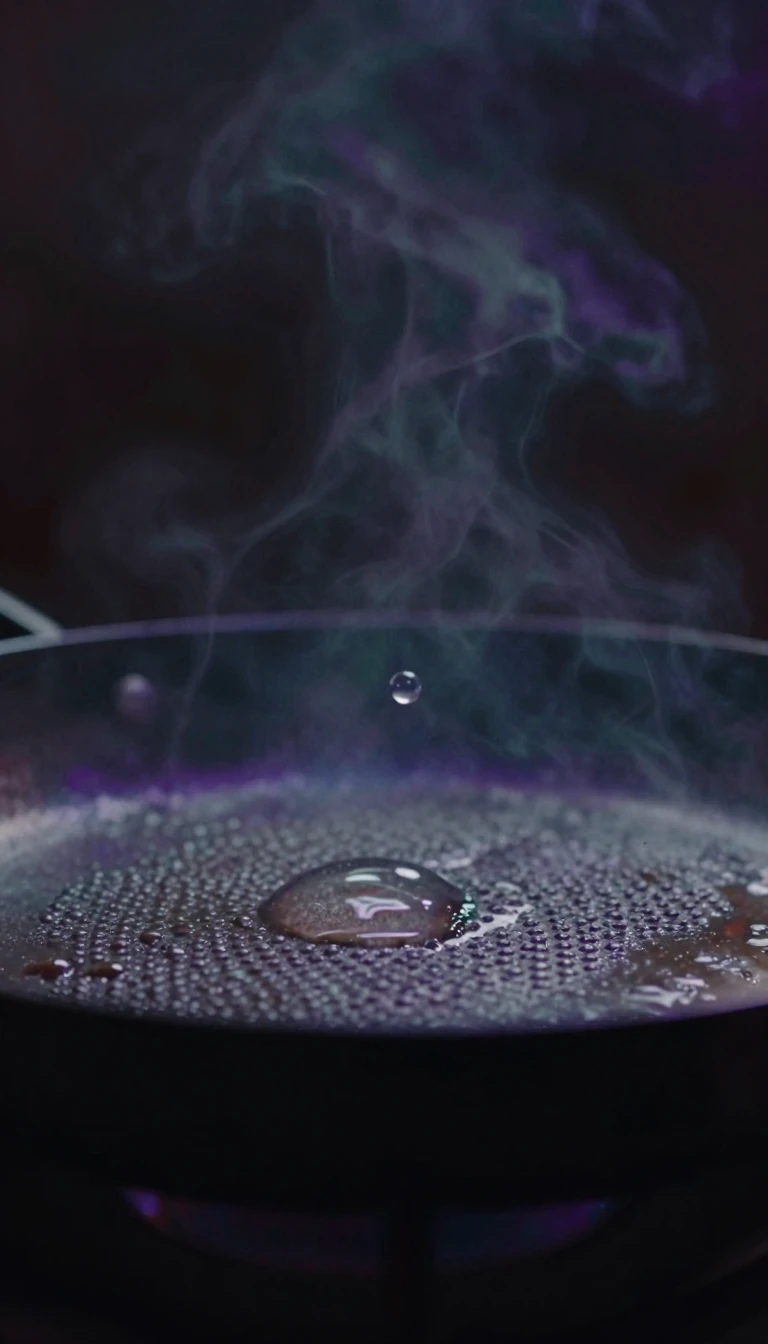
In short: Nature often skips steps. Deposition is the thermodynamic process where a gas transforms directly into a solid, bypassing the liquid phase entirely. From the delicate patterns of hoar frost on a winter leaf to the industrial coating of high-tech surfaces, this phase transition is a masterclass in energy release.
At its core, deposition is an exothermic phase change, meaning it releases energy as a substance transitions from a gaseous state to a solid. This process is the direct inverse of sublimation. For deposition to occur, thermal energy must be extracted from the gas. In the case of frost, water vapor in sub-freezing air loses enough energy to solidify instantly upon contact with a surface. Even when air temperatures drop below the dew point, water vapor does not always condense spontaneously; instead, supercooled vapor near a leaf may transition directly into ice.
This phenomenon is not limited to natural weather patterns; it is a critical mechanism in industrial engineering. In a fireplace, soot particles carried by volatile organic compounds rise as hot gases. Upon touching the cooler walls of a chimney, these compounds transition into a solid state without ever becoming liquid, leaving behind a layer of soot. This principle is harnessed in combustion chemical vapor deposition to manipulate material surfaces.
Modern manufacturing relies heavily on controlled deposition to create precise, thin films. Through evaporative deposition, solid materials are heated in low-pressure chambers until they sublimate into gas. These molecules travel across the chamber to a target surface, where they deposit as a smooth, solid layer. This is a primary method within the broader category of physical vapor deposition, a technique essential for coating materials with high precision. By bypassing the liquid state, engineers can achieve levels of uniformity and structural integrity that would be impossible if the material had to melt or flow first.
Understanding deposition allows scientists to control how matter behaves at the molecular level. Whether it is the formation of ice crystals on a garden plant or the creation of advanced thin-film coatings for electronics, the ability to manipulate this phase transition is a fundamental aspect of both atmospheric science and material technology. By managing the thermal energy of gaseous systems, we can dictate the precise moment and manner in which a gas becomes a solid.
Opens the Intellect+ feed with this card first. Swipe up for the next one.
Sources
- Summary by Intellect · source: Deposition (phase transition)
To cite this card, link to https://intellectplus.co.uk/app/science-deposition-phase-transition.
How we source, check and correct cards: Editorial standards.
General information, not professional advice. Spotted an error? Flag the card or see corrections and complaints.
Intellect Plus is a visual educational discovery platform for exploring fascinating facts and ideas. Brain Food, Not Brain Rot. What is Intellect Plus?
Related
More in Condensed matter physics · More in Science · Latest · A–Z · All topics
