The invisible skip: how matter bypasses the liquid state
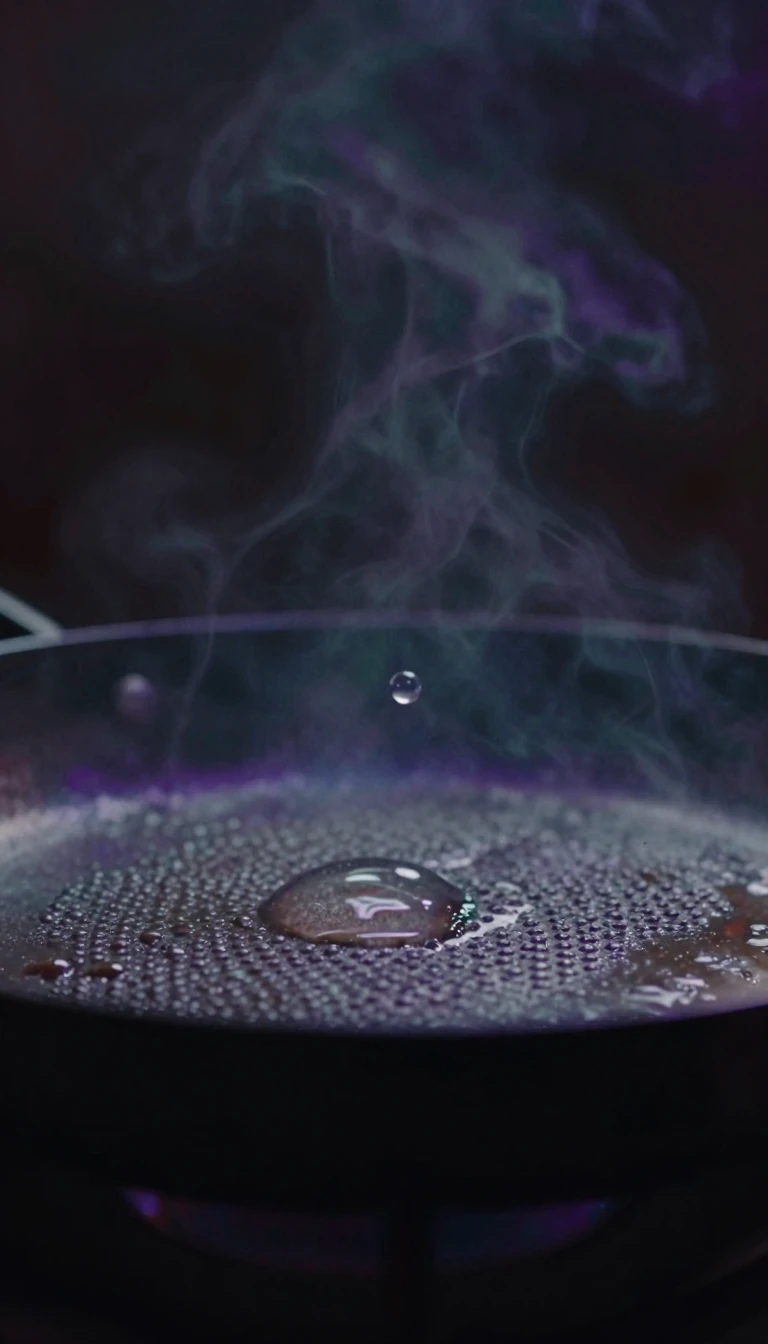
In short: Most substances melt before they evaporate, but some possess a strange ability to skip the liquid phase entirely. This phenomenon, known as sublimation, allows solids to transform directly into gas, a mechanism essential for everything from preserving food to the high-purity manufacturing of modern electronics.
Sublimation occurs when a substance transitions directly from a solid to a gas, bypassing the intermediate liquid state. This endothermic process happens when molecules absorb enough heat to overcome the attractive forces of their neighbors. While many substances require a liquid phase, others—like carbon or arsenic—have such high triple-point pressures that achieving a liquid state is difficult, making sublimation a more achievable transition.
The process is governed by the relationship between temperature and vapor pressure. For instance, solid carbon dioxide, or dry ice, sublimes rapidly at atmospheric pressure when it reaches its sublimation point of −78.5 °C. Conversely, water ice can sublime gradually at temperatures below 0 °C, provided the surrounding partial pressure is below 612 Pa. This specific mechanism is the foundation of freeze-drying, where food is frozen and water is removed under a vacuum.
Beyond natural phenomena, sublimation is a precision tool in chemistry and industry. Chemists use vacuum sublimation to purify compounds by heating a solid until it volatilizes and then re-condenses on a cooled surface, leaving impurities behind. This technique is vital for the organic electronics industry, where purities exceeding 99.99% are required. Even modern printing uses this science; dye-sublimation printing uses heat and pressure to infuse dyes into substrates at a molecular level, creating permanent, high-resolution images.
Historically, the term held mystical weight. In ancient alchemy, authors like Basil Valentine and George Ripley described sublimation as a process for the 'magnum opus,' using the physical transition of 'bodies' and 'spirits' as a metaphor for spiritual transformation.
Opens the Intellect+ feed with this card first. Swipe up for the next one.
Sources
- Summary by Intellect · source: Sublimation
- Also: Sublimation | Definition, Examples, & Facts | Britannica
To cite this card, link to https://intellectplus.co.uk/app/science-sublimation.
How we source, check and correct cards: Editorial standards.
General information, not professional advice. Spotted an error? Flag the card or see corrections and complaints.
Intellect Plus is a visual educational discovery platform for exploring fascinating facts and ideas. Brain Food, Not Brain Rot. What is Intellect Plus?
Related
More in Condensed matter physics · More in Science · Latest · A–Z · All topics
