When a single chemical species splits into two, it is called disproportionation.
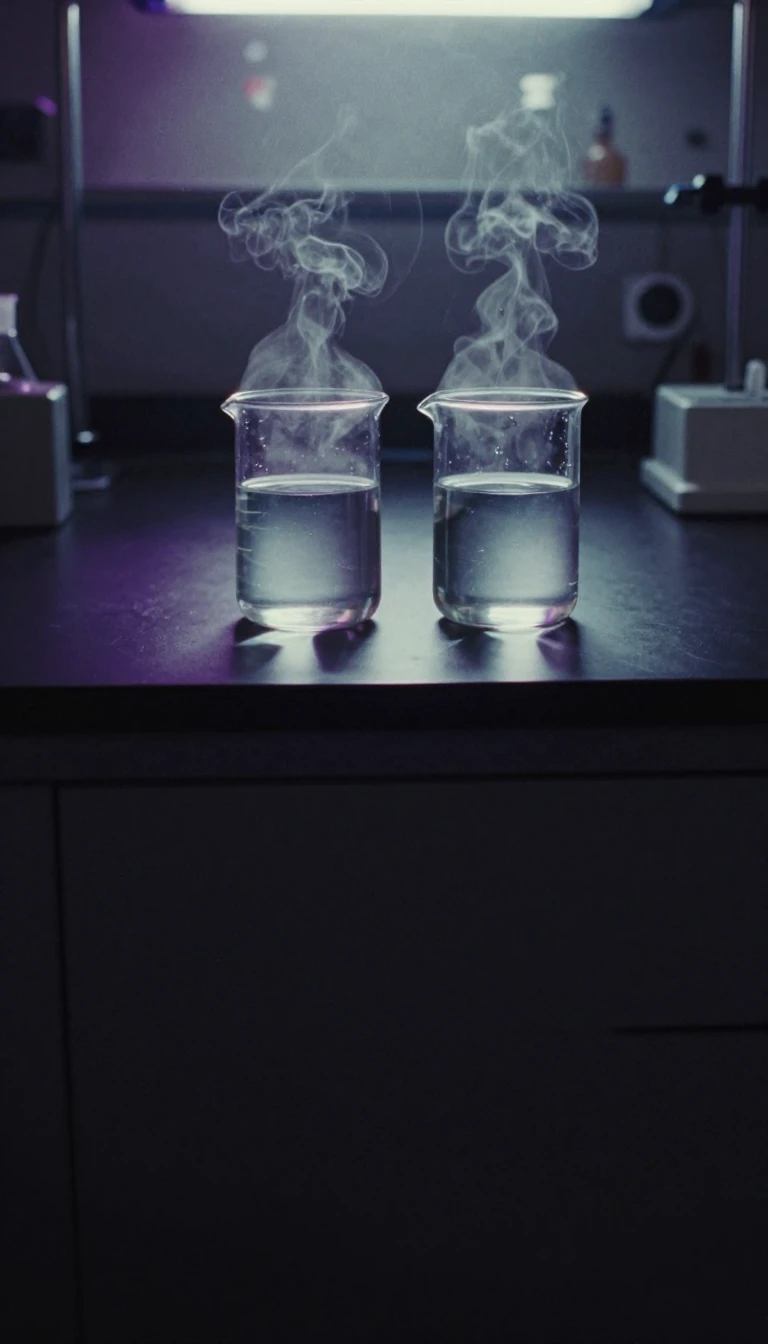
In short: In chemistry, a single compound can spontaneously transform into two distinct products: one more oxidized, one more reduced. This elegant process, known as disproportionation, powers everything from industrial carbon nanotube production to the fermentation of sugars in bacteria. It is nature's way of finding balance through internal redistribution.
At its core, disproportionation is a redox reaction where a substance in an intermediate oxidation state converts into two different compounds. One product gains electrons, becoming more reduced, while the other loses electrons, becoming more oxidized. While the term is strictly defined by these shifting oxidation states, chemists sometimes use it more broadly to describe any desymmetrizing reaction where two identical molecules react to produce two different types of molecules, even when no redox process occurs.
The phenomenon is remarkably versatile. In industrial settings, the Boudouard reaction uses high-pressure carbon monoxide on iron catalysts to produce carbon nanotubes. In biology, it is equally vital; fermentation is essentially a disproportionation process where organic molecules act as both electron donors and acceptors. Even the superoxide free radical, a potentially damaging byproduct in living systems, is neutralized through dismutation—a specific form of disproportionation—into hydrogen peroxide and oxygen, a process catalyzed by the enzyme superoxide dismutase.
The history of studying these reactions dates back to at least 1788, when Johan Gadolin examined the process using tartrates. Today, the study of disproportionation extends to the microscopic world, where microbial sulfur disproportionation in sediments helps geoscientists reconstruct the redox conditions of Earth's ancient oceans. Whether it is the thermal degradation of bicarbonate or the complex chain-termination steps in polymer chemistry, disproportionation remains a fundamental mechanism for chemical transformation.
While some researchers prefer the term 'redistribution' when only ligand exchange is involved, the concept remains a cornerstone of chemical theory. From the simple decomposition of hydrogen peroxide to the complex anaerobic metabolism of pyruvic acid confirmed by Hans Adolf Krebs in 1937, disproportionation highlights how nature frequently achieves stability by splitting the middle ground into extremes.
Opens the Intellect+ feed with this card first. Swipe up for the next one.
Sources
- Summary by Intellect · source: Disproportionation
To cite this card, link to https://intellectplus.co.uk/app/science-disproportionation.
How we source, check and correct cards: Editorial standards.
General information, not professional advice. Spotted an error? Flag the card or see corrections and complaints.
Intellect Plus is a visual educational discovery platform for exploring fascinating facts and ideas. Brain Food, Not Brain Rot. What is Intellect Plus?
Related
More in Reactions and synthesis · More in Science · Latest · A–Z · All topics
