Why every element in the universe carries its own unique, glowing barcode
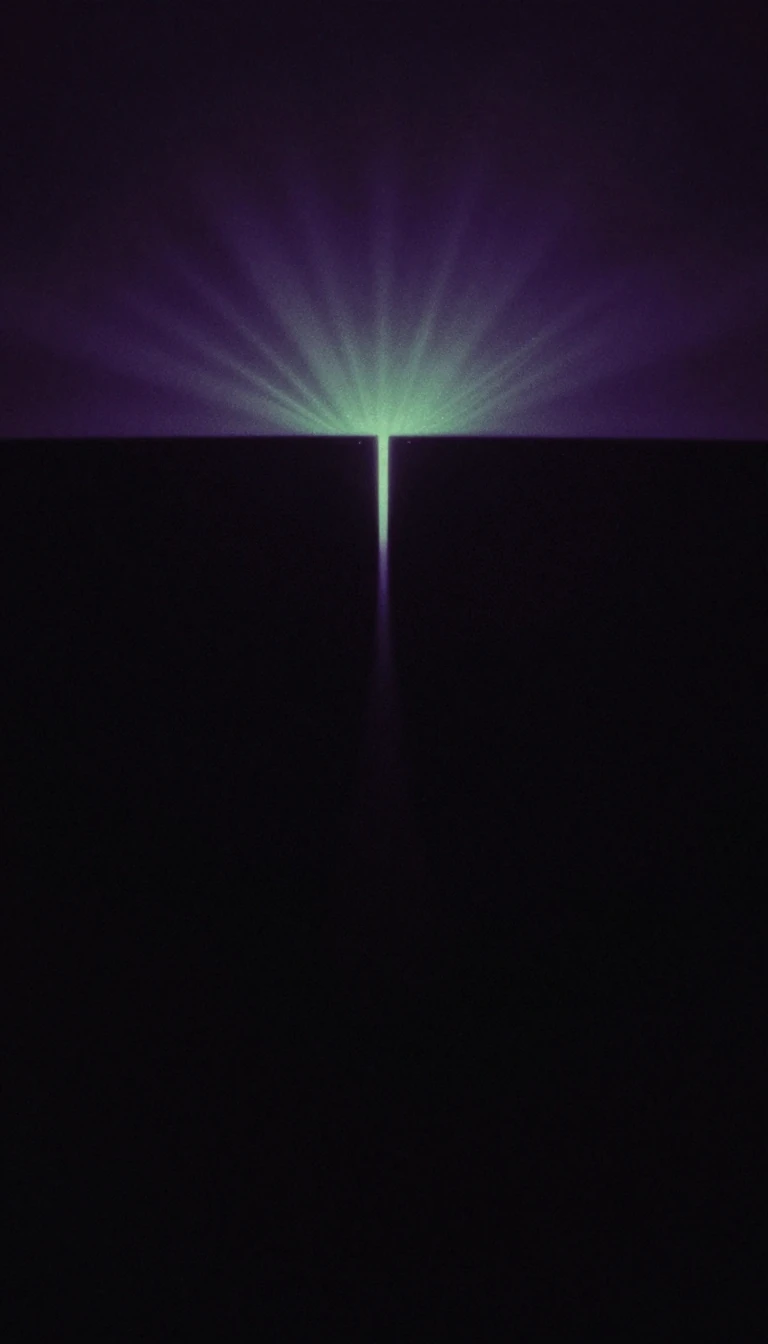
In short: Every element has a signature spectrum that acts like a fingerprint. When atoms are excited, their electrons jump between discrete energy levels, releasing light at specific wavelengths as they fall back down. This process creates a unique pattern of bright lines that reveals the chemical composition of stars and nebulae.
At the heart of an emission spectrum lies the principle of quantization. Electrons within an atom do not inhabit arbitrary energy states; they are restricted to specific, discrete levels. When an atom is energized—perhaps by heat or an electric arc—electrons are pushed from their ground state into higher, excited orbitals. As these electrons inevitably drop back to lower energy levels, they must shed the excess energy. This energy is released as a photon, with a wavelength precisely determined by the energy difference between the two states.
Because these energy levels are unique to the structure of each element, the resulting light emissions are equally distinct. For hydrogen, the most abundant element, this manifests as a specific set of visible lines: violet at 410 nm, blue at 434 nm, blue-green at 486 nm, and red at 656 nm. These lines are the inverse of hydrogen's absorption spectrum, where the atom pulls the exact same wavelengths from a continuous light source to fuel its own electron jumps. The distance an electron falls dictates the energy of the photon; a larger drop results in higher energy, shorter wavelength light.
While atomic spectra are defined by electronic transitions, molecules introduce further complexity. In substances like water or carbon dioxide, spectral patterns are influenced not just by electron movement, but also by the rotation and vibration of the molecules themselves. These additional degrees of freedom can cause spectral lines to cluster into bands. Regardless of whether one is analyzing a simple atom or a complex molecule, the fundamental mechanism remains a reliable diagnostic tool. By observing these bright-line patterns, scientists can identify the chemical makeup of distant stars or unknown substances on Earth with remarkable precision.
Opens the Intellect+ feed with this card first. Swipe up for the next one.
Sources
- Summary by Intellect · source: Spectroscopy 101 – How Absorption and Emission Spectra Work - NASA Science
- Also: Emission spectrum | physics | Britannica
- Also: Emission spectrum
To cite this card, link to https://intellectplus.co.uk/app/science-emission-spectrum.
How we source, check and correct cards: Editorial standards.
General information, not professional advice. Spotted an error? Flag the card or see corrections and complaints.
Intellect Plus is a visual educational discovery platform for exploring fascinating facts and ideas. Brain Food, Not Brain Rot. What is Intellect Plus?
Related
More in Atomic and molecular physics · More in Science · Latest · A–Z · All topics
