The deep-red glow of hydrogen-alpha is the primary tool for mapping the ionized universe.
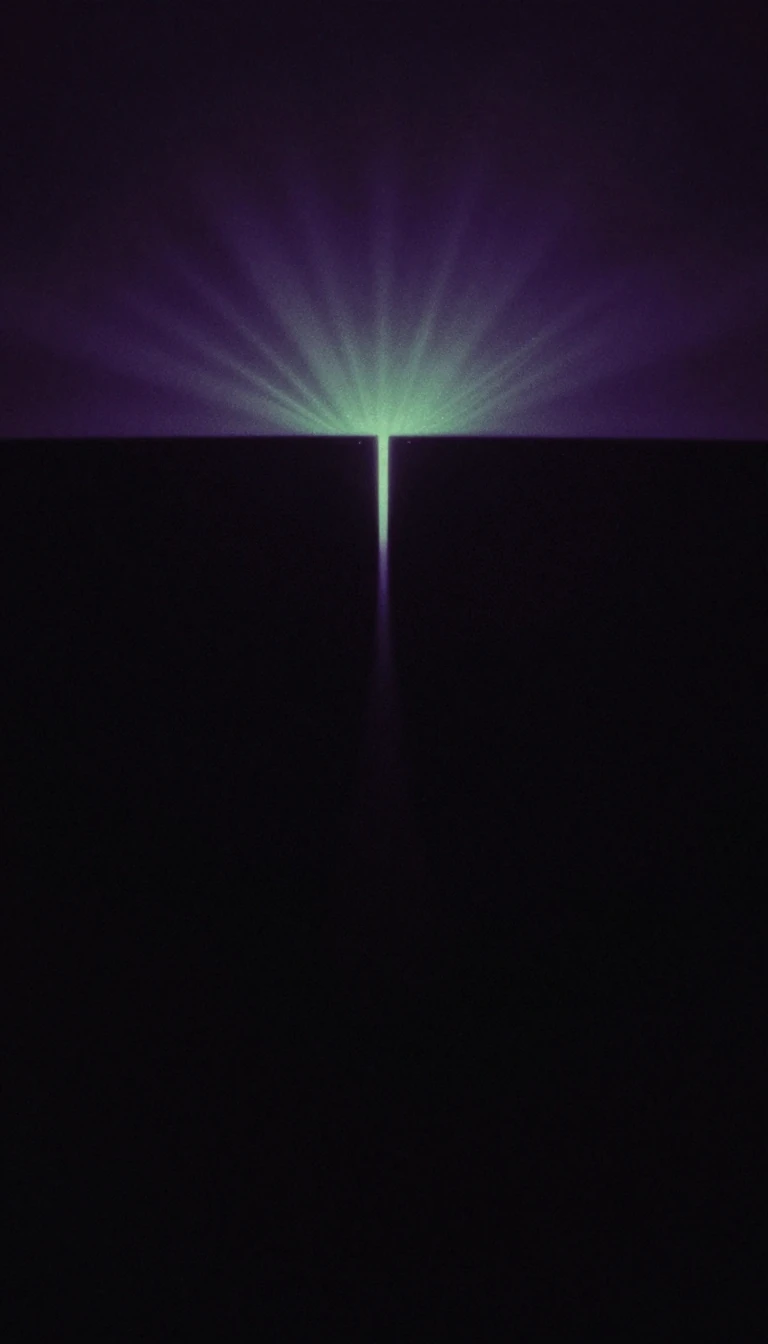
In short: Hydrogen-alpha is a specific spectral line that acts as a cosmic beacon. By tracing the light emitted when electrons drop within hydrogen atoms, astronomers can map the structure of gas clouds and solar features. It is the essential signature of ionized hydrogen, revealing the hidden architecture of the sky.
At the heart of the hydrogen atom, electrons occupy quantized energy levels. When an electron transitions from the third energy level to the second, it releases a photon at a wavelength of 656.28 nm, creating the deep-red H-alpha spectral line. This process is a hallmark of the Balmer series. Because ionizing a hydrogen atom requires 13.6 eV—only slightly more than the 12.1 eV needed to excite an electron to the third level—ionization is common in space. When ionized hydrogen recombines, electrons cascade down to the ground state, emitting H-alpha light in about half of these events.
While H-alpha is perfect for visualizing the shape and extent of nebulae, it has limitations. Because hydrogen is so abundant, the H-alpha line often saturates or self-absorbs, making it an unreliable metric for calculating a cloud's total mass. Astronomers instead turn to molecules like carbon monoxide or ammonia to weigh these structures. Despite this, H-alpha remains vital for solar observation, where it reveals the chromosphere and solar prominences.
To capture this light, scientists use specialized filters. Standard dichroic filters, made of roughly 50 vacuum-deposited layers, are sufficient for general astrophotography but lack the precision needed for solar work. Observing the Sun requires a much narrower bandwidth, often achieved by combining an energy rejection filter, a Fabry–Pérot etalon, and a blocking filter. These systems can be tuned to account for the Doppler effect caused by high-velocity solar ejections. Amateur solar observers typically use filters with a bandwidth of 0.7 Å, though adding a second etalon can sharpen this to 0.5 Å for superior contrast.
The underlying physics relies on the constructive and destructive interference of light. Whether through the internal reflections of a dichroic filter or the air gap of an etalon, these tools isolate the H-alpha line from the rest of the spectrum. This precise filtering allows us to peer into the Sun's atmosphere and trace the ionized gas that permeates our galaxy.
Opens the Intellect+ feed with this card first. Swipe up for the next one.
Sources
- Summary by Intellect · source: Hydrogen-alpha
To cite this card, link to https://intellectplus.co.uk/app/science-hydrogen-alpha.
How we source, check and correct cards: Editorial standards.
General information, not professional advice. Spotted an error? Flag the card or see corrections and complaints.
Intellect Plus is a visual educational discovery platform for exploring fascinating facts and ideas. Brain Food, Not Brain Rot. What is Intellect Plus?
Related
More in Atomic and molecular physics · More in Science · Latest · A–Z · All topics
