Why does it take so much energy to turn water into steam?
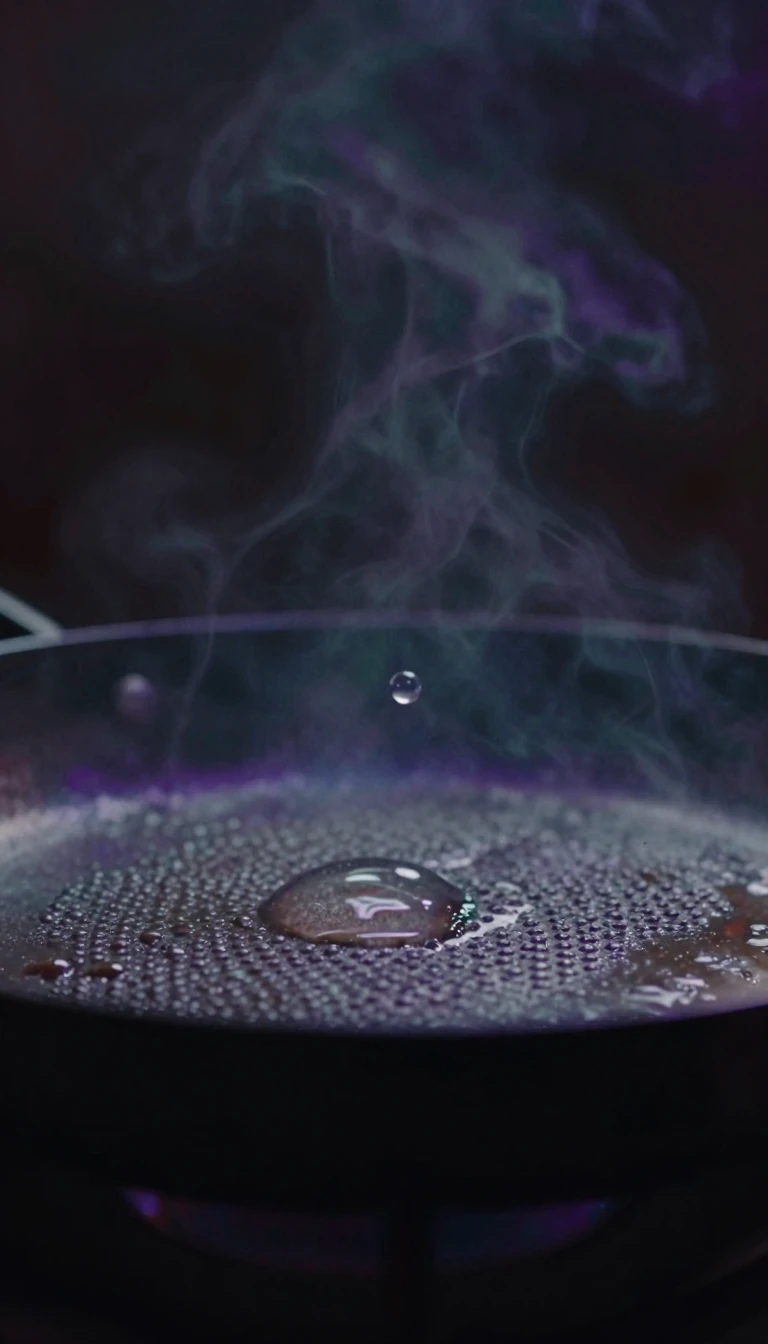
In short: The enthalpy of vaporization reveals the hidden energy cost of phase changes. It is not just about heating a liquid; it is the work required to break intermolecular bonds and push against ambient pressure. Understanding this energy exchange explains everything from why helium boils easily to how water stabilizes temperatures.
At its core, the enthalpy of vaporization represents the total energy input required to transform a liquid into a gas. This value is composed of two distinct parts: the energy needed to overcome the attractive forces holding molecules together in the liquid state, and the mechanical work performed against the surrounding atmospheric pressure. Because this process involves absorbing heat, the enthalpy change is always positive, while the reverse process—condensation—releases an equivalent amount of energy.
The strength of these intermolecular forces dictates the magnitude of the enthalpy. For instance, helium has an exceptionally low enthalpy of vaporization, just 0.0845 kJ/mol, because the van der Waals forces between its atoms are remarkably weak. In contrast, water molecules are bound by robust hydrogen bonds, requiring 40.65 kJ/mol to vaporize. This energy requirement is significant; it is more than five times the heat needed to raise the temperature of the same amount of water from 0 °C to 100 °C.
As temperature increases, the enthalpy of vaporization gradually diminishes. This happens because the liquid and gas phases become increasingly similar as they approach the critical temperature. At this specific point, the distinction between the two phases vanishes entirely, resulting in a supercritical fluid. While we often use tabulated values measured at standard boiling points, these figures are temperature-dependent and technically require corrections if the pressure deviates from 100 kPa, as the entropy of the gas phase is sensitive to pressure changes.
This thermodynamic relationship is fundamental to understanding why gases are favored at higher temperatures. As the temperature rises, the Gibbs free energy change decreases, allowing the higher entropy of the gas phase to overcome the intermolecular forces that keep matter in a condensed state. This balance is not only a theoretical curiosity but a practical necessity for fields ranging from chemical engineering to the study of electrolyte solutions.
Opens the Intellect+ feed with this card first. Swipe up for the next one.
Sources
- Summary by Intellect · source: Enthalpy of vaporization
To cite this card, link to https://intellectplus.co.uk/app/science-enthalpy-of-vaporization.
How we source, check and correct cards: Editorial standards.
General information, not professional advice. Spotted an error? Flag the card or see corrections and complaints.
Intellect Plus is a visual educational discovery platform for exploring fascinating facts and ideas. Brain Food, Not Brain Rot. What is Intellect Plus?
Related
More in Thermodynamics · More in Science · Latest · A–Z · All topics
