How flash freezing saves cells by manipulating the speed of physics
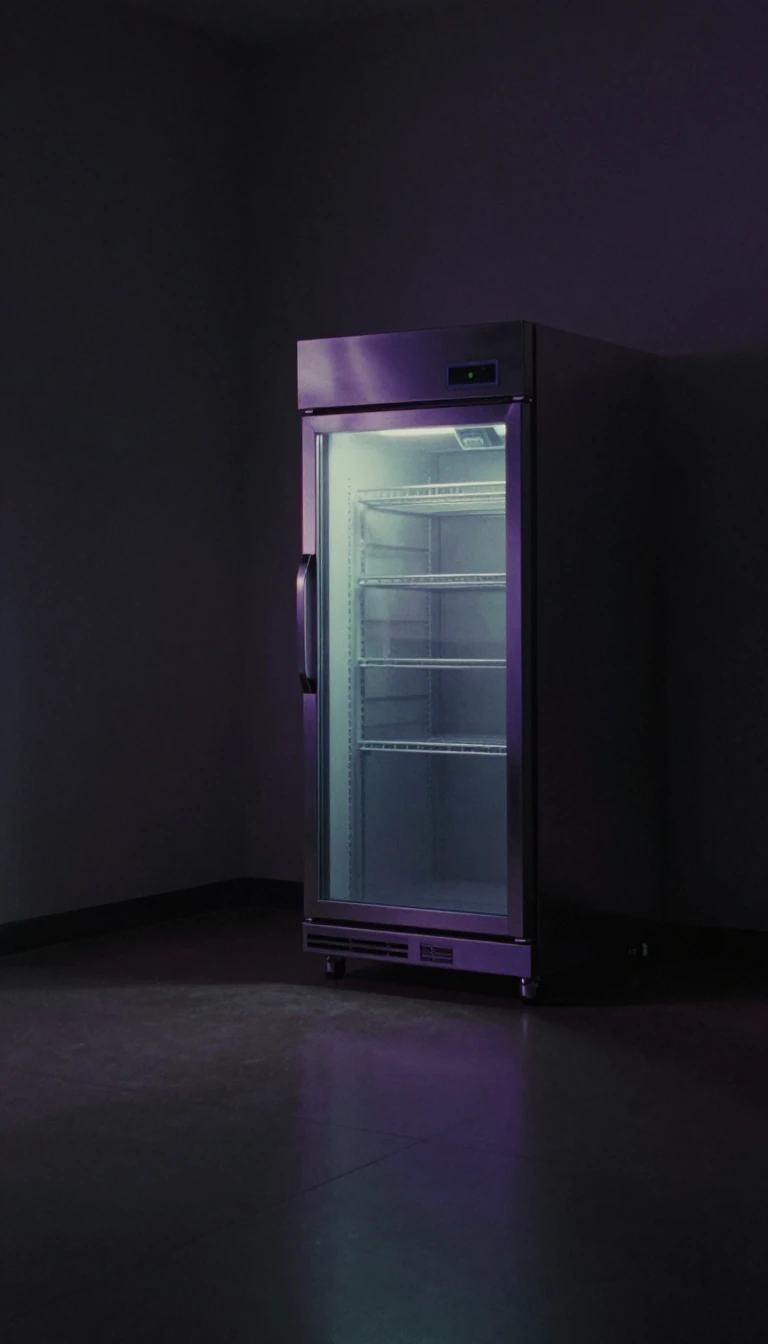
In short: When water freezes slowly, it creates large, jagged crystals that shred cell walls like microscopic daggers. Flash freezing bypasses this destruction by forcing ice to form almost instantly. By mastering the mechanics of nucleation, we can preserve biological tissue and even influence global climate models.
The difference between preservation and destruction lies in 'nucleation'—the process where water molecules begin to self-assemble into a solid structure. In slow freezing, crystals grow from fewer sites, resulting in large structures that cause cell dehydration and membrane damage. Flash freezing, which involves subjecting objects to cryogenic temperatures like liquid nitrogen at -196 °C (-320.8 °F), creates numerous nucleation sites simultaneously. This produces many smaller crystals, significantly reducing cellular damage proportional to the speed of the cooling rate.
This process is governed by classical nucleation theory, which balances the free energy cost of creating a new surface against the volume energy of the new phase. Heterogeneous nucleation—where ice forms on impurities or surfaces—is much faster and more common than homogeneous nucleation because it reduces the surface area barrier. This principle was famously commercialized in the 20th century by Clarence Birdseye, who developed 'quick-freezing' to preserve food. While industrial methods often use mechanical freezing for cost-efficiency, the goal remains the same: optimizing speed to minimize crystal size.
Beyond the kitchen, flash freezing is a critical component of atmospheric science. It dictates how ice clouds form in the upper troposphere, which scatter solar radiation and regulate Earth's temperature. Scientists are currently debating whether this crystallization happens at the surface of water droplets or within their interiors. If it occurs on the surface, it opens a theoretical door to engineering approaches that could tune surface tension to control ice formation rates, potentially impacting climate control research.
Opens the Intellect+ feed with this card first. Swipe up for the next one.
Sources
- Summary by Intellect · source: Flash freezing
To cite this card, link to https://intellectplus.co.uk/app/science-flash-freezing.
How we source, check and correct cards: Editorial standards.
General information, not professional advice. Spotted an error? Flag the card or see corrections and complaints.
Intellect Plus is a visual educational discovery platform for exploring fascinating facts and ideas. Brain Food, Not Brain Rot. What is Intellect Plus?
Related
More in Cold · More in Science · Latest · A–Z · All topics
