Why the Great Blondel and his namesake were the architects of French taste
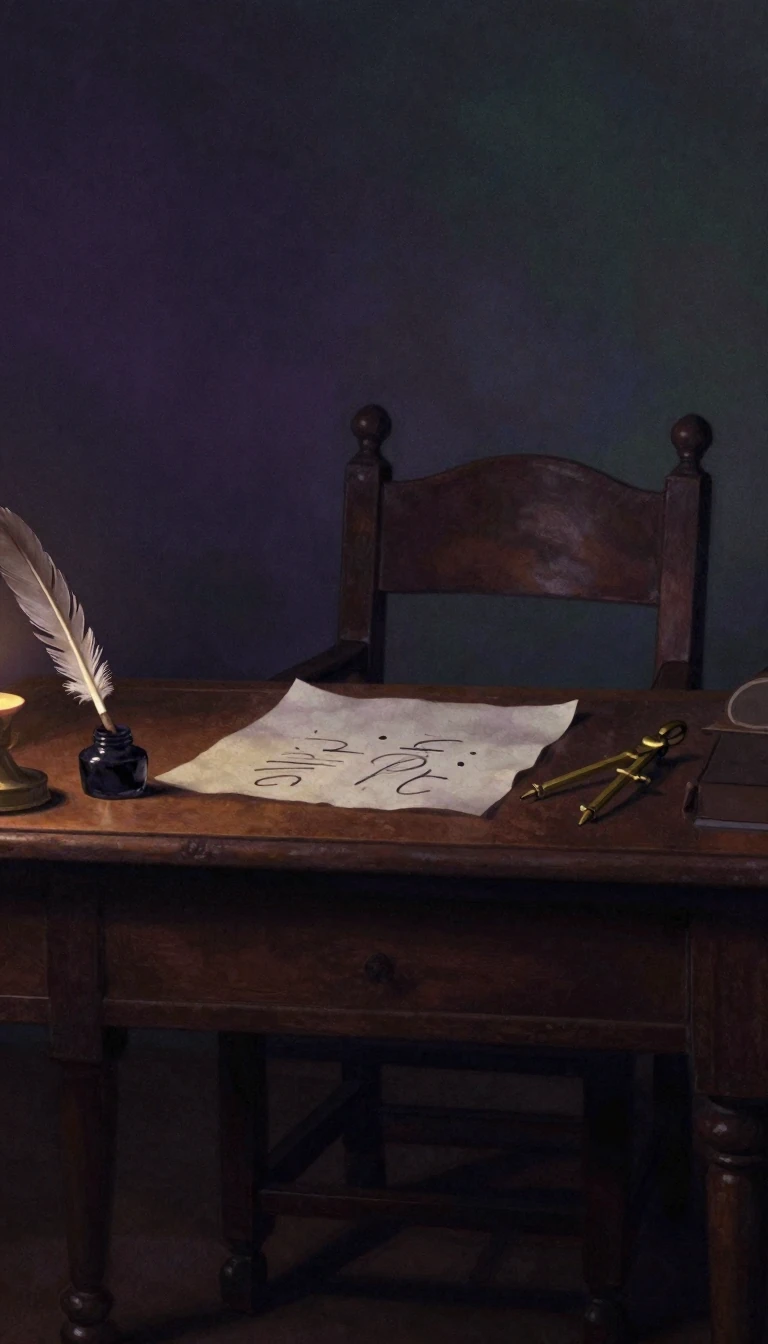
In short: History remembers two distinct masters named Blondel who shaped French architecture. One was a 17th-century polymath and diplomat who championed mathematical rigor, while the other was an 18th-century educator who defined Enlightenment aesthetics. Both left behind monumental texts that dictated the standards of their respective eras for over a century.
François Blondel, born in 1618 and known as the Great Blondel, was a multifaceted figure who served as a soldier, diplomat, and engineer. His career was defined by extensive travel, including diplomatic missions for Cardinal Richelieu and Mazarin that spanned from Egypt to Sweden. These journeys allowed him to study fortification systems and mathematics firsthand. He famously claimed to have studied under Galileo, becoming one of his earliest French supporters. His intellectual rigor was best captured in his Cours d'Architecture, a central text that placed him at the heart of the Querelle des anciens et des modernes, a cultural debate where he opposed Claude Perrault.
Decades later, Jacques-François Blondel emerged as a pivotal figure in 18th-century architectural theory. Born in 1705, he was less a polymath and more a dedicated teacher and writer. He founded the first art school in Paris specifically for architecture, influencing notable students like Sir William Chambers and Richard Mique. While he initially engaged with Rococo styles, he eventually rejected them in favor of the rationalist philosophy of the Enlightenment. His contributions were so significant that he was invited by Diderot and d'Alembert to write the architecture section for the Encyclopédie.
The legacy of both men is tied to their monumental publications. The Great Blondel’s mathematical approach, seen in works like his 1673 Résolution des quatre principaux problèmes d'Architecture, focused on structural mechanics, such as the resistance of beams. In contrast, Jacques-François Blondel’s 12-volume Cours d'architecture, completed by Pierre Patte, served as a comprehensive guide to the taste of his time. While the two men are often distinguished by their centuries, their combined influence ensured that the principles of French design remained grounded in a blend of technical precision and evolving aesthetic ideals for generations.
Opens the Intellect+ feed with this card first. Swipe up for the next one.
Sources
- Summary by Intellect · source: Jacques-François Blondel | French Baroque Architect & Architectural Theorist | Britannica
- Also: François Blondel
To cite this card, link to https://intellectplus.co.uk/app/science-fran-ois-blondel.
How we source, check and correct cards: Editorial standards.
General information, not professional advice. Spotted an error? Flag the card or see corrections and complaints.
Intellect Plus is a visual educational discovery platform for exploring fascinating facts and ideas. Brain Food, Not Brain Rot. What is Intellect Plus?
Related
More in Mathematicians · More in Science · Latest · A–Z · All topics
