The stonemason who invented ancient Druidic traditions to reshape Welsh national identity
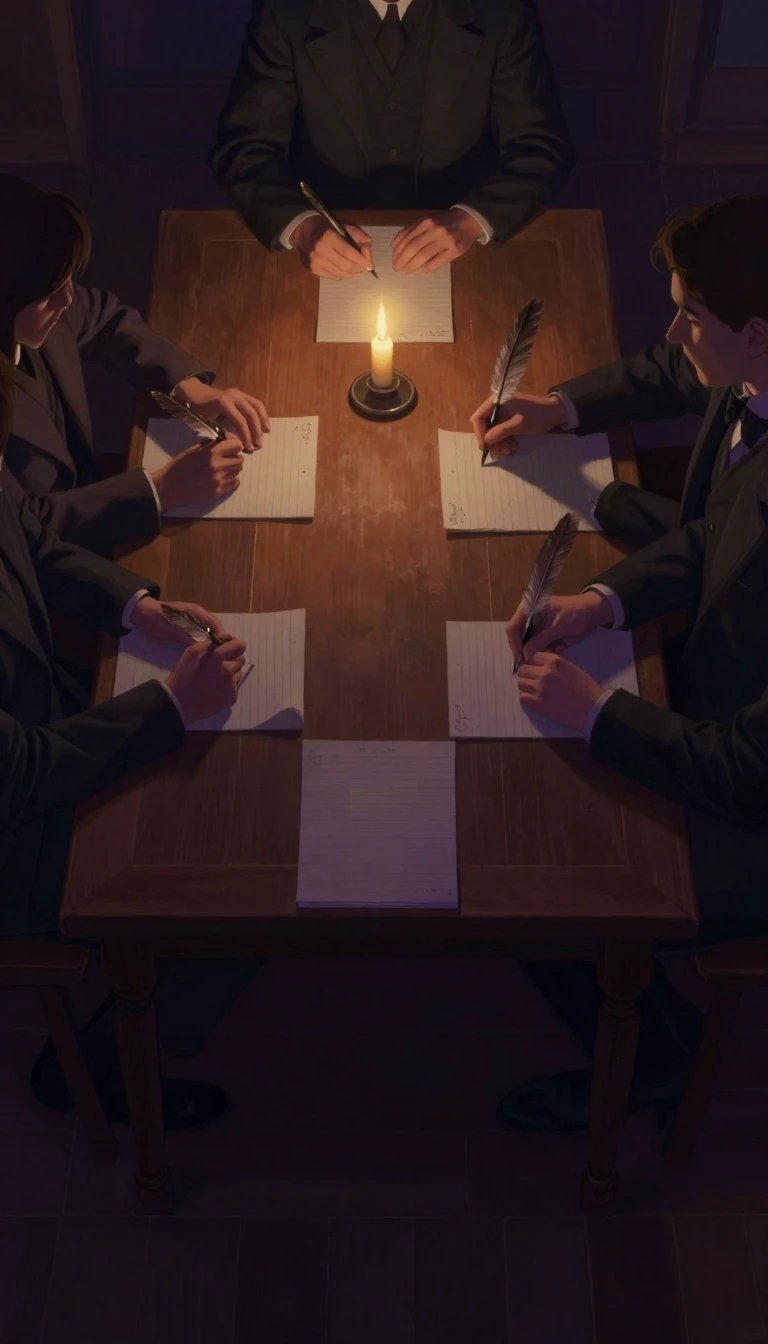
In short: Edward Williams, known as Iolo Morganwg, was a celebrated antiquarian whose legacy is built on a foundation of elaborate forgeries. By inventing ancient Druidic rites and manuscripts, he fundamentally altered Welsh culture, founding the Gorsedd and influencing neo-Druidism, even as scholars later exposed his work as a complex, imaginative fabrication.
Born in 1747, Edward Williams followed his father as a stonemason in Glamorgan before moving to London in 1773. There, he integrated into the city's Welsh literary circles. While he was initially respected as an expert collector of medieval literature, it was discovered after his death in 1826 that he had forged a vast array of manuscripts. These included poems attributed to the 14th-century poet Dafydd ap Gwilym, a false Brut chronicle, and the 'third series' of Welsh Triads, which he inserted into the three-volume Myvyrian Archaiology of Wales published between 1801 and 1807.
Williams’s forgeries were not merely artistic deceptions but tools for a larger cultural project. He sought to prove that an ancient, unbroken Druidic tradition had survived Roman conquest and Christian conversion. To support this, he created a mystical cosmology involving concentric 'rings of existence' and developed a runic system called Coelbren y Beirdd, which he claimed was the ancient alphabet of the Druids. His work was deeply influenced by the Romanticism of his era and, reportedly, a heavy reliance on laudanum. Despite the later exposure of his fraud by scholars like Sir John Morris-Jones, his influence remains profound; he successfully co-opted the Eisteddfod revival and founded the Gorsedd, a community of bards that persists today.
The evaluation of his legacy is nuanced. While critics like Morris-Jones labeled him a charlatan, later researchers such as Griffith John Williams, who studied his papers in 1917, acknowledged his role as an 'architect of the Welsh nation.' Some of his claims, such as the tale of the soldier Ieuan Gethin, may even have roots in genuine oral tradition. Today, Iolo Morganwg remains a paradoxical figure: a man who forged history to preserve it, leaving behind a cultural footprint so significant that some of his tampered texts remain better known than the authentic originals.
Opens the Intellect+ feed with this card first. Swipe up for the next one.
Sources
- Summary by Intellect · source: Iolo Morganwg
- Also: www.iolomorganwg.wales.ac.uk — Home : Iolo Morganwg and the Romantic Tradition in Wales, 1740-1918
To cite this card, link to https://intellectplus.co.uk/app/science-iolo-morganwg.
How we source, check and correct cards: Editorial standards.
General information, not professional advice. Spotted an error? Flag the card or see corrections and complaints.
Intellect Plus is a visual educational discovery platform for exploring fascinating facts and ideas. Brain Food, Not Brain Rot. What is Intellect Plus?
Related
More in Pseudoscientists · More in Science · Latest · A–Z · All topics
