Why predicting the motion of multiple celestial bodies remains a profound scientific challenge.
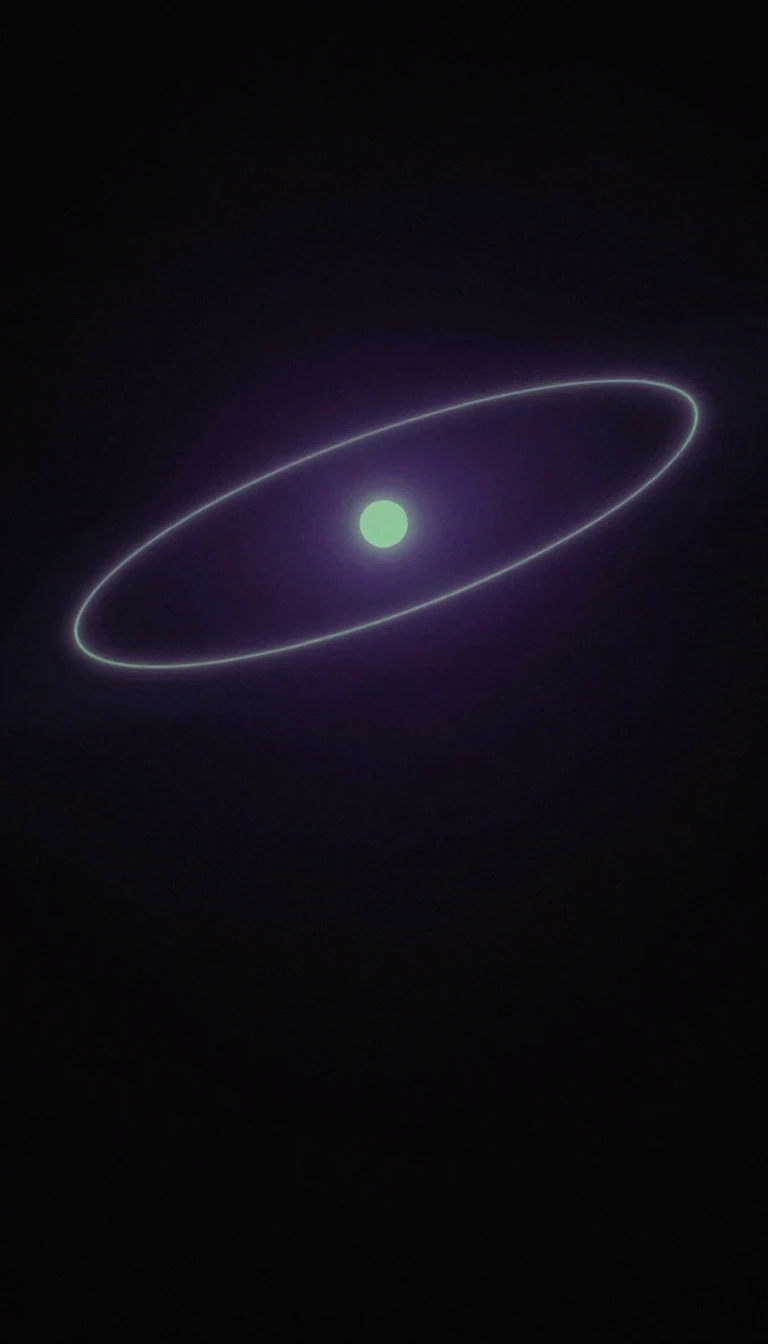
In short: The n-body problem asks how a group of objects move when they all pull on each other through gravity. While simple to state, it is notoriously difficult to solve. Because every body influences every other, the system becomes chaotic, forcing scientists to rely on ingenious numerical approximations instead of exact equations.
At its core, the n-body problem involves determining the future positions and velocities of several objects based on their initial states and their mutual gravitational attraction. While Isaac Newton’s laws provide the framework for these interactions, the complexity grows exponentially as more bodies are added. For a system of n particles, calculating the gravitational influence of every object on every other object requires computer time that increases by the square of n. This makes direct calculations impractical for systems with more than 10,000 bodies.
To manage this, researchers employ clever numerical techniques. For large systems like galaxies, which may involve 100,000 stars or even billions of particles in early universe simulations, scientists use tree structures or continuum approximations to group distant bodies together. These methods balance the need for accuracy with the reality of limited computing power. Even so, close encounters between two bodies can cause massive errors or lead to calculation divergence, requiring specialized strategies like regularization to maintain precision.
The stability of our own solar system is a classic example of this problem. With nine major bodies, including the Sun, we still do not know if the current configuration will last indefinitely or if chaotic zones will eventually lead to instability. Historically, the challenge was so significant that in the late 1800s, a Swedish monarch offered a prize for a solution. Henri Poincaré won the award for his work, which, while failing to solve the original problem, laid the essential groundwork for modern chaos theory.
Opens the Intellect+ feed with this card first. Swipe up for the next one.
Sources
- Summary by Intellect · source: Celestial mechanics - N-Body, Dynamics, Orbits | Britannica
- Also: N-body problem
To cite this card, link to https://intellectplus.co.uk/app/science-n-body-problem.
How we source, check and correct cards: Editorial standards.
General information, not professional advice. Spotted an error? Flag the card or see corrections and complaints.
Intellect Plus is a visual educational discovery platform for exploring fascinating facts and ideas. Brain Food, Not Brain Rot. What is Intellect Plus?
Related
More in Mechanics · More in Science · Latest · A–Z · All topics
