Why black holes are the universe's ultimate minimalists, shedding all their complex history
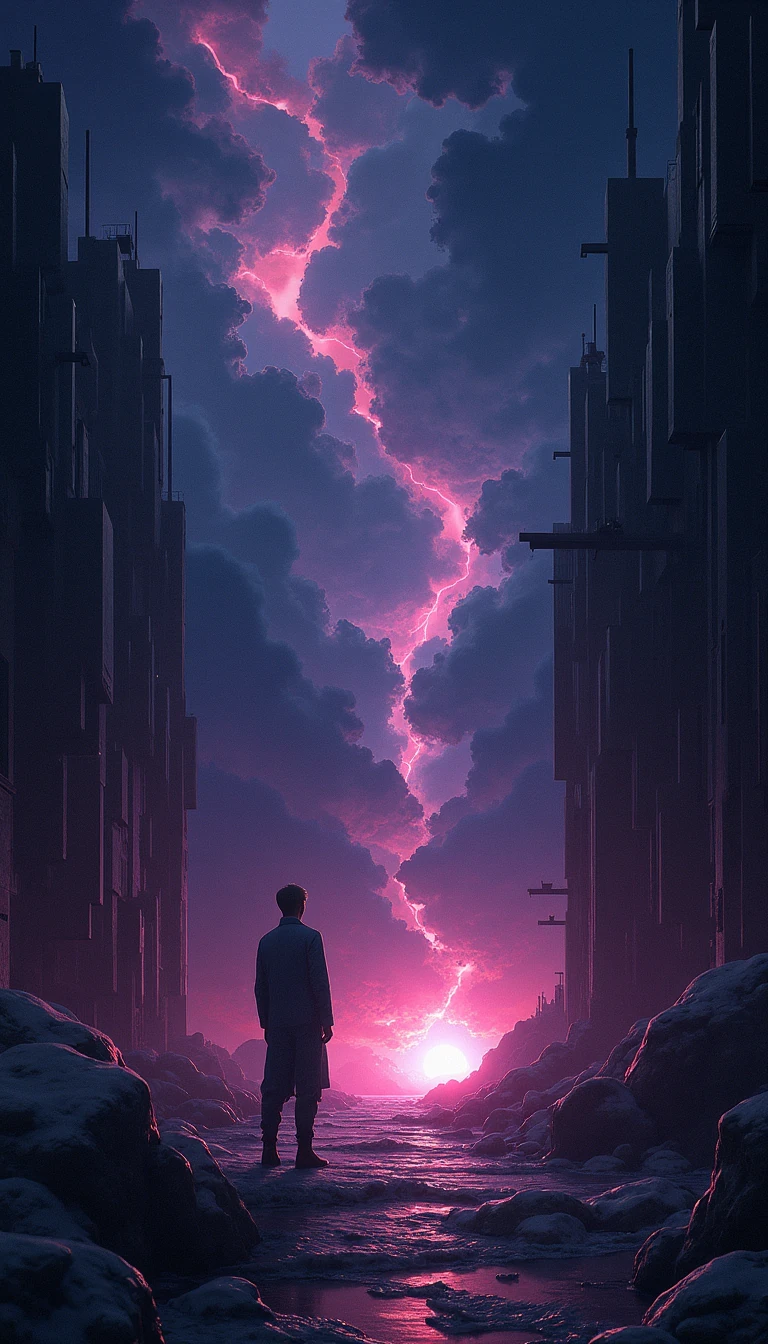
In short: When a star collapses into a black hole, it undergoes a radical simplification. According to the no-hair theorem, these cosmic giants discard almost all information about their origins. Whether formed from matter or antimatter, they become indistinguishable, defined only by three simple, observable traits: mass, charge, and spin.
The concept, famously dubbed by John Archibald Wheeler after Jacob Bekenstein’s graduate research, suggests that a black hole’s past is effectively erased. Once a black hole settles, any matter that fed it—along with its complex particle physics properties like baryonic or leptonic numbers—becomes permanently inaccessible to the outside world. This leaves behind a stripped-down object that physicists describe using only mass, angular momentum, and electric charge. While eleven parameters can describe a black hole at spatial infinity, eight are merely artifacts of the observer’s reference frame, leaving just those three core traits.
Despite its elegance, the idea remains a conjecture rather than a proven law. Werner Israel initiated the work in 1967, later bolstered by Stephen Hawking, Brandon Carter, and David C. Robinson. However, their proofs rely on restrictive assumptions, such as the mathematical requirement of real analyticity. Furthermore, the theorem holds strictly in four-dimensional spacetime. In higher dimensions or specific fields like non-abelian Yang–Mills, the rules break down, suggesting that 'hairy' black holes might exist as bound states of solitons and simpler black holes.
Modern physics continues to challenge this simplicity. In 2004, researchers derived a stable solution for a black hole carrying a scalar charge, though its existence remains speculative. More recently, Sasha Haco, Stephen Hawking, Malcolm Perry, and Andrew Strominger proposed the existence of 'soft hair'—low-energy degrees of freedom that might have been overlooked in earlier models. While 2015 gravitational wave observations align with the traditional view, ongoing projects like the Event Horizon Telescope aim to test these limits, potentially revealing that black holes are far more complex than the original theorem suggests.
Opens the Intellect+ feed with this card first. Swipe up for the next one.
Sources
- Summary by Intellect · source: No-hair theorem
To cite this card, link to https://intellectplus.co.uk/app/science-no-hair-theorem.
How we source, check and correct cards: Editorial standards.
General information, not professional advice. Spotted an error? Flag the card or see corrections and complaints.
Intellect Plus is a visual educational discovery platform for exploring fascinating facts and ideas. Brain Food, Not Brain Rot. What is Intellect Plus?
Related
More in Mechanics · More in Science · Latest · A–Z · All topics
