How a simple fluid principle allows you to lift a car with ease
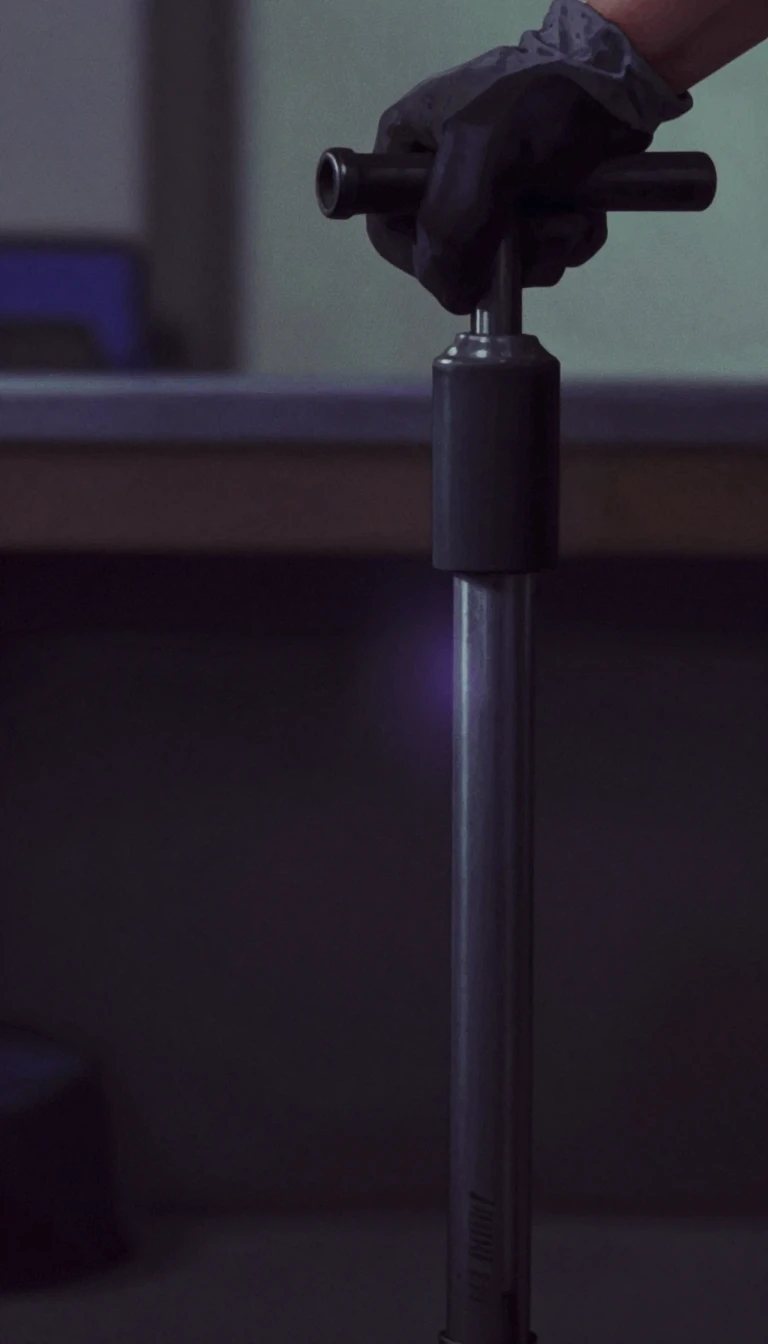
In short: Pascal's law explains how pressure applied to an enclosed fluid transmits undiminished in every direction. This mechanism allows for massive force amplification, turning a modest input into the strength required to lift heavy machinery, operate hydraulic brakes, or support the weight of an automobile in a service station.
Established by Blaise Pascal in 1653, Pascal's law describes the behavior of confined, incompressible fluids at rest. The principle dictates that any change in pressure at one point is transmitted equally throughout the entire fluid. When applied to a hydraulic system, such as a U-tube with pistons of different sizes, this creates a mechanical advantage. Because pressure is defined as force divided by area, increasing the surface area of the output piston allows the system to exert a proportionally larger force than the input.
This force multiplication does not violate the conservation of energy. While the output force is significantly greater than the input, the distance the output piston moves is reduced by the same factor. For instance, if a system is designed to amplify force by a factor of 50, moving the small input piston downward by 100 centimeters will raise the larger output piston by only 2 centimeters. The work done—force multiplied by distance—remains consistent, mirroring the mechanics of a simple lever.
Modern technology relies heavily on this principle. Hydraulic jacks, construction equipment, and vehicle braking systems all utilize fluid pressure to manage heavy loads. Beyond mechanics, the concept explains hydrostatic pressure in natural systems like artesian wells and water towers. It is also critical for scuba divers, who experience an increase of about 100 kilopascals in pressure for every 10 meters of depth beyond the standard atmospheric pressure of 100 kilopascals.
Interestingly, some popular lore surrounding Pascal may be inaccurate. The famous 'Pascal's barrel' experiment, where a vertical tube is used to burst a sealed barrel of water, is not found in any of the mathematician's preserved works. Attributed to him by 19th-century French writers, the experiment is likely apocryphal, though it remains a staple in physics textbooks to illustrate the effects of hydrostatic pressure.
Opens the Intellect+ feed with this card first. Swipe up for the next one.
Sources
- Summary by Intellect · source: Pascal's law
To cite this card, link to https://intellectplus.co.uk/app/science-pascal-s-law.
How we source, check and correct cards: Editorial standards.
General information, not professional advice. Spotted an error? Flag the card or see corrections and complaints.
Intellect Plus is a visual educational discovery platform for exploring fascinating facts and ideas. Brain Food, Not Brain Rot. What is Intellect Plus?
Related
More in Mechanics · More in Science · Latest · A–Z · All topics
