Why light rays are just a useful fiction for understanding the physical world
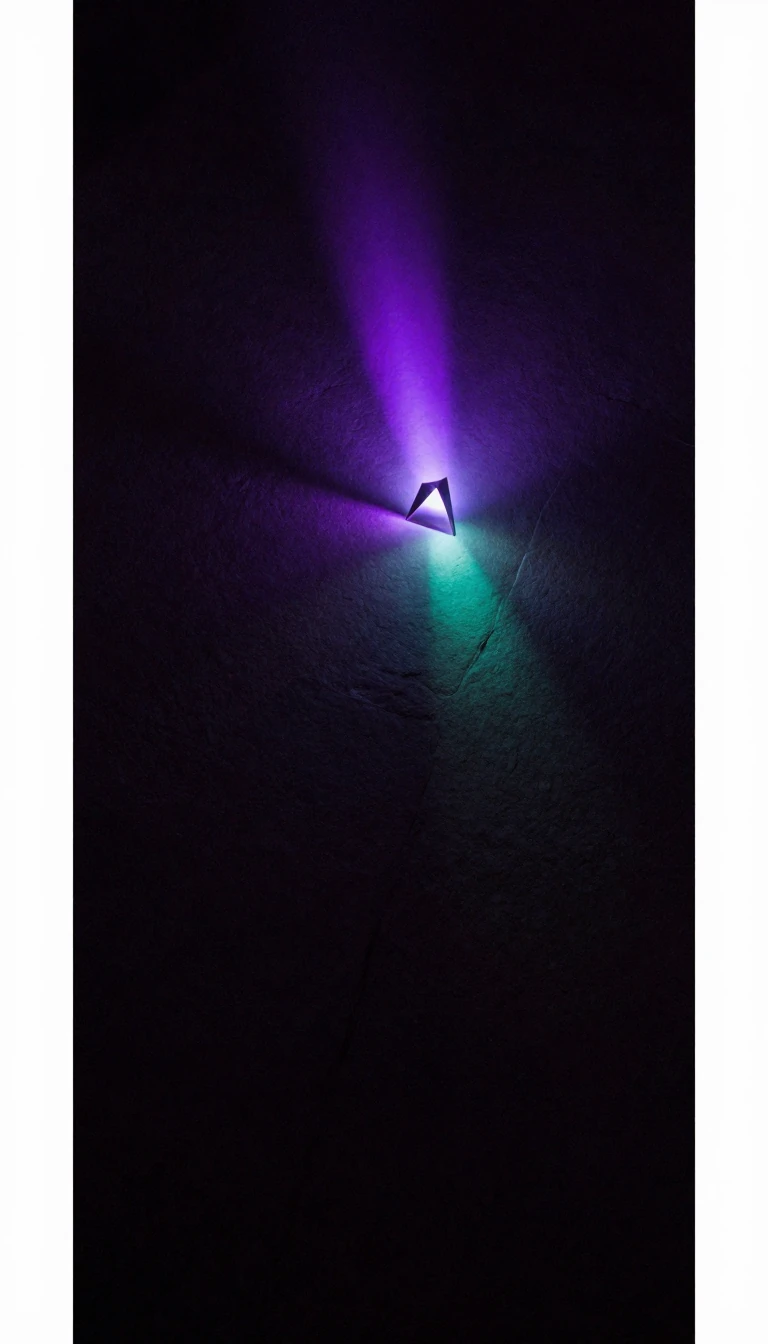
In short: Light rays are not physical objects but mathematical models used to track energy flow. By treating light as a collection of lines perpendicular to wavefronts, we can simulate complex optical systems. While this approach ignores phenomena like diffraction, it remains the backbone of modern optical design and computer-aided engineering.
At its core, a ray is an idealized geometric construct. It represents the path of light as a curve perpendicular to wavefronts, pointing in the direction of energy propagation. This model relies on the assumption that light interacts with objects significantly larger than its own wavelength. When these conditions are met, we can use ray tracing to analyze how light moves through lenses, mirrors, and fibers. It is a powerful simplification that allows us to treat complex light fields as discrete, manageable paths.
The utility of this model is rooted in Fermat’s principle, which posits that light travels between two points along the path requiring the least time. By applying this, engineers can calculate how light reflects off surfaces or refracts through different media. For instance, the Law of Reflection dictates that the angle of reflection equals the angle of incidence on specular surfaces, while Snell’s law governs the behavior of refracted rays. In more exotic materials like birefringent crystals, a single ray may even split into ordinary and extraordinary components, each following a distinct refractive index.
To model specific systems, optics experts use a variety of specialized rays. Marginal rays, which touch the edge of an aperture stop, help determine image location and pupil size. Chief rays, which pass through the center of the aperture, define image size. Other categories, such as meridional rays that stay within a plane containing the optical axis, or skew rays that never cross the axis, allow for granular control in design. Even when systems lack symmetry, parabasal rays can be used to model paths relative to a base ray rather than the central axis.
While ray optics is highly effective, it has limits. It cannot account for wave-based phenomena like diffraction, which requires wave optics theory. Interference can sometimes be modeled by adding phase to the ray, but the model remains an approximation. Despite these constraints, the ability to mathematically propagate rays through a system remains the primary method for designing everything from simple lenses to complex optical fibers.
Opens the Intellect+ feed with this card first. Swipe up for the next one.
Sources
- Summary by Intellect · source: Ray (optics)
To cite this card, link to https://intellectplus.co.uk/app/science-ray-optics.
How we source, check and correct cards: Editorial standards.
General information, not professional advice. Spotted an error? Flag the card or see corrections and complaints.
Intellect Plus is a visual educational discovery platform for exploring fascinating facts and ideas. Brain Food, Not Brain Rot. What is Intellect Plus?
Related
More in Waves · More in Science · Latest · A–Z · All topics
