The city where Israel’s high-tech and agricultural revolutions first took root
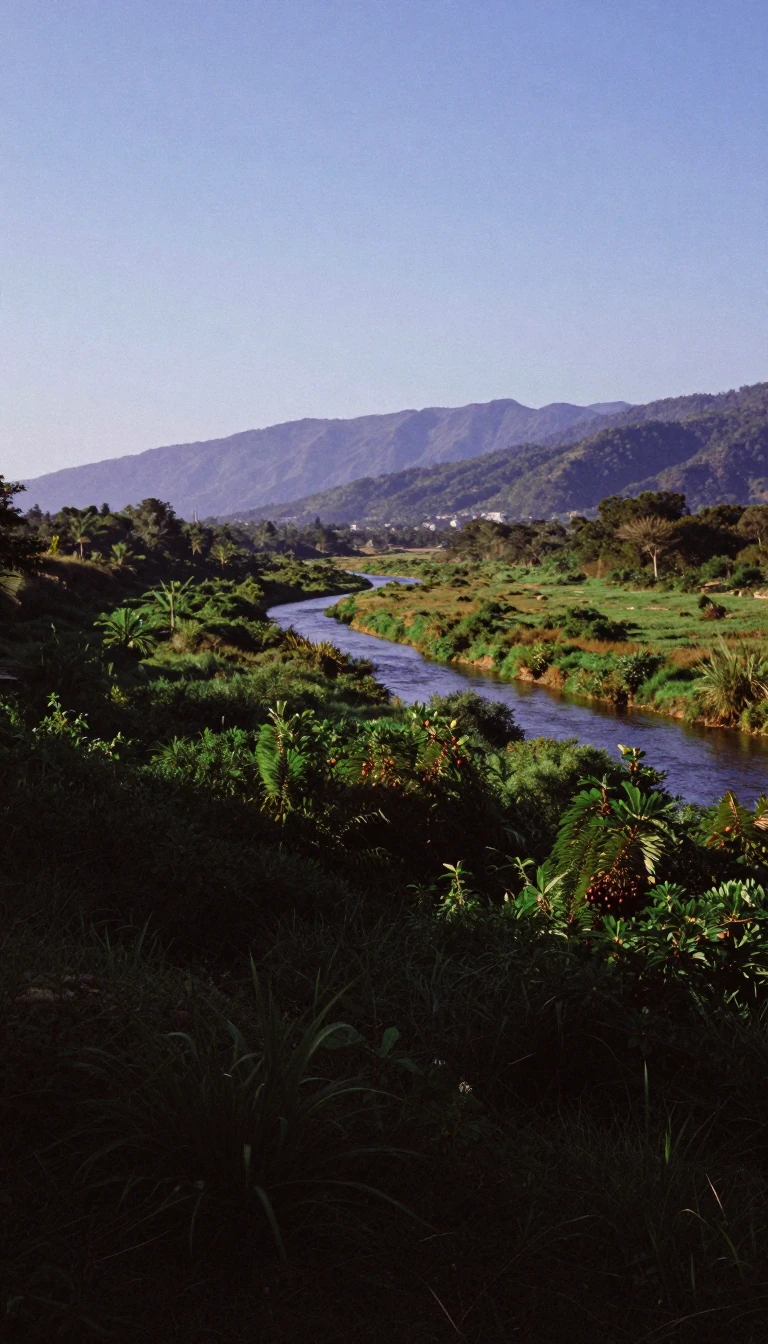
In short: From an uncultivated wasteland in 1890 to a hub of global innovation, Rehovot serves as a blueprint for rapid transformation. It is a place where ancient biblical imagery meets modern biotechnology, housing the very institutions that shaped Israel's scientific identity.
Founded in 1890 by Polish Jewish immigrants, Rehovot began as a 'moshava'—a cooperative settlement—on the coastal plain. Unlike other nearby settlements, it was established independently of the Baron Edmond James de Rothschild's influence. The early pioneers faced extreme environmental hurdles, beginning in a region described as an uncultivated wasteland with no trees, houses, or water. They struggled with agricultural failures and plant diseases until the early 20th century, when the establishment of the first citrus grove in 1904 by Zalman Minkov introduced sophisticated irrigation systems using groundwater from 23-meter-deep wells.
The city’s trajectory shifted toward global scientific prominence in the 1930s. In 1934, Chaim Weizmann established the Sieff Institute, which evolved into the Weizmann Institute of Science. This period marked the transition from purely agrarian survival to high-level research. The Hebrew University of Jerusalem's Department of Agriculture originated from a local farming research site established by 1932. These institutions laid the groundwork for Rehovot's current status as a center for biotechnology and high-tech industries.
Today, Rehovot balances this heritage with a massive industrial and technological footprint. It hosts the Tamar Science Park, a 1,000-dunam high-tech hub featuring global companies like Stratasys and Applied Materials. The city also maintains a significant industrial presence with large-scale dairy, beverage, and ice cream factories. This evolution from a 19th-century wilderness to a 21st-century powerhouse illustrates a unique mechanism of 'scientific settlement,' where infrastructure and research are used to overcome geographical limitations.
The city's growth has also been marked by complex social and historical dynamics. Early disputes over pasture rights and water with neighboring villages and Bedouin tribes shaped its borders and early relations. These tensions, including a notable 1913 incident, are cited by historians as pivotal moments in the broader Zionist-Arab encounter in late Ottoman Palestine, highlighting how local resource management often mirrors larger geopolitical shifts.
Opens the Intellect+ feed with this card first. Swipe up for the next one.
Sources
- Summary by Intellect · source: Rehovot
To cite this card, link to https://intellectplus.co.uk/app/science-rehovot.
How we source, check and correct cards: Editorial standards.
General information, not professional advice. Spotted an error? Flag the card or see corrections and complaints.
Intellect Plus is a visual educational discovery platform for exploring fascinating facts and ideas. Brain Food, Not Brain Rot. What is Intellect Plus?
Related
More in Physics · More in Science · Latest · A–Z · All topics
